
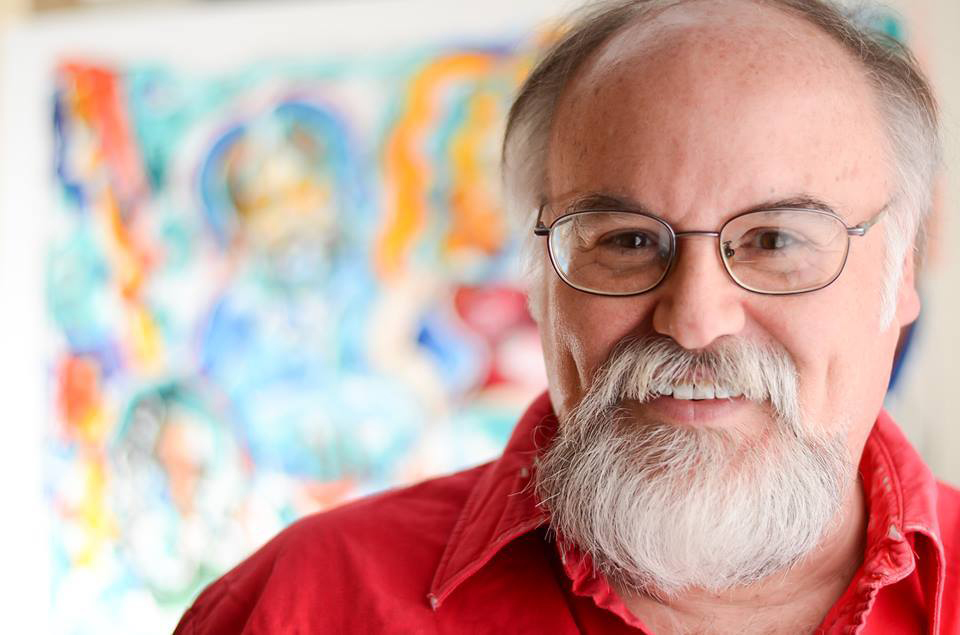
RICK HUNT
1955–
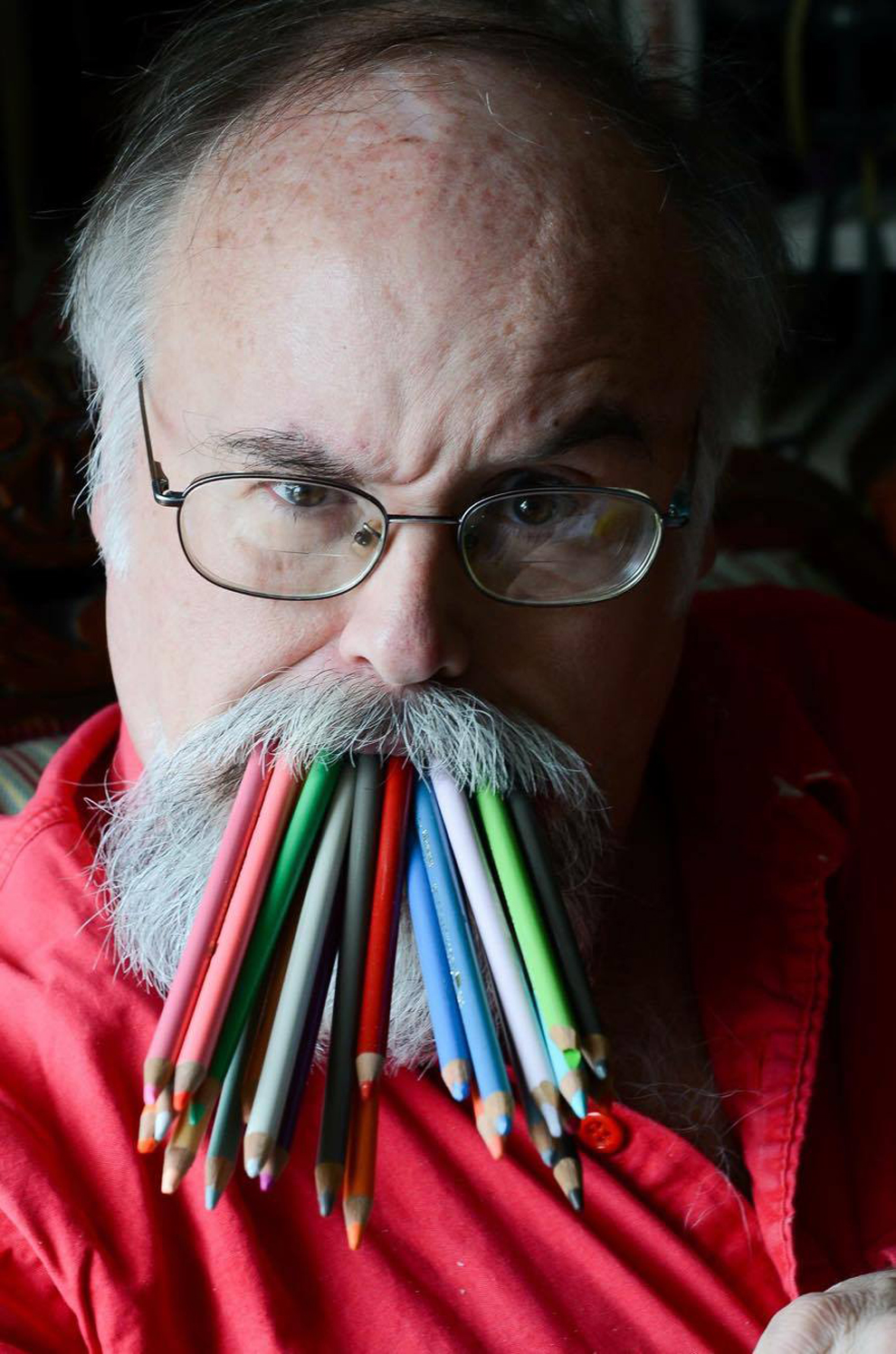
Thank You, Rick
A fitting way to start this piece on artist Rick Hunt. I was introduced to Rick when Angie Bowie began casually sharing his work on Facebook. I was immediately spellbound—and admittedly a little overwhelmed, albeit in a very righteous way.
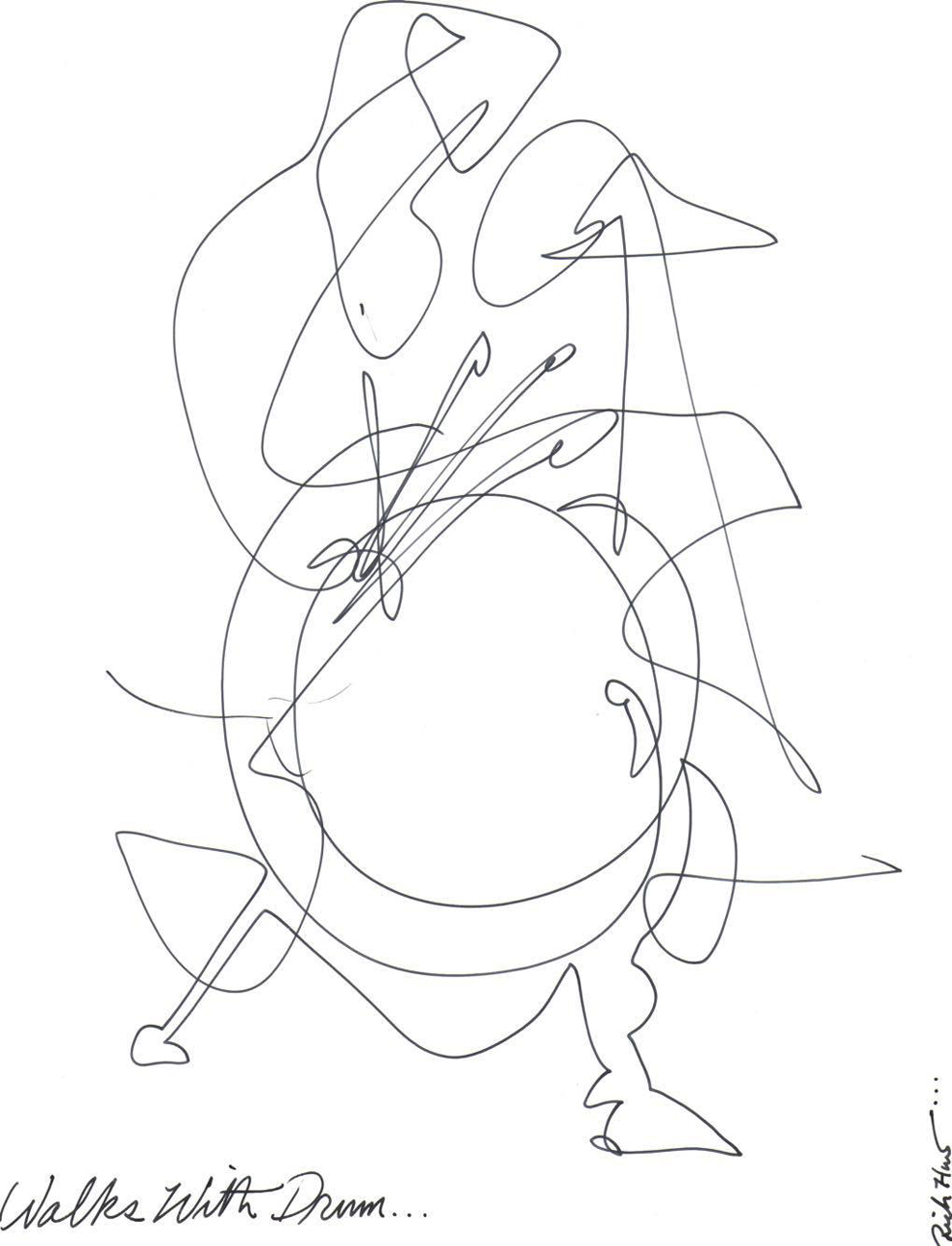
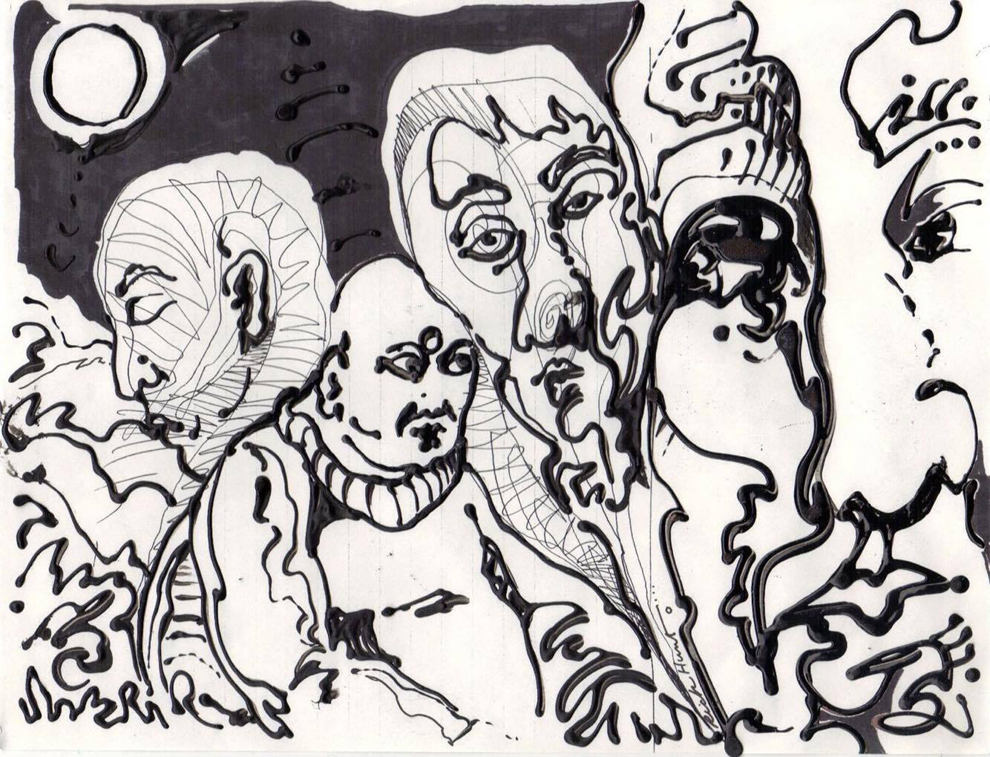
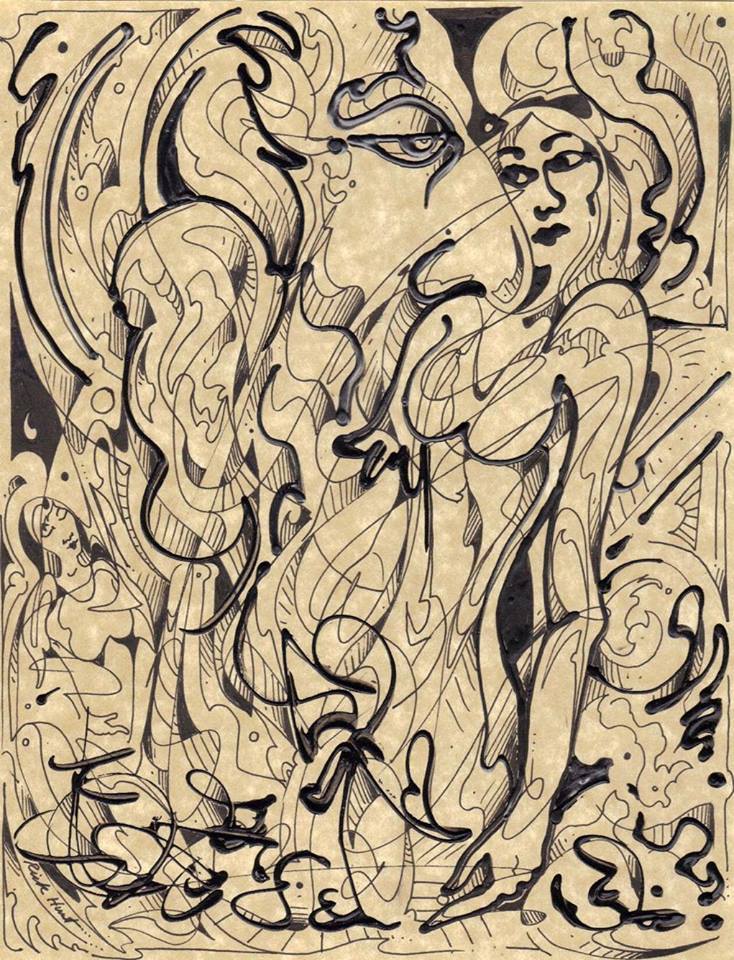
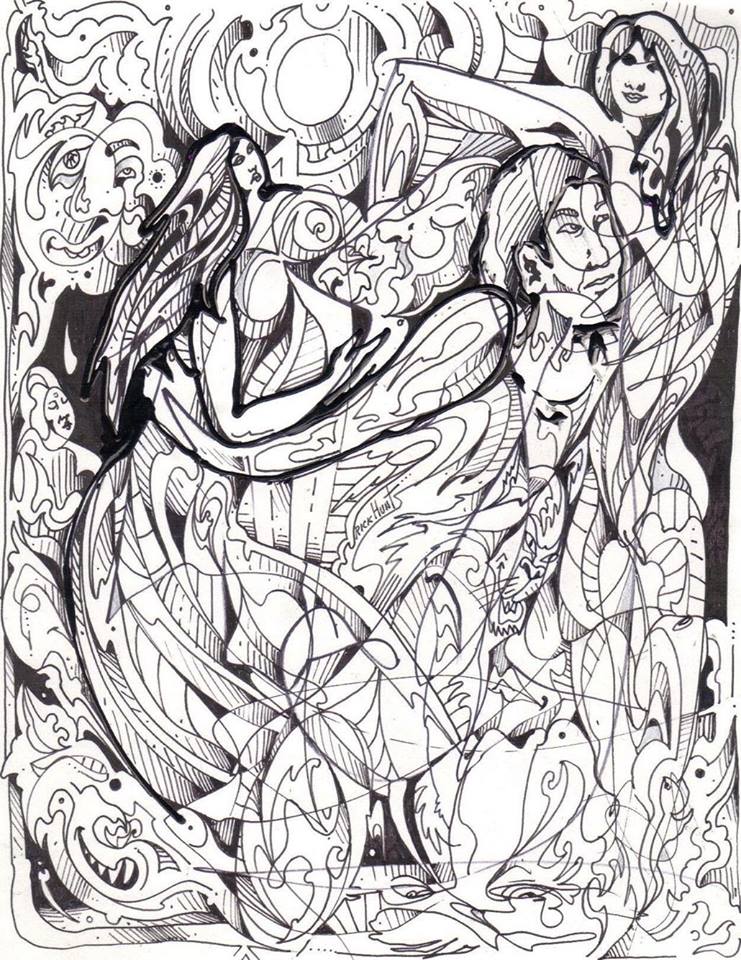
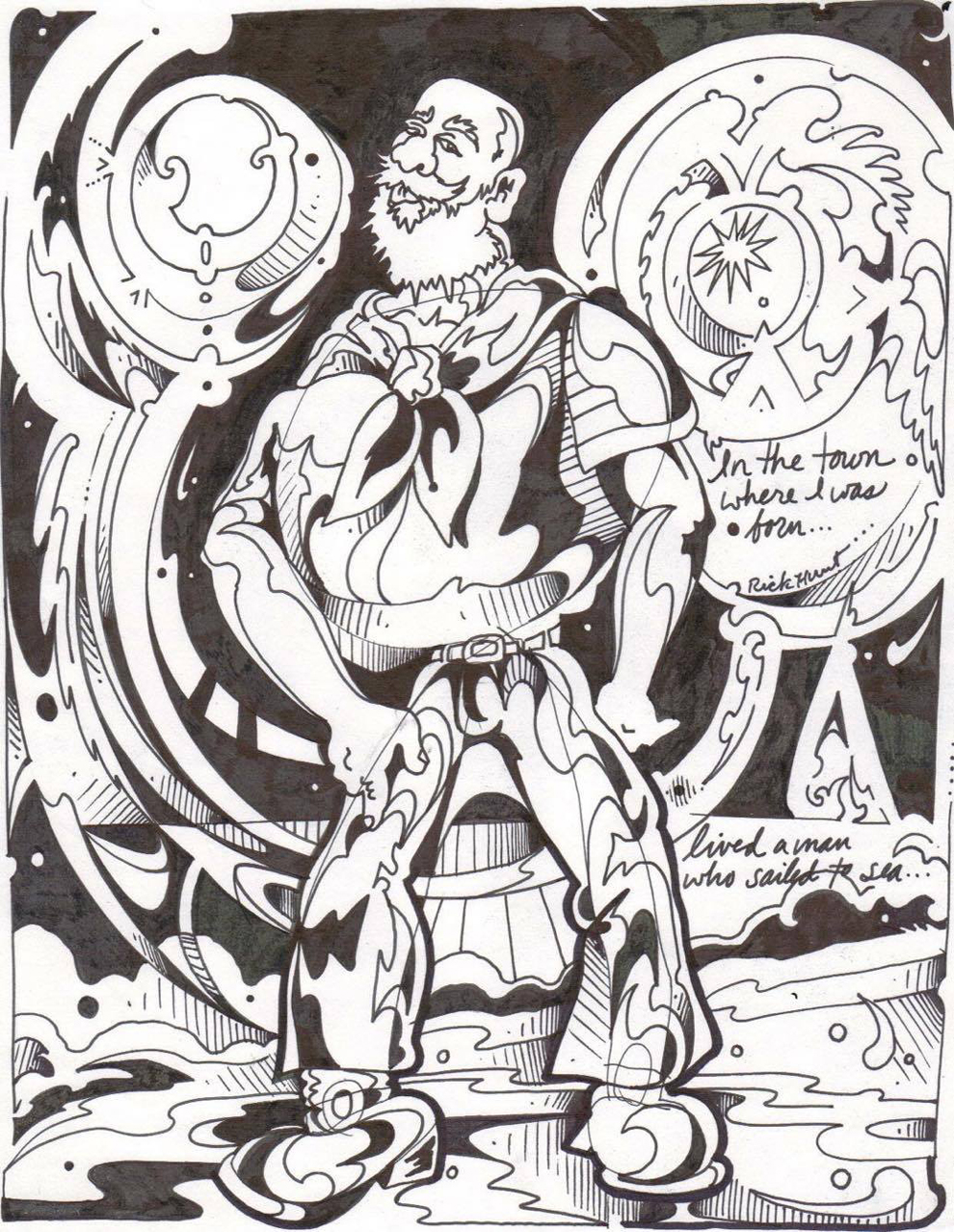
Rick’s art drew me in with lines that seemed to flow endlessly while completing each image as an entity of its own. These images combine to produce a larger work that tells a story. Take your time when you absorb his creations. They are not something to glide through. Each one becomes a study whether you like it or not, and the time invested is well spent.
A Life in Motion
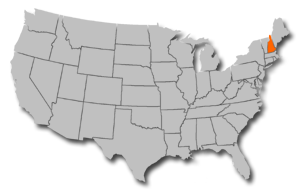
Born and raised in New Hampshire, Rick was apparently quite a test for his teachers as an artistically gifted, free-spirited adolescent. His early interests in drawing and art joined an active, constantly curious imagination and made a career as an artist feel almost inevitable—much to his mother’s despair.
“I would draw Egyptian hieroglyphs on my exams,” he remembers. “Then I’d turn them in.”
Taken under the wings of mentors Kenneth Westhaver and Claude Brusseau, Rick developed a love of Picasso, an intrigue with Dalí, a curiosity about Leonardo da Vinci and a querulous exasperation with Man Ray. His own style—a combination of psychedelic momentum, stream-of-consciousness humor and intricate line—can be bewildering, funny and immediately compelling.
Rick also worked as a substance-abuse counselor. That experience informs an art that can face darkness without surrendering its joy or color. “All of my life experience is food for my art,” he explains. “Without dark, you can’t have light. Van Gogh knew that. That’s why even his saddest paintings have hope in them.”
With strong ties and ancestry to the Abenaki, Rick travels New England with his wife Carolyn as the Laughing Couple, presenting integrative Native storytelling and art to schools, museums and community organizations. He also collaborated with artist and writer Angie Bowie on Cat-Astrophe, a children’s story about an abandoned cat who finds a new home and creates a family among fellow misfits.
“The story of Pooh Kitty is a story about finding value in yourself, and discovering that family isn’t necessarily who shares your blood,” Rick says. “It’s about who shares your heart. And really, that’s what a lot of my art is about. I’m always exploring and searching for connections.”
Selected Works
Select any image to view the full artwork.
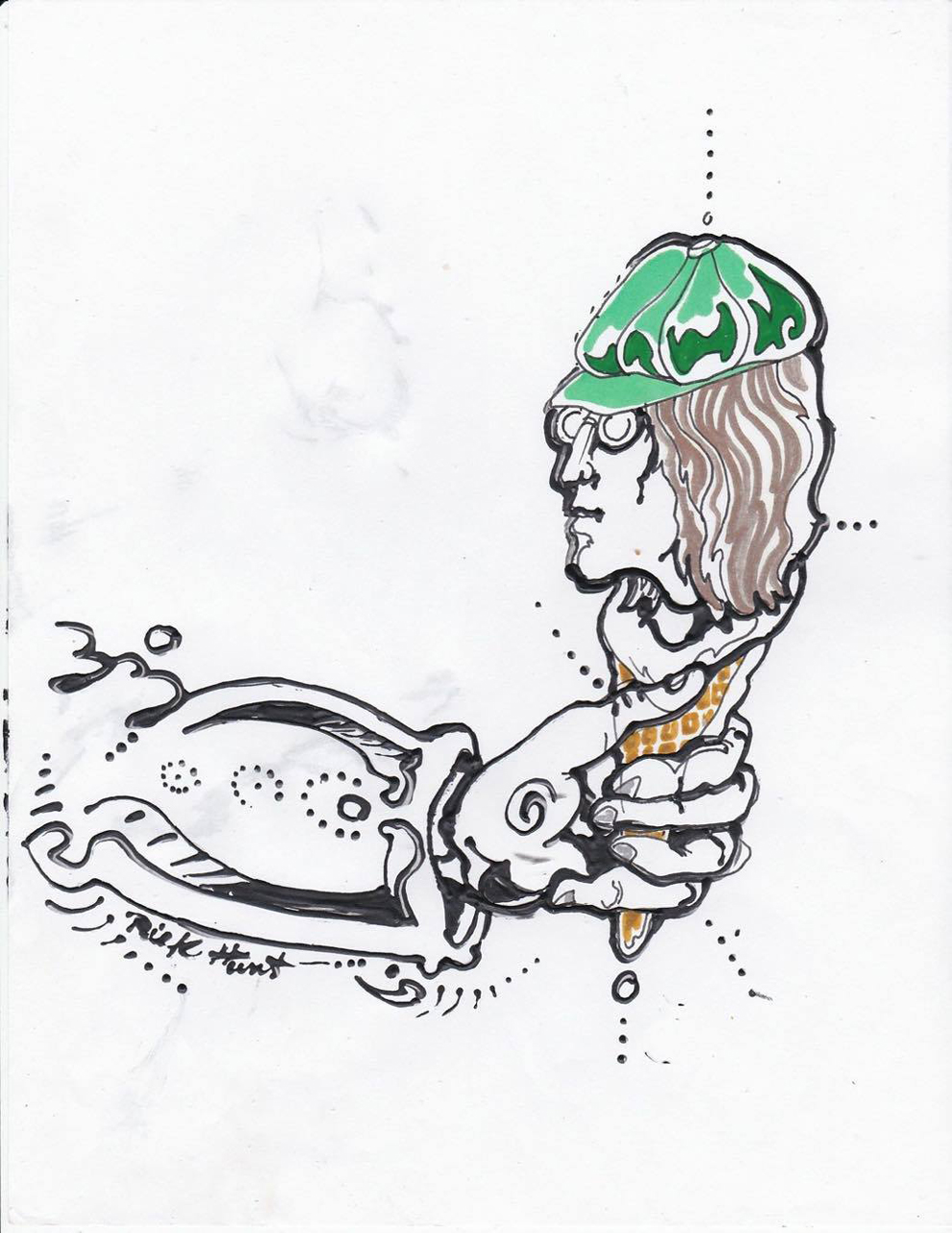
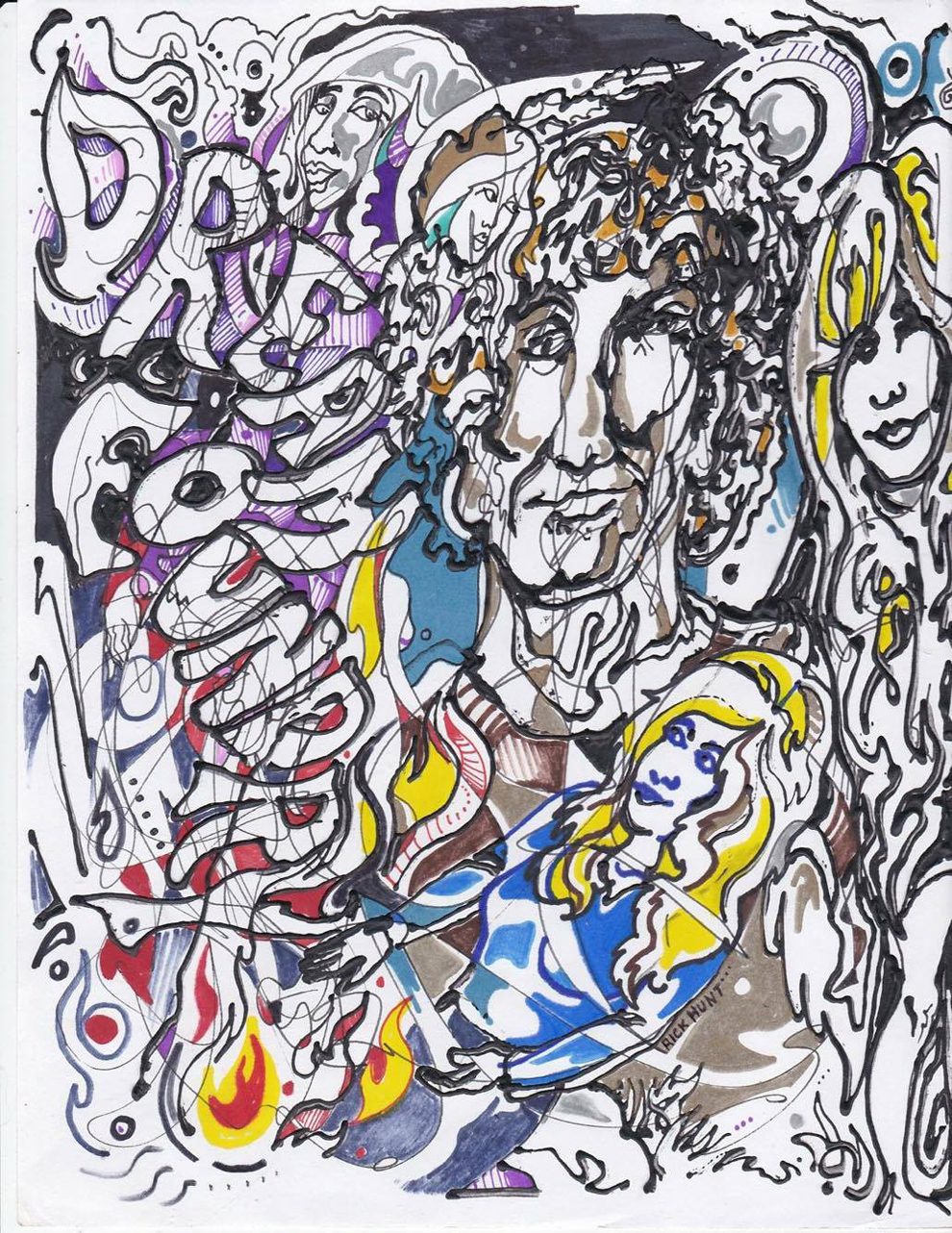
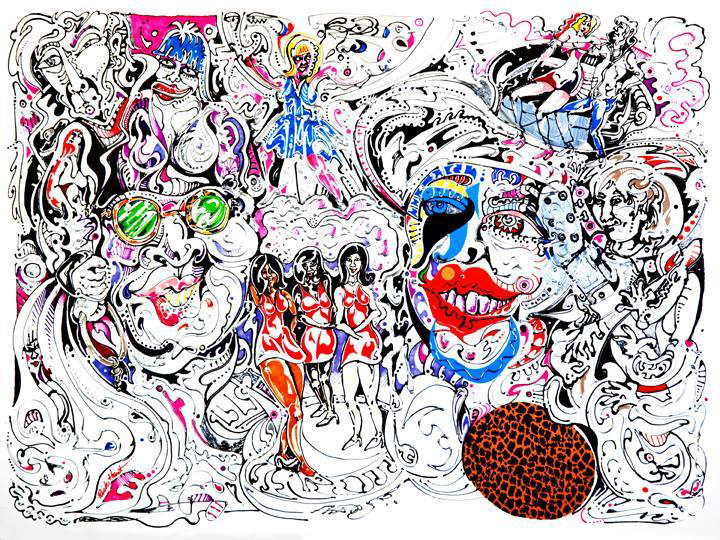
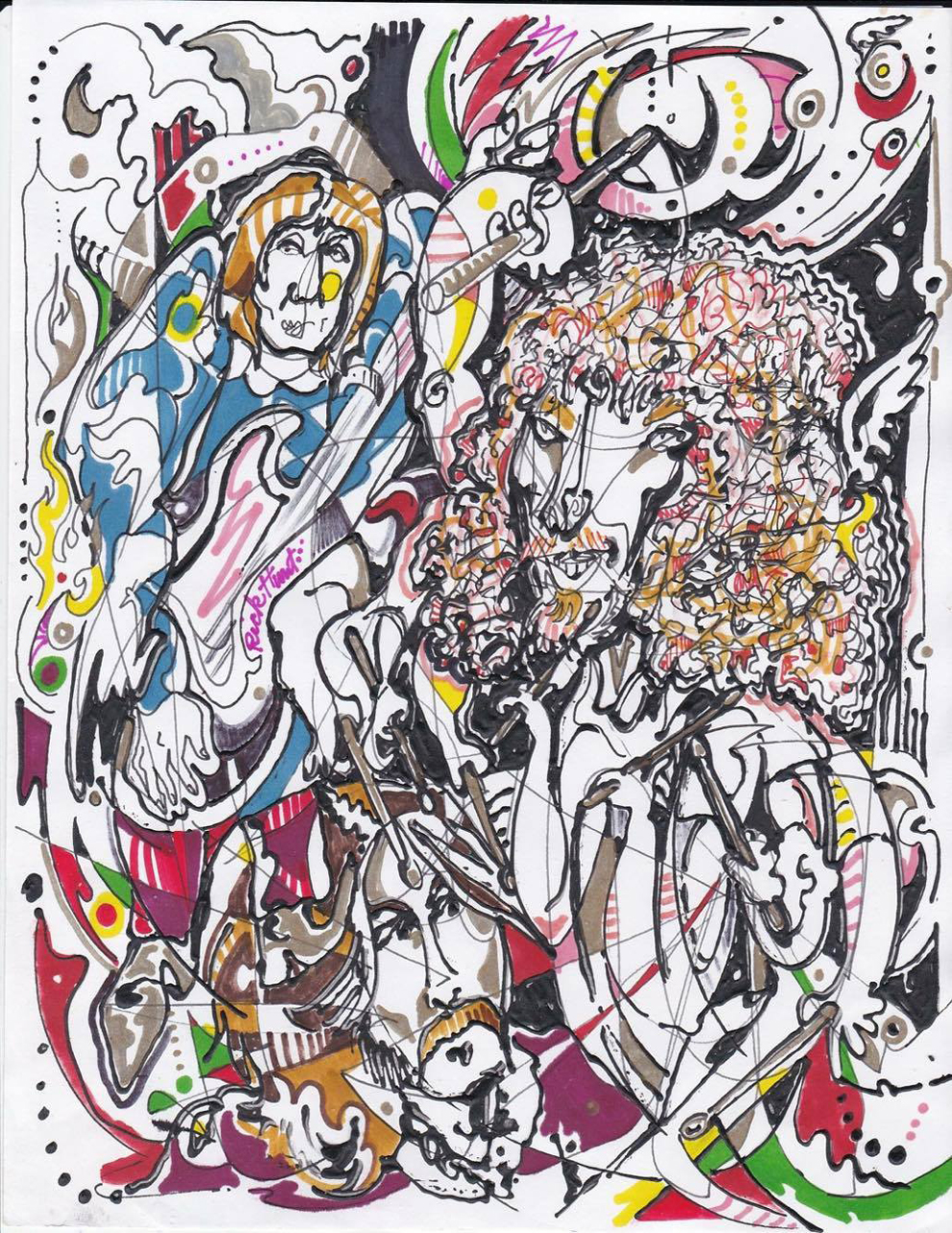
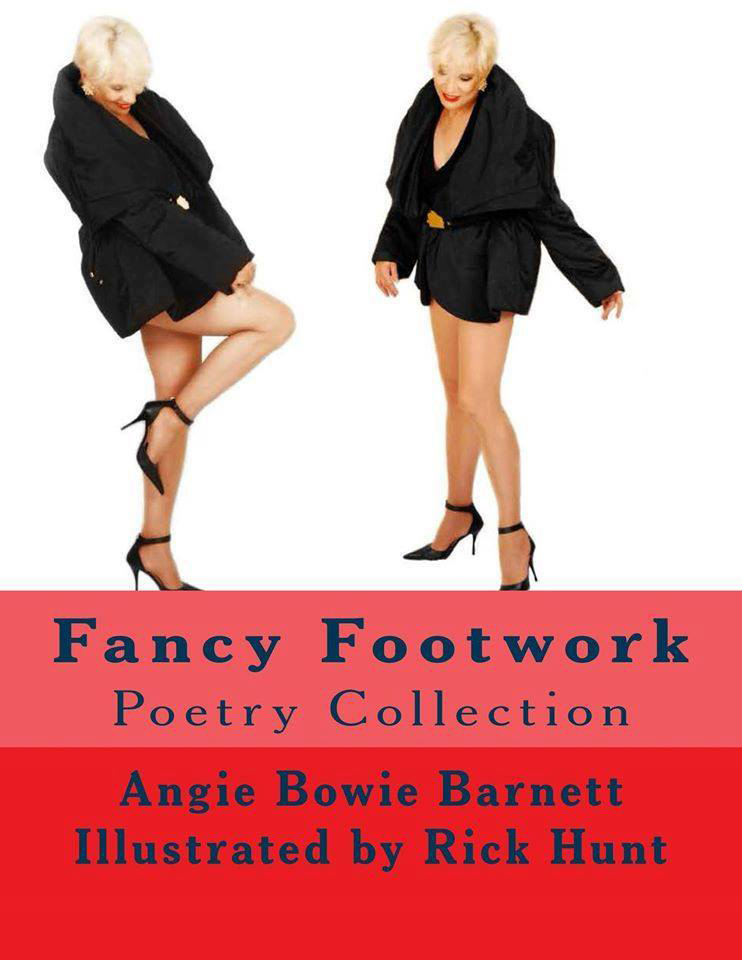
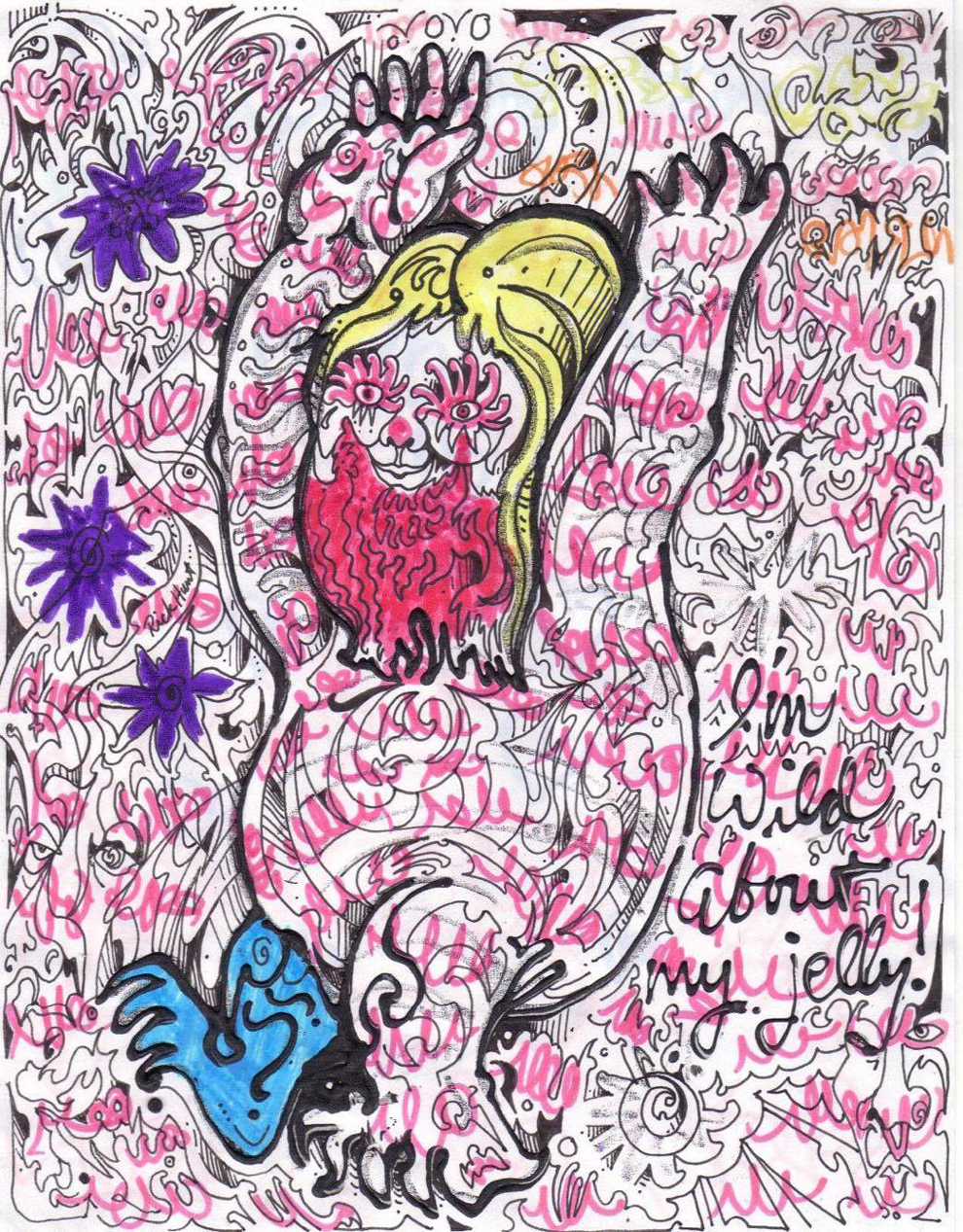
Angie Bowie: Partner in Art-Crime
Angie Bowie included Rick’s work in In Your Ear: David Bowie, An Appreciation, alongside photographs from her collection, prose by Annette Witheridge and her own recollections. She described Rick’s “zany and unstoppable magical visions” as part of a creative roller coaster that never stops.
The two also developed Cat-Astrophe 2 and Radio Portraits. Their collaborations connect Rick’s visual world to the larger network of musicians, writers and outsiders that continues to run through Motherlode.
Twisted Path
At sixteen, Rick received private instruction from artist Ken Westhaver and attended Franconia College for part of each school day. He created posters for area bands and the Galleon, and began exhibiting in sidewalk art shows. At nineteen, he ran a crisis-intervention hotline in northern New Hampshire. He later earned a psychology degree from Lesley College and worked for years as a substance-abuse therapist, incorporating art therapy into his practice.
In 1979, he attended Massachusetts College of Art to study illustration and fine art. As a freshman, he was selected for the International New Artists Show at Madison Square Garden. His work later appeared in books, museum collections and private collections, as well as on releases by American and international musicians.
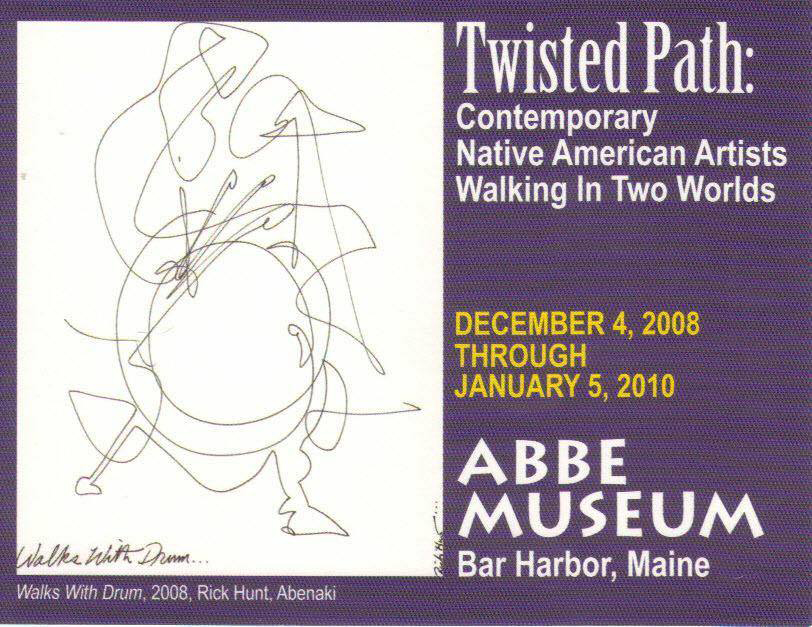
Rick became a co-curator with the Abbe Museum in Bar Harbor, Maine, after describing a dream of walking through a modern gallery filled with contemporary Native art. With Rick creating the theme and signature work, Twisted Path: Native American Artists Walking in Two Worlds was born. The public response extended the original six-month exhibition to a full year and helped establish an ongoing series presenting contemporary Native artists from across the United States and Canada.
Rick Hunt continues to produce work that turns perspective upside down, finds light inside darkness and sends the viewer into the middle of an already-moving conversation.
Connections
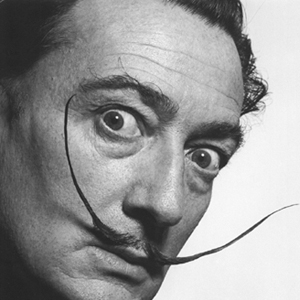 SALVADOR DALÍ
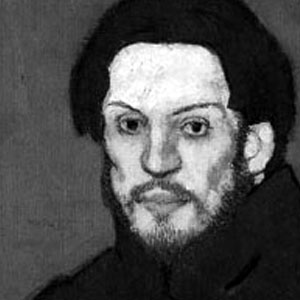 PABLO PICASSO
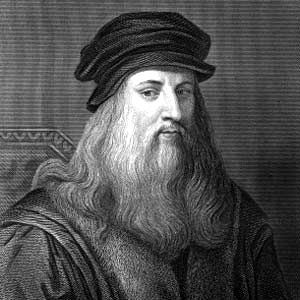 LEONARDO DA VINCI
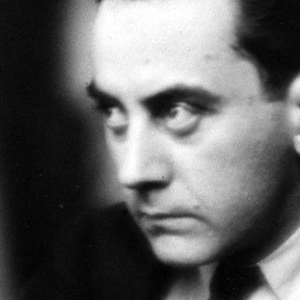 MAN RAY
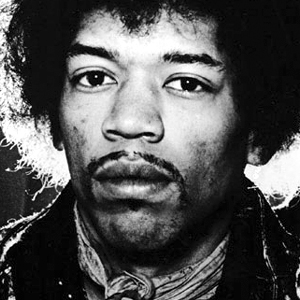 JIMI HENDRIX
 WILLEM DE KOONING