
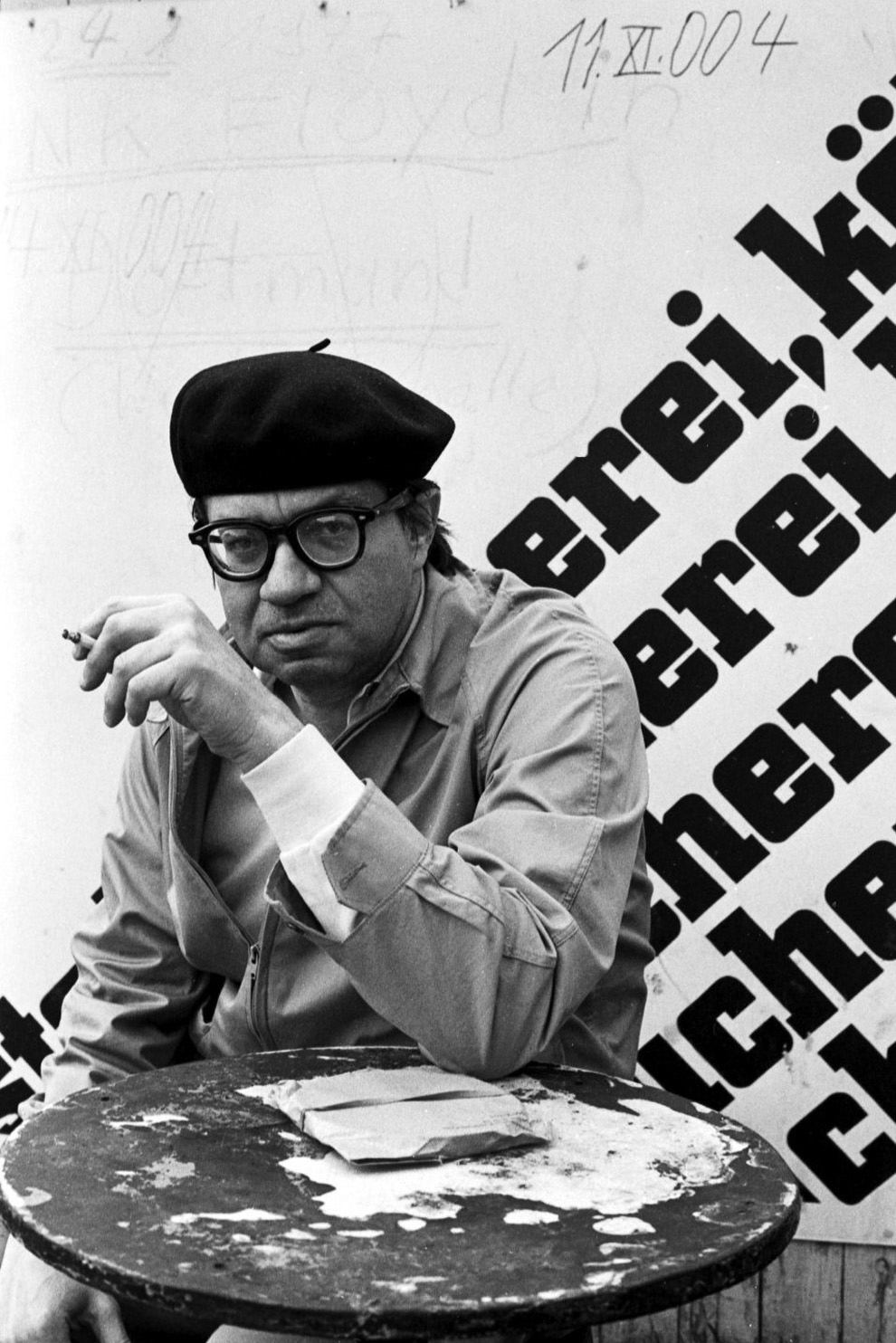
Morton Feldman - Photo by Roberto Masotti
MORTON FELDMAN
(1926 - 1987)
MUSIC ::: COMPOSER :::

Morton Feldman was a whisper at the center of the 20th century’s loudest upheavals—an architect of silence in an age enthralled with noise, a composer for whom duration was a material as palpable as pitch or rhythm. Born and raised in New York City, Feldman emerged alongside John Cage at the dawn of indeterminate music, rejecting teleology and climax in favor of openness, drift, and soft edges. Where traditional composition mapped arcs and arguments, Feldman made sound situations—spaces you enter, inhabit, and sometimes cannot fully leave.
Feldman’s music might be cagey in structure, but it was intimate in intention, part of the same broad cultural push that animated the New York School painters and poets. He counted Jackson Pollock as a close friend and found in Pollock’s all-over canvases a visual analog to his own musical logic: repetition without domination, variation without hierarchy. Sound for Feldman was not a battle to be won but a surface to be shared. His friendships with poets like Frank O’Hara further cemented his sense that art need not dominate experience, but could define the conditions under which experience happens—a startlingly modern proposition when everyone else was chasing novelty or spectacle.
In works like Rothko Chapel and his mighty string quartets, Feldman replaces the dramatic arc with a sustained felt time, asking the listener not to witness but to attend. The result can be disorienting and ineffable, a music that resists memory as much as expectation. Yet this is precisely his genius: he refused closure not to frustrate but to open, inviting the listener into a different relation with sound and silence, presence and loss. In a century marked by acceleration and spectacle, Feldman offered stillness as a radical act, and in doing so expanded the grammar of music itself.