POLITICS: RADICAL CHIC
July 7, 2015 marks the one-hundredth anniversary of the first performance Neith Boyce’s Constancy. It was the watershed moment in modern American theatre; an event that took place in Provincetown, Massachusetts. It would be a year later, in the summer of 1916, when Eugene O’Neill landed on Cape Cod with his mythical suitcase full of plays and as the focus of Louise Bryant’s wandering eye. As we creep closer to the day, words like revolutionaries and radicals have begun being bandied about.
In the spring of 1915, World War I was brewing overseas as Woodrow Wilson began looking toward his second term under the guise that he would keep America out of the War. Suffragettes demanded that women had the right to vote though it would be another five years before it would become a constitutional right in the United States. The ethics of the Industrialists were being called into play that concerned not only workers rights but also the fact that factories were wreaking havoc on the environment. While the war games had begun overseas, there was trouble brewing on our southern border in Mexico. This was all unfolding on top of a wobbling US economy. Societal conventions were being re-examined as the definition of marriage and sexuality expanded.
Provincetown had long been a getaway for artists and writers dating back to the 1800s but it wasn’t until the summer of 1915, a year after the founding of the first Provincetown art schools, that these radical, liberal, socialist, anarchist, atheist, communist, revolutionary bohemians crystallized in the middle of a once sleepy, Puritan stronghold that was now a predominantly Portuguese fishing village at one of the most eastern points of the continental USA.
Who exactly were these people and what did all of these words to describe them really mean? Glad you asked.
What many of these words meant in 1915 and what they have become to represent today are really quite different. Let’s take the very concept of how the word revolution has been successfully co-opted in 2015. Revolution once stood for the idea of change; change in the most dangerous sense of the word. Revolution literally means a turn around. In politics, a revolution brings change to an existing constitution. Revolution today is a successful marking campaign used by the Chrysler Corporation suggesting that purchasing and driving one of their vehicles is truly revolutionary. The same twist holds true for a word like socialist which at one time in history did not carry the stigma that exists today. To be a socialist never really meant that one was unAmerican.
With all this being said, let’s take a closer look at women and men who created Provincetown: 1915.
Mary Heaton Vorse
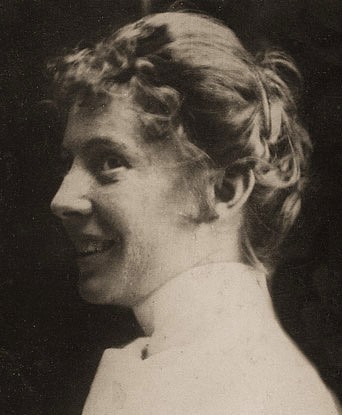 She was the one who started it all. She believed in peace, affordable housing, civil rights, social justice, and the right for women to vote. She had deep concerns about infant mortality and child labor laws. She first was lured to journalism through the fine art of muckraking by her friend, writer Lincoln Steffens. Muckracking, being the original form of investigative reporting and an early form of whistle-blowing, became wildly popular when it first appeared in the monthly McClure’s Magazine and Collier Weekly.
These new watchdogs called for reform in cases of political corruption in the country’s highest offices or out-of-control monopolies like Standard Oil and out-of-control industries like the meat packers in Chicago in the early 1900s.
Vorse sympathetically covered the plight of the successful, immigrant-worker-led, Massachusetts-based, Lawrence Textile Strike (aka the Bread and Roses Strike) in 1912 led by “Big Bill” Haywood’s Industrial Workers of the World. The organization became a force to be reckoned with before it was successfully dismantled after WWI when the union was maligned during the First Red Scare. She would continue to cover and witness monumental labor strikes into the 1930s.
To escape the madness, she would find refuge in Provincetown but only to soon find herself a widow for a second time with a handful of children but it never slowed her down.
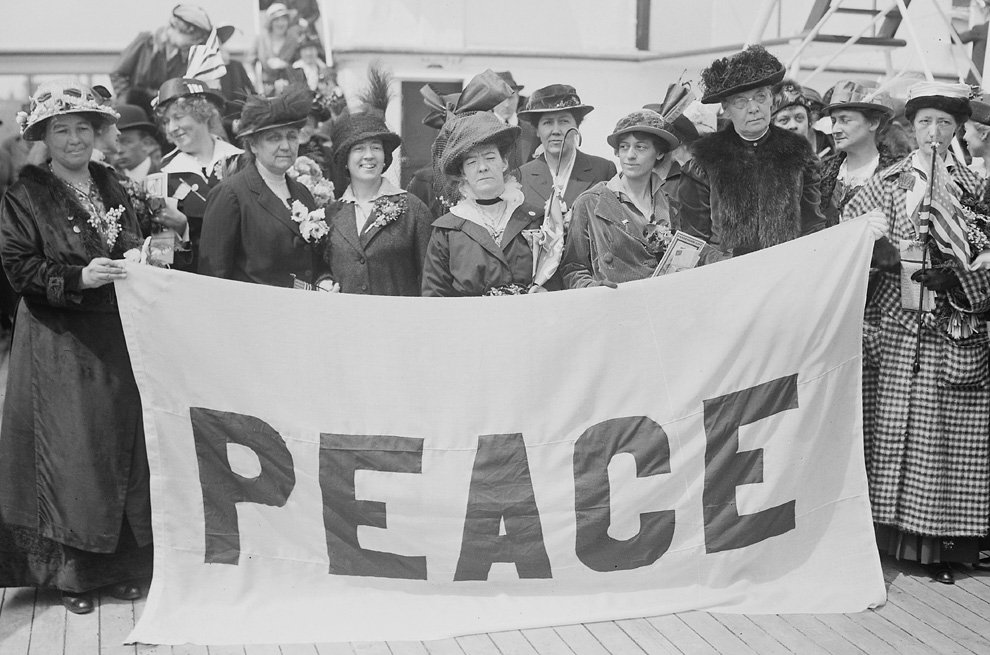
In April of 1915, she made the voyage through mined harbors to arrive at The Hague for the International Women's Peace Congress as a delegate before returning home in time to play host to what would become modern theatre’s Provincetown Players. Everything really revolved around her. While many came and went, she made Provincetown her home. She was the one constant. She would die there and be buried in 1966.
She had already settled on Commercial Street with her family by 1914 and also owned the fishing shack at the end of Provincetown’s main wharf that would be transformed into the original playhouse theatre.
Mabel Dodge & John Reed
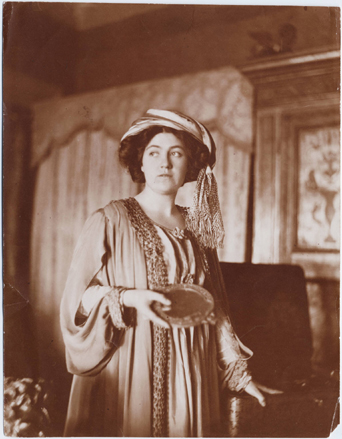 She was the daughter of a prominent Buffalo, NY banker whose family shipped her off to Paris in 1904 amid a scandalous affair with a local gynecologist. Between marriages and divorces and the silver spoon she was born with, Mabel was able to pay her own way to the fair and ended up with properties in both Europe and New York’s Greenwich Village.
She spent the better part the new century’s first decade in the confines of the Villa Curonia, which overlooked Florence, Italy and was originally built for the Italian dynasty family, The Medici’s. Her seemingly never ending guest list included a young writer named Gertrude Stein. Her days were spent collecting art and antiques and an impressive array of both boys and girls. She returned stateside in 1912.
Her art fetish and deep pockets made her a hit with the era’s art dealers and endeared her to many artists themselves for whom she would become a patroness to. She soon found herself at the epicenter of the divergent and emerging modern art world as an integral part of the game-changing 1913 Armory Show in New York which offered a glimpse into the future through the work of both American and European Cubist, Futurists, and Post Impressionists. The month-long exhibition began in mid-February and over the course of the next thirty days scared the living shit out of every corner of the establishment - from the art world to politics - as a perceived threat throwing any and all preconceived notions - of what art is and represented - out of the proverbial window. The works of Picasso, Duchamp and Matisse were treated as subversive; the Western World was no longer safe. The Armory Show is today considered to be one of the most important art moments of the 20th century.
The Armory’s success reconfirmed Mabel Dodge’s role as a tastemaker and as one of the new art world’s most important patroness-benefactors. She was continuing a centuries-old-tradition in which great composers and painters were commissioned by royalty and/or the church but this time a dangerous element was being fostered. The excitement was palpable and it would soon spill over into every discipline associated with the world of art.
Next, Dodge opened up her home as Greenwich Village to the fringes of the bohemian world to become the most famous post-Fanny Kemble salon in America where weekly raucous discussions about art and readings from the works of evolutionist Charles Darwin; psychoanalyst Carl Jung and political philosopher Karl Marx unfolded in her parlor. They were soon to become known as Mable’s Evenings.
The salon was frequented by a most impressive list of dignitaries - most of who ended up in Provincetown over the course of the following summers - her dear friend and photographer Carl Van Vechten; controversial women’s reproductive rights advocate Margaret Sanger; Haymarket Affair anarchist Emma Goldman; artist Charles “Deem” Demuth; Wobblie "Big Bill" Haywood; socialist monthly magazine The Masses publisher, Max Eastman and wife, Ida Rauh, ; muckracker Lincoln Steffens; her soul mate, writer, editor and anarchist Hutchins Hapgood and his wife and former Steffens assistant Neith Boyce; writer and political commentator, Walter Lippmann.
In April 1913, while still admiring her new muscles, Mabel decided to try her luck in politics. While attending a meeting held by “Big Bill” Haywood concerning the Paterson New Jersey silk workers strike, Mabel met one of the movements rising stars, John Reed.
In the wake of police brutality and false arrests at the picket lines, Reed would spent four days in a Jersey jail that in turn would kick start his journalistic career when his autobiographical War in Paterson article appeared in the underground press publication, The Masses. Because the plight of the striking silk workers was being largely ignored by the mainstream media of the times, a plot was hatched to create an event so grand that it could no longer be ignored. Madison Square Garden was booked to hold The Paterson Pageant on June 13, 1913. Dodge would pony up the cash and Reed would spearhead the coordination the event’s finer details. Reed enlisted the help of friends like Max Eastman and the future dune poet Harry Kemp to rally support.
The event was in a strange way an exercise in guerilla theatre with a parade of workers and supporters marching their way through the streets of New York to snake their way into New York’s grandest hall and be treated to an evening of vitriolic yet inspirational speeches on a stage designed by future Provincetown Player set designer, Bobby Jones, all before a capacity crowd. The press took notice at last and hailed the event as "a new art form" but in the end was a great failure on the two important fronts; it lost money in spite of hopes of raising strike support funds and the strike itself ended in favor of the factory bosses.
The morning following the Paterson Pageant, Mabel Dodge, Jack Reed, Bobby Jones and Carl Van Vechten were aboard a ship to Europe.
Reed and Dodge became lovers and by the fall of 1913 were living in sin in her Italian villa. It was not long before the sirens of journalism beckoned Jack’s return and he, much to Mabel’s dismay, was off to cover Pancho Villa in the Mexican Revolution and Colorado’s Ludlow Massacre which took place during the spring of 1914. The two would spend most of June in Provincetown trying to make up for lost time, splitting their time between enchanted evenings in the Provincetown dunes and days with Mary Vorse. Much to Dodge’s chagrin, Reed seemed more interested in talking politics with Mary than in her affection. Their romance would not have the fairy tale ending that Dodge had her heart set on.
Mabel and Jack would both return to Provincetown in the summer of 1915 but each in the arms of other lovers.
(Pending: Neith Boyce & Hutchins Hapgood)