
Nathaniel Hawthorne
1804–1864
Darkness in the New England Story
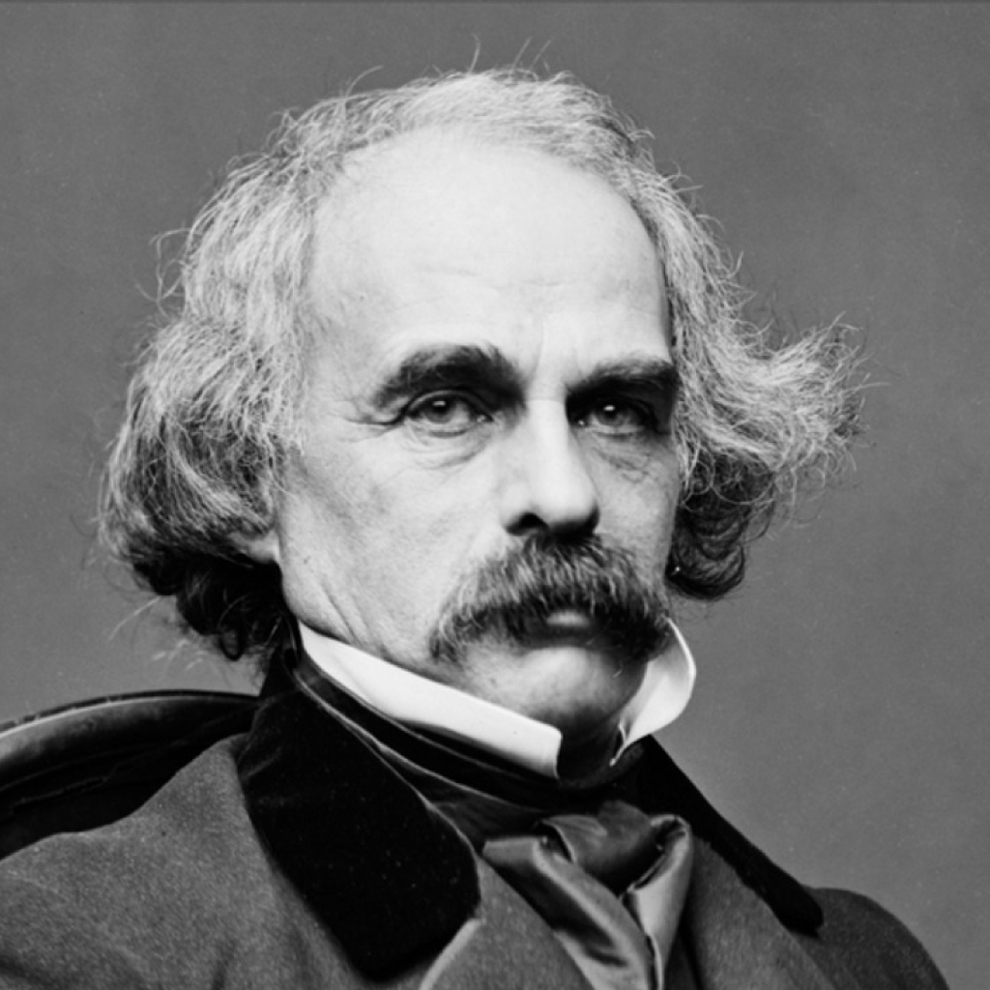
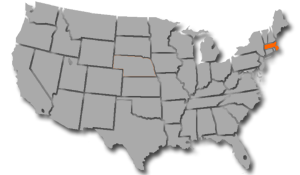
Nathaniel Hawthorne turned the history and inherited anxieties of New England into some of the defining works of American literature. Born in Salem, Massachusetts, he wrote about guilt, secrecy, judgment and the uneasy distance between public virtue and private experience. His novels The Scarlet Letter and The House of the Seven Gables made the Puritan past feel psychologically immediate rather than safely remote.
Across his fiction, ministers, reformers, families and entire communities discover that the past is never finished with them. That tension is especially vivid in The May-Pole of Merry Mount, his 1836 retelling of the conflict between the revelers of Merry Mount and the Puritan authority represented by John Endicott. Hawthorne transforms an episode from early colonial history into a struggle between pleasure and repression, freedom and order, sunlight and moral gloom—a collision that belongs squarely inside Boston 400.
Download an abridged classroom adaptation of The Maypole of Merry Mount for grades 4–5 (PDF).
Hawthorne at Brook Farm
In 1841 Hawthorne joined Brook Farm, the communal experiment founded by George and Sophia Ripley in West Roxbury. He invested in the project but never surrendered himself completely to its ideals. The physical labor, shared routines and friction between utopian aspiration and ordinary human nature gave him material he would later transform in The Blithedale Romance. Brook Farm placed Hawthorne inside one of Greater Boston’s boldest attempts to invent a different kind of society—and confirmed his instinct to look for shadows inside every promised paradise.
Brook Farm Research
- Brook Farm — historical overview
- Hawthorne and the Brook Farm Community — The House of the Seven Gables
- Nathaniel Hawthorne: A Letter from Brook Farm — The New Dial
Hawthorne and Melville
Hawthorne met Herman Melville in the Berkshires in 1850, beginning one of American literature’s most intense and enigmatic friendships. Melville responded to Hawthorne’s work with extraordinary admiration while writing Moby-Dick, which he dedicated to Hawthorne. Their surviving correspondence—largely Melville’s side of the exchange—reveals an intellectual and emotional attachment too complicated to be contained by a single comfortable label.
Melville and Hawthorne Research
- Nathaniel Hawthorne — The Life and Works of Herman Melville
- Herman Melville’s letters to Nathaniel Hawthorne — The Marginalian
- Read a (Love) Letter from Herman Melville to Nathaniel Hawthorne — Literary Hub