
THE CROSSROADS
Chris Hillman & Gram Parsons: Two Roads to Cosmic American Music
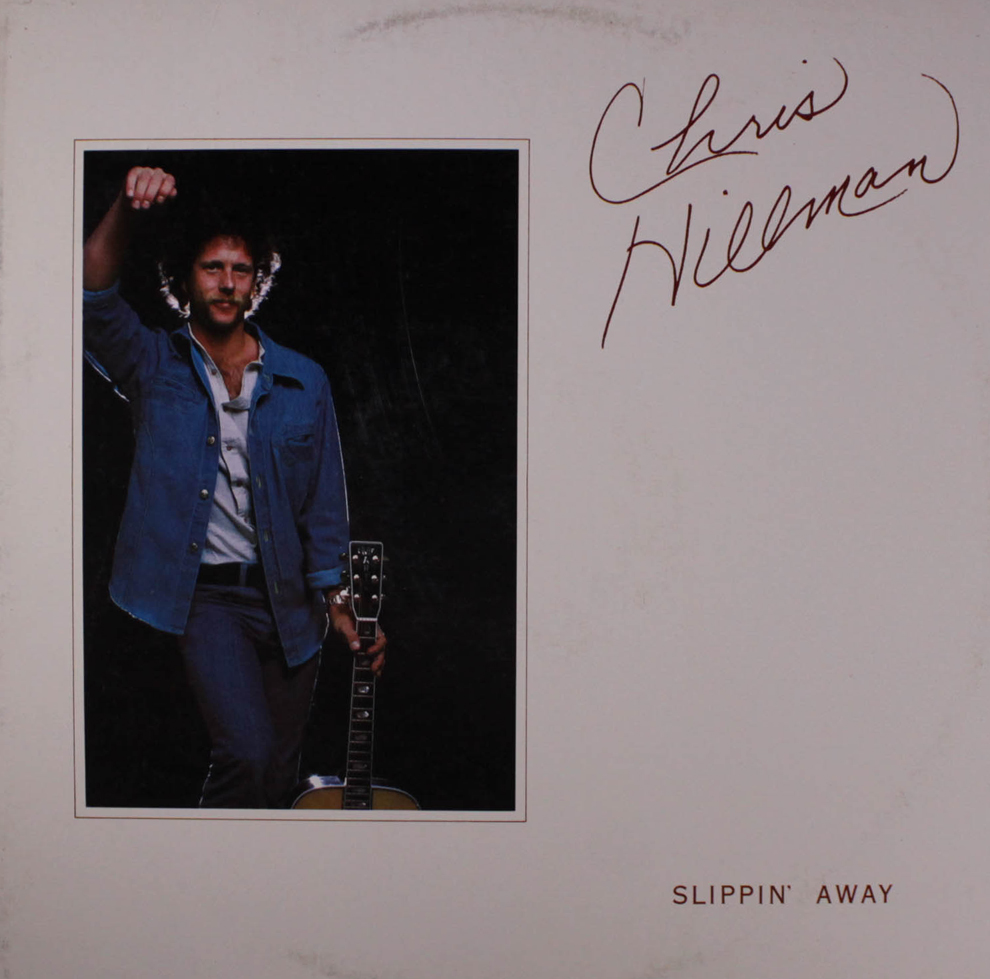
Chris Hillman was a California kid who discovered the high lonesome sound of Appalachian bluegrass thousands of miles from the mountains that gave it birth. Born in Los Angeles on December 4, 1944, and raised in San Diego County, Hillman was still a teenager when he traded the familiar sounds of Southern California surf culture for a mandolin and the music of Bill Monroe, Flatt and Scruggs, and the Stanley Brothers. By seventeen, he was playing with the Scottsville Squirrel Barkers, a remarkable collection of young pickers that included future Eagles guitarist Bernie Leadon, before graduating to the Golden State Boys and the Hillmen. In 1964, producer Jim Dickson recruited the young bluegrass musician for a fledgling folk-rock outfit that would become the Byrds, despite Hillman having little experience playing electric bass. Within a year, the band had conquered the charts with Bob Dylan's “Mr. Tambourine Man,” helping launch a folk-rock revolution alongside the Beatles and the British Invasion. But beneath the jangling Rickenbackers, soaring harmonies, and Hollywood celebrity, Hillman remained a country boy at heart. His compositions “Time Between” and “The Girl with No Name,” along with the Byrds' recording of “Old John Robertson,” were already smuggling country music into rock & roll before anyone thought to give the resulting hybrid a name. By late 1967, David Crosby and drummer Michael Clarke were gone, the original Byrds were coming apart, and Hillman was restless. He had helped invent folk rock, but the music that first captured his imagination was calling him back.
Nearly three thousand miles away, Ingram Cecil Connor III had been born into a world of Southern privilege, family tragedy, and musical contradictions. Born in Winter Haven, Florida, on November 5, 1946, the boy who would become Gram Parsons grew up between Florida and Georgia, surrounded by citrus wealth, Southern aristocracy, and the increasingly destructive alcoholism that haunted his family. His father, Ingram Connor II, died by suicide in 1958, and his mother, Avis, subsequently married Robert Parsons, whose surname Gram adopted. As a child, he reportedly witnessed Elvis Presley perform in Waycross, Georgia, an encounter that helped ignite a fascination with the explosive possibilities of rock & roll. The Kingston Trio, the Everly Brothers, and the folk revival soon entered the picture, and by his teens Gram was performing in a succession of bands, including the Pacers and the Shilos, absorbing everything from Southern gospel to contemporary folk. His mother's death in 1965, just as he was graduating from high school, added another devastating chapter to an already troubled family history. That autumn he arrived at Harvard University, where Cambridge's thriving folk scene offered a different kind of education. Parsons increasingly gravitated toward the emotional directness of traditional country music, particularly the records of Merle Haggard and Buck Owens, whose working-class narratives must have seemed a world removed from his own privileged upbringing. Harvard didn't last, but the music did. With the International Submarine Band, Parsons abandoned the folk purism of his earlier years and began experimenting with a country-rock synthesis that would eventually become his life's obsession. By 1967, the band had relocated to Los Angeles, where Parsons found himself in the same sprawling musical landscape inhabited by the Byrds, the Buffalo Springfield, and an entire generation of musicians dismantling the boundaries between American musical traditions. He was twenty-one years old, ambitious, restless, and convinced that country music belonged in the future of rock & roll.
And so, sometime in late 1967 or early 1968, two young musicians whose lives had followed wildly different trajectories found themselves standing in line at a bank in Beverly Hills. Chris Hillman was twenty-three, a founding member of one of America's most influential rock bands, a seasoned bluegrass instrumentalist who had already helped reshape popular music. Gram Parsons was twenty-one, a Southern expatriate with a troubled past, a fledgling recording career, and an almost evangelical enthusiasm for country music. Accounts of their meeting differ slightly in chronology, but the essential story survives in Hillman's own recollections: the two struck up a conversation, discovered their mutual affection for traditional country, and recognized something familiar in one another. They even looked the part, two long-haired young men whose clothes suggested that Nashville and Sunset Boulevard might not be as far apart as the record industry imagined. Hillman invited Parsons to a Byrds rehearsal that evening. Gram arrived carrying two original songs, “Hickory Wind” and “One Hundred Years From Now,” compositions that spoke directly to the musical territory Hillman had been exploring for years. Neither man had invented the idea of combining country with rock, folk, blues, and soul. Those traditions had been crossing paths long before either was born. But each had arrived at this moment carrying a different piece of the American musical puzzle: Hillman through the discipline of bluegrass and the commercial revolution of folk rock, Parsons through Southern roots, folk music, honky-tonk, and an appetite for breaking every rule in the book. Two roads had finally crossed, not in a recording studio, a Nashville honky-tonk, or beneath the lights of the Sunset Strip, but in the most ordinary of American institutions. A bank. And by the time they walked out, the future of American music had taken an extraordinary turn.
Follow the story
Chris Hillman | GRAM: The Gram Parsons Story
MOJO: Gram Parsons Remembered | Rock Cellar: McGuinn & Hillman