Updated 2026
Reverb and a Zip Code
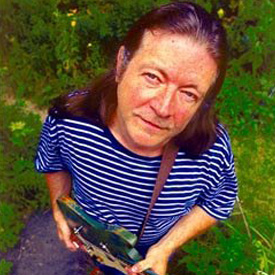
Ray Mason was born in Holyoke, Massachusetts, in September 1950 and grew up surrounded by records. Sam Cooke, the Everly Brothers and Duane Eddy entered early; an electric guitar followed. In 1964, his grandmother bought him a Silvertone as an eighth-grade graduation present. That guitar became more than an instrument. Decades of rooms, records and road miles turned it into one of the most recognizable objects in Western Massachusetts music.
Mason started his first band in 1966 and began writing songs the following year. The Gladiators led to the Buck Rogers Movement and a continuing education in regional rock. Later work included the Yankee Rhythm Band, Rohlehr, Groves & Colby, the Chills and sessions at Long View Farm before the Ray Mason Band emerged in 1982.
The Ray Mason Band developed its own durable language: compact songs, melodic economy, rhythm-and-blues memory, guitar jangle and lyrics alert to ordinary life. Longtime members Frank Marsh, Tom Shea and Stephen Desaulniers helped make the group an institution without turning it into a museum piece. Mason simultaneously built another catalog with Jim Armenti in the Lonesome Brothers and continued working alone under his own name.
The 1999 Ray Mason Band album Castanets placed Mason and the Silvertone on its cover and captured what the band called timeless roots-rocking pop. Around this period, “Harold’s Been Feeling Down” entered the One Way ecosystem. It appears as track nine on Dig the Boston Underground, following Natalie Flanagan and preceding Robin Vaughan’s Velveteen - a Western Massachusetts voice positioned inside the larger Boston network.
Mason never stopped at the compilation’s historical moment. Solo and band releases accumulated alongside a performance schedule that frequently exceeded one hundred shows a year. Is There Wiggle Room? arrived in 2023, followed by his fifteenth solo album, You Never Lose That Grip, in 2024. In January 2026 he released Glaze, recorded with Ken Maiuri and Keith Levreault and built without guitars other than Mason’s bass.
That latest turn clarifies the whole career. The Silvertone remains central, but it is not a cage. Ray Mason’s real tradition is motion: another song, another configuration, another room and another record. One Way preserves a point on that road rather than pretending the road ended there.