The 12 Stations
of the Rat
A cultural pilgrimage through Boston’s punk-rock Camelot.
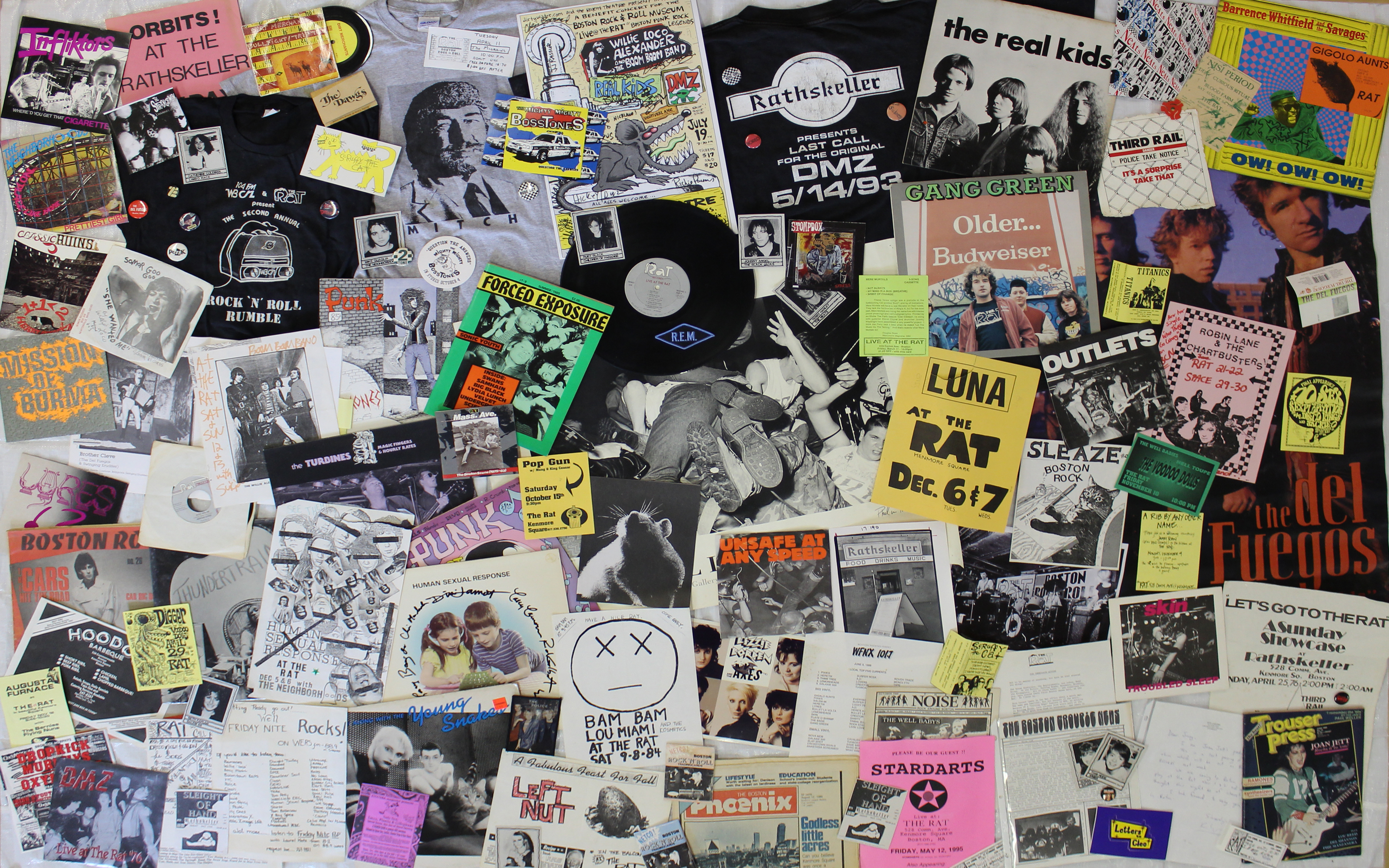
The 12 Stations of the Rat reconstructs Boston’s legendary Rathskeller through twelve points of contact: the musicians, recordings, artifacts, photographs, workers, personalities and memories that made the basement beneath the Hotel Buckminster the headquarters of Boston’s punk and new-wave revolution.
Curated from the David Bieber Archives, the exhibition follows the Rat from its 1974 transformation out of a college bar through Mickey Clean, Willie Alexander, Live at the Rat, the Cars, Hoodoo Barbecue, the women who ran the room, Mitch, Mr. Butch and the club’s final song in 1997.
The Rat is gone. The evidence remains.
The Rathskeller
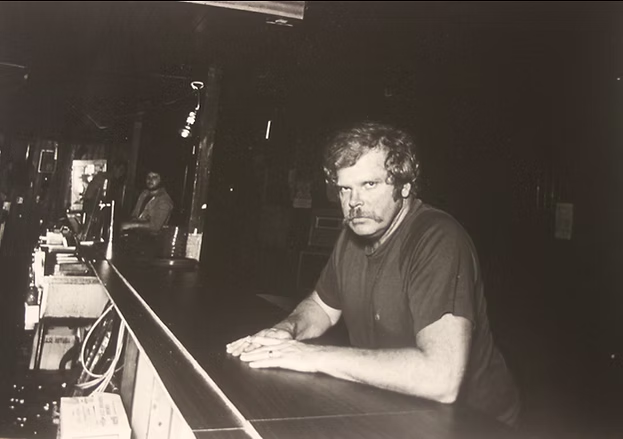
“Boston’s most intense underground dwelling—that subterranean cavern of lurid vice and glamour known as the Rat.”
— Oedipus, Live at the Rat, September 1976
In 1974, Kenmore Square doorman Jimmy Harold got his hooks into a real-estate deal that transformed the 260-seat college bar TJ’s into the Rathskeller. The basement club became Boston headquarters for the punk and new-wave revolution, setting the stage for legendary international, national and local performances.
The Rat became synonymous with urban punk and its universal elements of style: safety pins, stale beer, vomit, revolting latrines and complete commitment.
Mickey Clean
& The Mezz
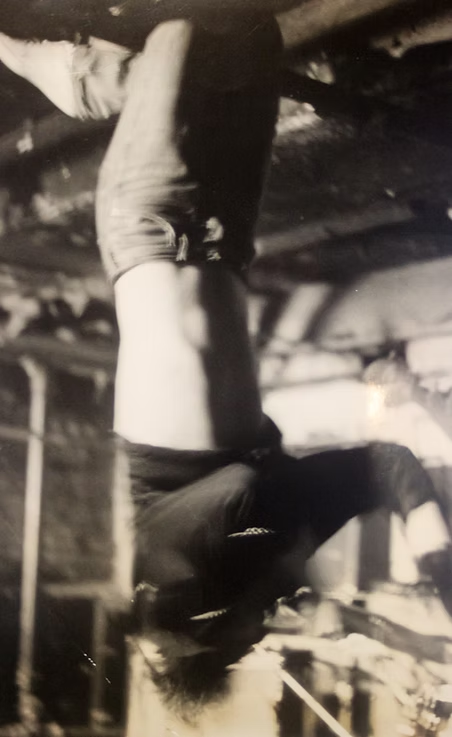
“I got a fucking band. They’re so bad you gotta see ’em.”
— Mickey Clean
“He was so horrible, but he was entertaining and people would come in to see this. I’m telling you, it was like a revelation. I was like, ‘That’s it!’ It was one hundred percent commitment at that point. I was going to live and die by it. I made up my mind right at that moment.”
— Jimmy Harold, Boston Groupie News, September 17, 2006
The viable alternative to Top 40 show bands and neighborhood discotheques was the small collection of acts writing original music. An unexpected opportunity fell into Jimmy Harold’s lap in the form of the Mezz.
Mickey Clean was surrounded by a cast of characters that included manager Helanie Saad, future Modern Lover Asa Brebner, spin-off act the Mindless Fucks and Stephan “Swine” Baerenwald. Swine’s clove cigarettes would waft across the Rat during the coming years while he served as house soundman—the first in a lineage of engineers that included Granny, Bonehead and George Dineen.
Willie Loco Alexander
The Godfather
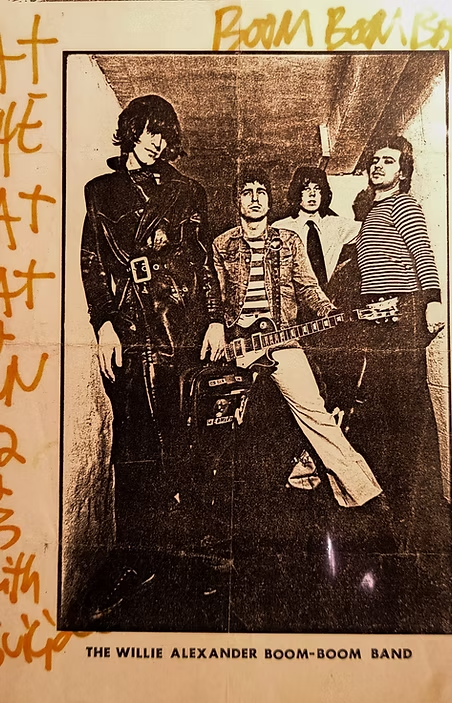
Willie Alexander’s “Kerouac/Mass Ave.” single returned to the do-it-yourself practices of a foregone era: the independently released record. The punk and new-wave movement was, in many ways, a rebellion against the corporatization of the music industry.
Former rebels WBCN and the Boston Phoenix had become commercial institutions, leaving a void for new underground media built from Xeroxed fanzines, independent records and college radio. “Mass Ave.” managed to thrive in both worlds.
Willie drew upon his earlier experience with the Boston garage band the Lost—which had played the same room a decade before it became the Rat—and found inspiration in 1960s girl groups, 1950s rebel Gene Vincent, antiheroes Sky Saxon and Roky Erickson, and his time performing with the Velvet Underground during its twilight years.
This became the recipe for the soon-to-be best-selling punk-rock cookbook.
Looking Like
a Bimbo

“One hand on my pocket. One hand on my bag. In my rock & roll drag. I’m a counterfeit fag. Looking like a bimbo. Looking like a John. Looking like John Morse, of course. Looking like John Kelly. Looking like John Macey in his elevator shoes.”
— Willie Loco Alexander, “Looking Like a Bimbo”
The Rolling Stones and the New York Dolls inspired young rockers to apply their sisters’ Maybelline and slip into layers of chiffon. In the calm before the punk storm, the remnants of glitter and glam were still shimmering.
The look was the yin to the rough-and-tumble, greasy grit emanating from garages and basements throughout the Boston suburbs. Reddy Teddy, Fox Pass and Thundertrain were among the last degenerate alternatives to the sanitized teen idols of the mid-1970s.
Oedipus
Live at the Rat

“Meanwhile, the Rat’s Jimmy Harold began importing New York bands from Hilly Kristal and sending Boston’s finest—who all rehearsed at Reddy Teddy’s Kilsyth Manor for fifteen dollars a week—down to CBGB. When Kristal released the Live at CBGB’s album, Jim Harold had a light bulb appear above his head: Live at the Rat.”
— Charles W. White III, The History of Boston Rock & Roll
From September 27 through September 29, 1976, a mobile recording unit sat at the Rat’s curb and captured sets from ten of Boston’s finest acts. The lines wrapped around Kenmore Square.
WBCN disc jockey Maxanne Sartori, who had championed Willie Alexander at 50,000 watts, and WTBS disc jockey Oedipus, who christened America’s first punk show, The Demi-Monde, with “Mass Ave.,” were soon barraged with independent singles and local demo tapes seeking airplay.
Rat Records released singles by Third Rail, Buck and the Nervous Eaters as the landmark double album Live at the Rat gained international recognition.
The First Wave

“For a year or so, punk has been flourishing in the seediest rock joints—a Bowery bar called CBGB’s in New York, a dingy cavern called the Roxy in London, and the Rat in Boston. There, shock is chic.”
— “Anthems of the Blank Generation,” Time, July 1977
They were the disciples of Lou Reed and the bastard children of the Modern Lovers. The first generation of Boston punks became a collective antenna receiving signals from New York’s Bowery through Patti Smith and the Ramones. One final nudge pushed everything over the ledge: the arrival of Johnny Rotten and his mates from across the Atlantic.
The songs forever enshrined in this underground include the Real Kids’ “All Kindsa Girls,” the Nervous Eaters’ “Loretta,” DMZ’s “The Boy From Nowhere” and the Tracks’ “Brakes on You.”
The Cars

“When they came back as the Cars, even at sound check, you knew these guys were going to be good. It was like, ‘Oh, wow. This was really different.’ They had something no one else had.”
— Jimmy Harold
Ric Ocasek and Benjamin Orr were wash-ashores from Cleveland, forever yearning to be accepted by Boston’s musical cliques. One of their many incarnations, Cap’n Swing, was an early attempt to gain traction. WBCN’s Maxanne Sartori quickly placed her on-air influence behind them as the band shape-shifted into the new-wave phenomenon known as the Cars.
Ocasek’s love for the Boston scene proved sincere. He used his newfound fame to direct attention toward musicians he had leapfrogged, returning as a producer for Richard Nolan and Third Rail, Peter Dayton of La Peste, the Nervous Eaters and Jonathan Richman, as well as the nationally successful Weezer.
The Second Wave

“The Rock ’n’ Roll Rumble was held at the Rathskeller in Kenmore Square for its first two years and was often referred to as the Rumble at the Rat.”
In the aftermath of the Cars’ ascent into the Top 40, major labels signed Willie Alexander and the Boom Boom Band, Tom Dickie and the Desires, Susan, DMZ, the Rings, Robin Lane and the Chartbusters, the Atlantics, the Stompers and Johanna Wild.
Meanwhile, the underground continued to percolate with La Peste, Thrills, Unnatural Axe, the Neighborhoods and the Maps.
The attention directed toward Boston supplied enough energy to launch WBCN’s Rock ’n’ Roll Rumble. WCOZ soon entered the competitive media landscape with its own punk and new-wave promotions and locally focused compilations.
Hoodoo Barbecue
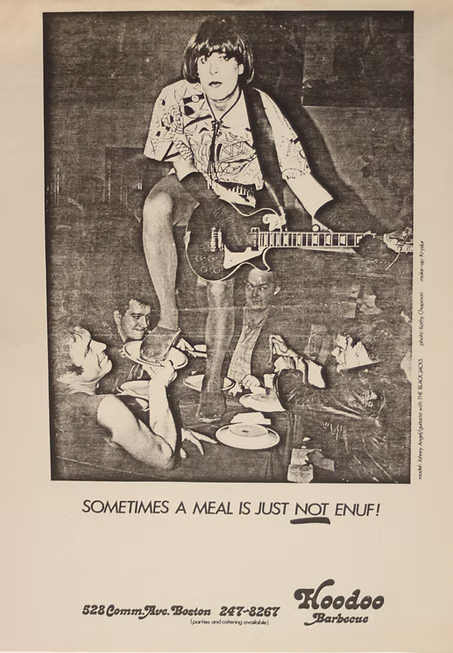
“Business was slow through the winter, but in the spring we were ‘rediscovered’ by the Boston Phoenix, and in the summer Esquire named us one of the best 100 new restaurants in America. Word was out, and I needed to hire some help.”
— James Ryan
For those who knew, there was no secret. For everyone else, Hoodoo Barbecue was Boston’s best-kept secret. The restaurant’s sauce recipe may have gone to the grave with James Ryan.
For much of the 1980s, Ryan provided the sustenance that kept struggling musicians and artists alive. He fed local regulars, weary traveling bands and, of course, Mr. Butch. Ryan described himself as a Marxist fry cook.
The kitchen staff included members of the Neats, the Del Fuegos and Ryan’s own band, the Swinging Erudites. The waitresses ruled the room with the sass ordinarily found at truck stops across the country.
Ryan was evicted in 1986 when Jimmy Harold introduced his own culinary agenda at the Rat. A 1988 Boston Herald article remembered Hoodoo as the preferred pig-out joint for members of Aerosmith, Hall & Oates, Cyndi Lauper and former Celtics coach K.C. Jones.
The Women

The Rathskeller’s booking lineage included men such as Alan Rotberg. By the 1980s, however, many of the people behind the curtain—the people making everything happen—were women. They were talent buyers, cocktail waitresses, cooks, managers, writers and den mothers for the orphans of the Boston scene.
Kathei “Candy” Logue managed the Outlets, expanded music to the Rat’s balcony and published the fanzine Killer Children. Jane “Crass” Richter worked as an agent and wrote gossip columns with Candy.
Lilli Dennison moved from Hoodoo waitress to managing the Del Fuegos, Scruffy the Cat and the Titanics. Julie Farman began as a Rat cocktail waitress and went on to manage Vitamin, 007, the Neats and the Lyres.
Lois McGee managed Left Nut and championed local acts including the Bags. Joyce Linehan managed the Lemonheads and Prime Movers. Rachel Tanzer became the last of the Rat’s great women booking agents.
Doormen, Bouncers
& Mr. Butch

“In late 1977, Jimmy stepped back and faded into the background and cleverly hired his jazz-musician friend Mitch Cerullo to work as doorman at the top of the staircase leading to the underground showroom. Mitch became the de facto face of the Rat.”
— Mach Bell
The “Rat Bouncers Suck” movement grew from a Mission of Burma and Proletariat show turned upside down when Rat security became heavy-handed with stage divers. Early hardcore shows migrated across town after the club established a zero-tolerance policy toward moshing.
Mitch Cerullo exuded an aura resembling Darth Vader. His large frame was accompanied by an electronic voice box inherited after a bout with throat cancer. Those who knew him saw his teddy-bear side, but no one wanted to receive one of his chicken chokes. He became a cult star when The Noise publisher T. Max began printing Mitch T-shirts.
Nearly everyone who passed beneath the Citgo sign during the Rat’s heyday has a Mr. Butch story. The six-foot-plus, dreadlocked street musician declared himself King of Kenmore Square. Hoodoo fed him, and bands provided their vans and lofts during the coldest winter nights.
He was always good for one benediction: “Have yourself an excellent day.” When Mr. Butch died, mourners shut down Harvard Avenue in Allston for his parade.
Closing
Gang Green: In Memoriam
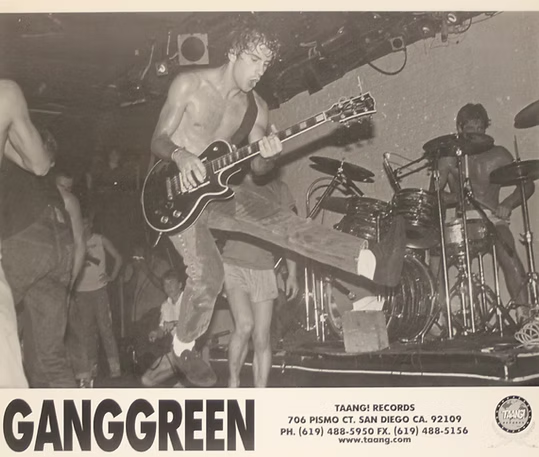
“The last night wasn’t very special, I have to say. It felt like something that had already ended. The Rat was really the punk-rock Camelot—it fell from grace, but you kept hoping for a resurrection. Maybe someday it will get good again.”
— Dennis McCarthy
“At least the club received a fitting sendoff from Gang Green, whose anthem ‘Alcohol’ can go down in history as the last song played there.”
— Brett Milano, Boston Phoenix, November 26, 1997
The Rat closed on November 15, 1997. The basement disappeared, but its musicians, workers, recordings, photographs, handbills, clothing, gossip and accumulated mythology entered Boston’s cultural memory.
The club is gone. The twelve stations remain.
The Rat Reunion
Celebrating fifty years of the Rathskeller.
Twenty-seven years after the Rat closed, its community gathered again at Bellforge Arts Center for a fiftieth-anniversary reunion hosted by Oedipus. Nervous Eaters, the Dogmatics and Tree performed while musicians, workers, regulars and survivors exchanged stories from Boston’s punk-rock Camelot.
The History of the Rat, curated from the David Bieber Archives, returned the club’s photographs, handbills, publications, recordings and surviving evidence to public view. The exhibition demonstrated that the Rat was never merely a vanished nightclub. It remained a community capable of recognizing itself through the objects it left behind.
“The Rat was a special place in time. More than a club, a state of mind. When a group of amorphous outcasts created a community centered around an underground music that became our soundtrack. A scene never to be duplicated. A streetlight spotlight demi-monde.”
— Oedipus
The reunion supplied the working model for The 12 Stations of the Rat: archival evidence activated through exhibition, music, testimony, merchandise and the physical reunion of the culture that created it.
Made in Boston
The 12 Stations of the Rat is an online and brick-and-mortar exhibition curated from the David Bieber Archives as part of Boston 400 and its continuing investigation into the people, places, objects and cultural forces that made Boston.