
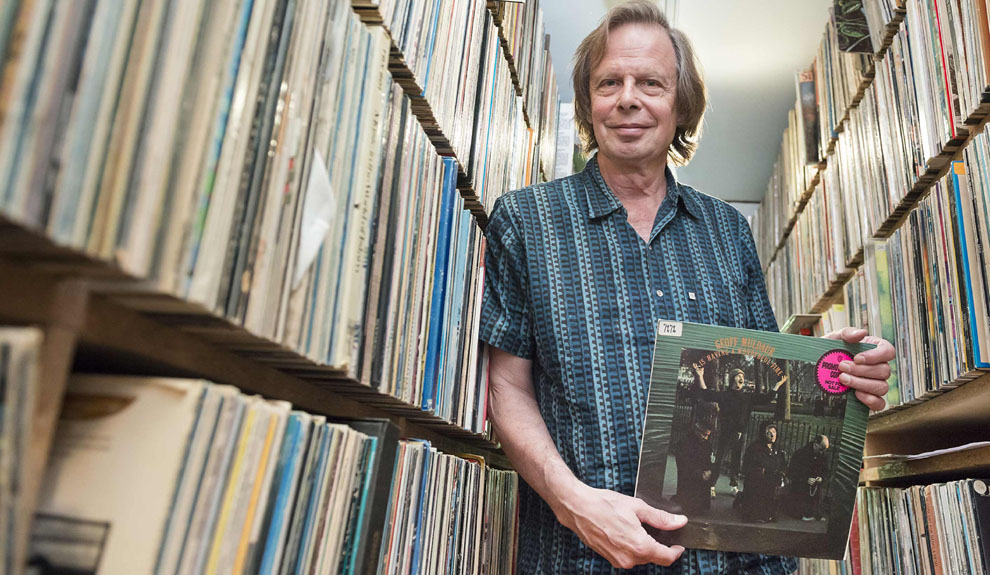
JOE BOYD
(1942 - )
MUSIC ::: PRODUCER ::: BOSTON BABYLON
The Missing Link
Some people become legends. Others recognize them before almost anyone else does.
For more than six decades, producer, writer, and cultural impresario Joe Boyd has quietly stood at the crossroads of modern music. His career stretches from the Cambridge folk revival and the 1965 Newport Folk Festival to London's psychedelic underground, the emergence of British folk-rock, and the global traditions that would later become known as world music. Again and again, Boyd found himself in the right place—not by accident, but because he possessed an uncommon ability to recognize extraordinary artists before the rest of the world caught up.
His résumé is remarkable, but it only hints at the larger story. Boyd supervised production at the Newport Folk Festival when Bob Dylan plugged in his electric guitar, an event that transformed popular music. In London, he managed the UFO Club, where Pink Floyd helped define psychedelic rock, and he produced landmark recordings by Nick Drake, Fairport Convention, the Incredible String Band, Richard and Linda Thompson, and countless others. Later, his work expanded far beyond Britain and America, championing musicians from Africa, Cuba, and around the world while helping Western audiences discover traditions they might otherwise never have encountered.
What makes Joe Boyd such an important figure isn't that he created these movements—he didn't. He stood where they converged. Folk met rock. Britain met America. Tradition met experimentation. Local music became global conversation. Follow Joe Boyd's path and you discover that modern music wasn't built by isolated geniuses working alone. It emerged through a remarkable network of artists, producers, promoters, festivals, clubs, and chance encounters, all influencing one another in ways that continue to shape music today.
For Motherlode, Joe Boyd represents something even larger. He reminds us that history isn't always driven by the people standing in the spotlight. Sometimes it's shaped by the person opening the door, making the introduction, or recognizing brilliance before anyone else can see it. Boyd didn't simply witness history—he spent a lifetime helping remarkable people find one another. In doing so, he became one of modern music's greatest connectors.