Updated 2026
All Kindsa History

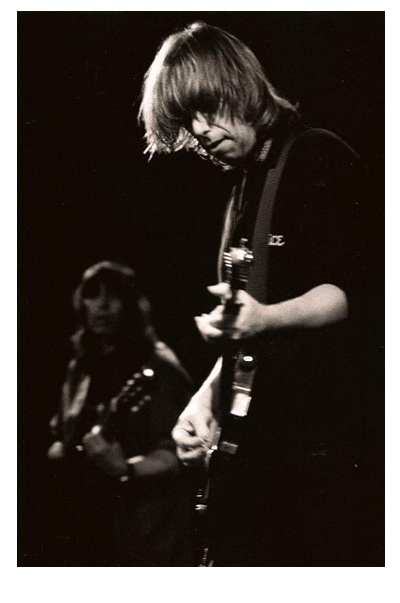
John Felice grew up in Natick next door to Jonathan Richman and entered one of Boston rock’s foundational stories almost before he was old enough to drive. At fifteen he joined the early Modern Lovers, learning rhythm guitar inside the band that would redirect American rock toward blunt feeling, repetition and the street-level possibilities of the Velvet Underground. Felice left before the group recorded its landmark album, but he carried the lesson forward.
He formed the Kids with drummer Howard Ferguson, bassist Allen “Alpo” Paulino and guitarist Billy Borgioli. Richman added the decisive adjective when another group already using the name surfaced: they became the Real Kids. The band appeared on Live at the Rat and released its self-titled debut in 1977. “All Kindsa Girls,” “Taxi Boys,” “Better Be Good” and “My Baby’s Book” turned teenage impatience, girl-group melody, Chuck Berry propulsion and punk economy into a Boston language of their own.
The Real Kids never followed the standard American success story, but their records traveled. Bomp!, Red Star, Norton, New Rose and other labels kept different chapters in circulation, and European audiences embraced the band with a loyalty that outlasted fashion. Felice also worked through the Taxi Boys and several versions of the Real Kids, whose songs continued reaching listeners born long after the first album.
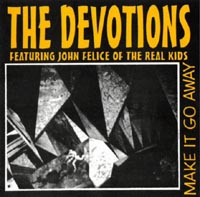
The Devotions represent a distinct Felice side road. With Dana Stewart, Mark McCormick and Paul McCormick, Felice recorded five previously unreleased sides assembled by One Way as Make It Go Away. Kelly Knapp of the Bristols and the Darlings joins Felice on “Looks Like Goodbye.” The recordings preserve the same songwriting nerve outside the Real Kids name.
A separate Devotions chapter began at the Kendall Cafe in 1995 around Felice, Scott Baerenwald, Mirsky and drummer Diane Gately. After eight-track preproduction at Red Curtain Studios in Allston, Steve Wynn produced fifteen songs at Fort Apache in January 1996. The tapes sat for years before the band remixed and mastered them in 2007 for a full-length eventually titled The Devotions. The earlier Red Curtain tape reportedly contains additional songs that never reached the Fort Apache reels—an unresolved archival lead made for Roadkill Revival.
Cheryl Eagan-Donovan’s 2003 documentary All Kindsa Girls placed Felice and the Real Kids inside the wider problem and glory of Boston bands: groups capable of changing lives without receiving the commercial scale their music deserved. That question runs directly into Boston Babylon. Felice is not merely one subject among many; his path from Richman’s Natick neighborhood through the Rat, the Real Kids, the Devotions and Europe is one of the book’s structural lines.