
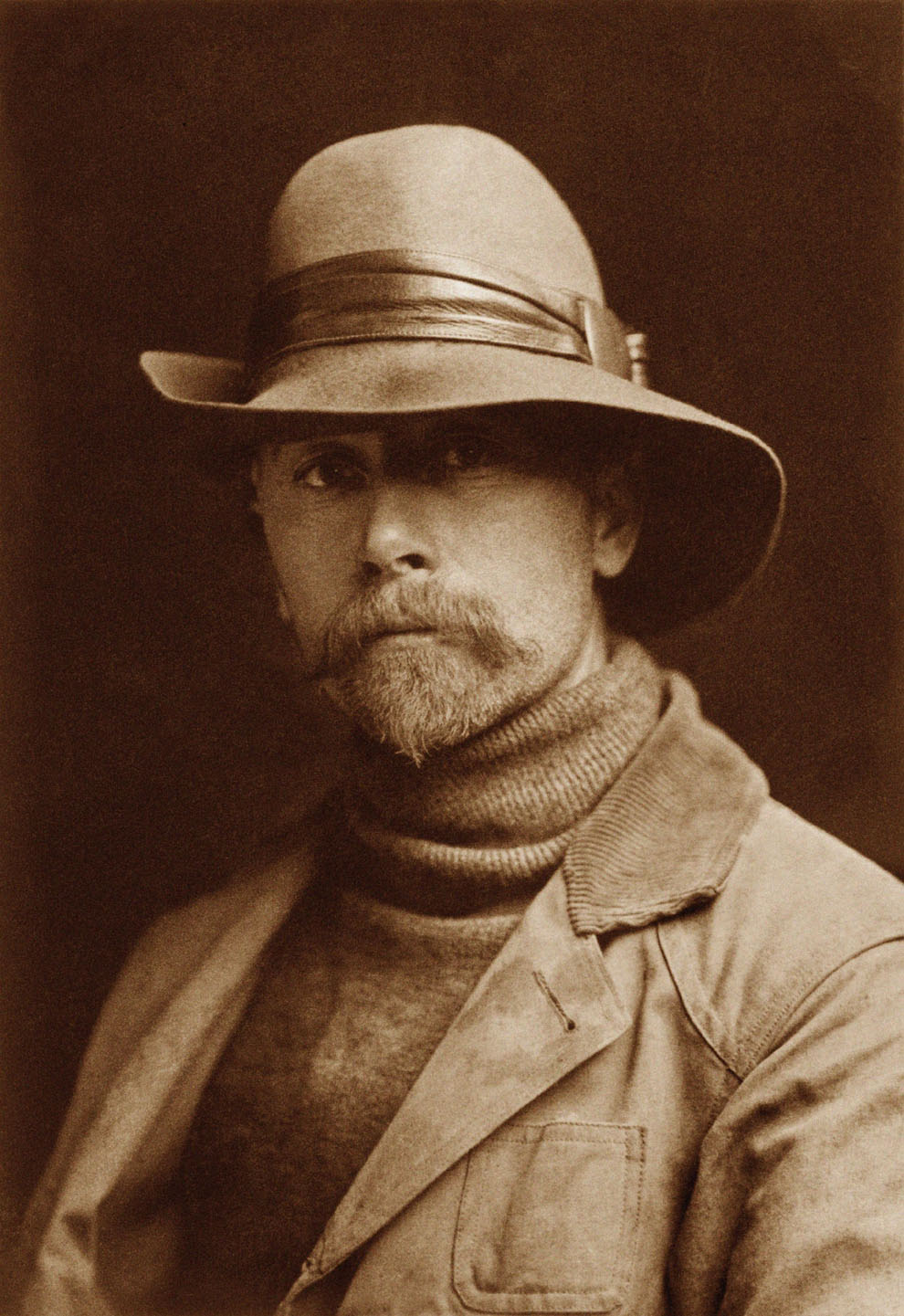
EDWARD SHERIFF CURTIS
(1868 - 1952)
ART ::: PHOTOGRAPHER ::: SONO :::
The Photographer Who Helped Reveal Norwood's Hidden Legacy
Edward S. Curtis is remembered as the photographer behind The North American Indian, one of the most ambitious publishing projects in American history. Over more than thirty years, he traveled throughout North America documenting the lives, languages, traditions, and cultures of Indigenous peoples, producing a monumental twenty-volume work that remains one of the great achievements of photography, ethnography, and bookmaking.
Few readers realize that part of this remarkable project was brought to life in Norwood, Massachusetts.
Beginning with Volume VI, The North American Indian was manufactured by The Plimpton Press, whose skilled printers and craftsmen transformed Curtis's photographs, manuscripts, and illustrations into beautifully produced books destined for libraries, museums, collectors, and universities around the world. The story of Curtis's masterpiece is therefore not only one of exploration and photography—it is also a story of American printing and the extraordinary craftsmanship that flourished in Norwood during the early twentieth century.
Curtis's connection to Norwood is not unique. He is one of many internationally significant authors and artists whose work passed through the town's presses. Writers such as Jack London and Robert Frost also saw important works manufactured here, while companies including Plimpton Press, Norwood Press, and George H. Morrill Company helped establish Norwood as one of America's premier centers of printing, publishing, book manufacturing, and printing ink production. Together they formed an industrial ecosystem whose influence reached far beyond Massachusetts.
Curtis himself remains a fascinating and sometimes controversial figure. His photographs preserve invaluable records of Indigenous communities and represent one of the greatest documentary undertakings ever attempted by a single individual. At the same time, modern scholars recognize that his images were shaped by artistic choices and the assumptions of his era, making them both extraordinary historical documents and compelling works of art.
For SONO, however, Edward S. Curtis tells an even larger story. His masterpiece reminds us that behind every great book stands an army of printers, engravers, binders, papermakers, ink makers, and craftsmen. Their names rarely appeared on the cover, yet their skill helped carry some of the most important works of American literature, photography, and history into the world.
Curtis's photographs were made in the American West.
His masterpiece, in part, was made in Norwood.