SALOMÉ
A forbidden play finds Boston: Oscar Wilde, Aubrey Beardsley and F. Holland Day.
SONO ::: BOOKS ::: ART ::: BOSTON 400
OCTOBER 16, 1854 — Oscar Wilde is born in Dublin, Ireland. Decades later, one of his most provocative works would acquire a Boston imprint and a connection to Norwood.
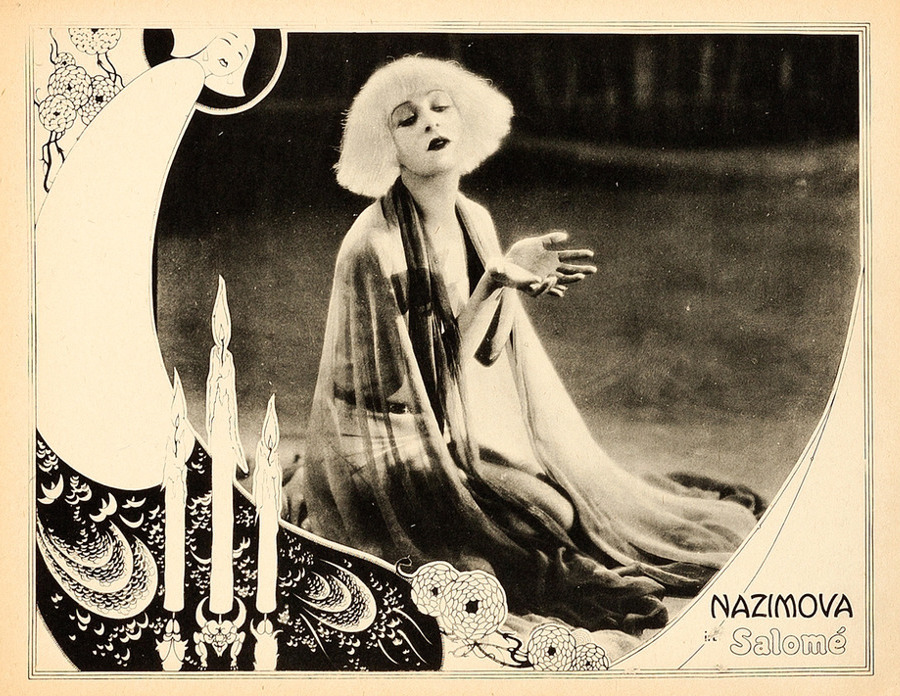
Oscar Wilde’s Salomé reached Boston through a publishing house. Before it became a landmark of theatrical scandal, it was a work struggling to find its way onto a stage. Wilde wrote the one-act tragedy in French in 1891–92, turning the biblical story of John the Baptist’s execution into a drama of desire, rejection and revenge. Salomé wants Jokanaan, Wilde’s John the Baptist. When he rejects her, she demands his severed head as the reward for dancing before Herod. The court becomes a place where appetite commands, power bargains and a promise ends in catastrophe.
A Stage Denied
Sarah Bernhardt intended to perform Salomé in London in 1892. Rehearsals were underway when the Lord Chamberlain stopped the production under the prohibition against presenting biblical characters on the British stage. The distinction mattered: a theatrical ban did not prevent publication. The French text appeared in 1893, followed by an English edition in 1894. Wilde’s drama could travel between covers while its characters remained barred from public performance in Britain.
The play finally premiered in Paris on February 11, 1896, in a production by Aurélien Lugné-Poe, with Lina Munte as Salomé. Wilde was then imprisoned in England, serving his sentence following his 1895 conviction for gross indecency. The premiere belonged to a different chapter from Bernhardt’s abandoned London production. His play had found a stage; its author could not be there.
Two Artists Between Covers
The English edition carried complications of its own. Lord Alfred Douglas’s translation required revision, and the published book omitted his name from the title page while acknowledging him in the dedication. Then came Aubrey Beardsley. His illustrations gave the drama an independent visual force: elaborate ornament, sharp contrasts, ambiguous figures and an erotic imagination that unsettled conventional taste. This was a collaboration with friction. Beardsley’s pictures interpreted and provoked, rather than simply recording the action of Wilde’s text.
A surviving French typescript at the Free Library of Philadelphia offers another glimpse of the work in motion. It contains extensive corrections, including changes in Wilde’s handwriting. Researcher John Cooper highlights the handwritten addition of the “dance of the seven veils” to a stage direction. The library dates the document approximately 1894. It is a surviving record of revision, and a reminder that even an enduring theatrical motif can begin with a few words added to a working page.
The Boston Imprint
The 1894 English edition names Elkin Mathews & John Lane in London and Copeland & Day in Boston. That imprint is the firm evidence of Salomé’s Boston passage. The “Day” was F. Holland Day, the photographer, collector and publisher whose family home was in Norwood. With Herbert Copeland, he helped put Wilde’s words and Beardsley’s images into American circulation. Boston’s role here belongs to the history of the book; the publishing imprint does not establish a local stage production.
The connection extended beyond a single book. Copeland & Day brought out the first ten volumes of The Yellow Book for American readers. Published in thirteen quarterly issues from April 1894 to April 1897, the journal combined literature and visual art under literary editor Henry Harland, with Beardsley directing its art during the first year. The Boston firm helped circulate both Wilde’s illustrated Salomé and the magazine that gave its illustrator a larger stage. Through Day, Norwood was connected to an international publishing enterprise that made adventurous art available to American audiences.
Wilde had already addressed Boston audiences during his 1882 North American tour. On January 31, he delivered The English Renaissance at the Boston Music Hall, later the Orpheum. On June 2, he spoke on The Decorative Arts at the Globe Theatre on Washington Street. A later account quotes Day’s recollection of approaching Wilde at a Boston railway station for an autograph during the tour. The precise station remains unverified. What survives beyond the anecdote is the later publishing connection, recorded in the books themselves.
From Beardsley to the Screen
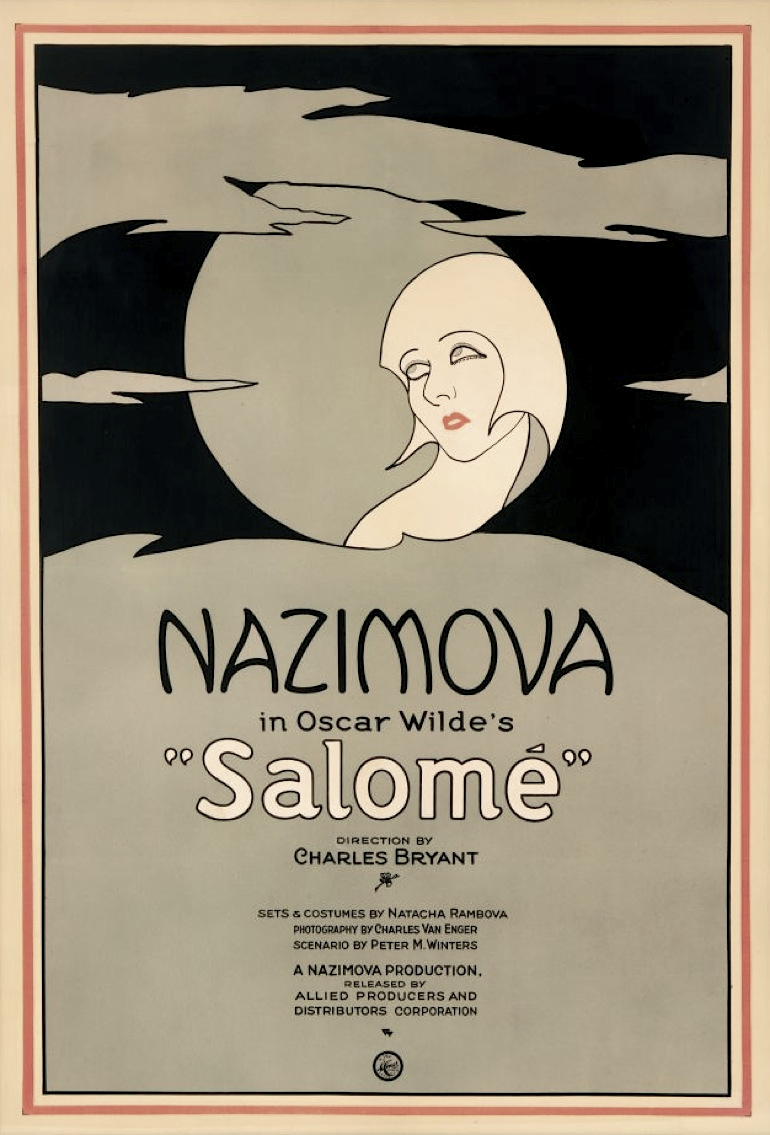
The story continued in another medium. Alla Nazimova’s Salomé, released in 1923, adapted Wilde’s play as a silent film directed by Charles Bryant. Designer Natacha Rambova drew on Beardsley’s illustrations for its sets and costumes. The imagery that had accompanied Wilde’s words in the 1894 edition became a starting point for a cinematic world. The film brought movement, bodies and light to an artistic vocabulary readers had first encountered on paper.
Norwood in the Story
Day’s literary interests also entered his photography. Wilde, Beardsley, Balzac and Keats formed part of the imaginative world described in Estelle Jussim’s biography, Slave to Beauty. In 1898, Day staged photographs of the Crucifixion with himself as Christ at his Norwood estate. Literature, religious imagery and the expressive possibilities of the body occupied the same artistic life. Publishing Salomé belongs within that larger commitment to art capable of disturbing its audience.
For SONO, this history places Norwood within an international exchange of books, pictures and ideas. A Dublin-born writer composes a French tragedy. A London production is stopped. An illustrator gives the drama another life. A Boston firm, cofounded by a Norwood artist, helps bring it to American readers. Decades later, those illustrations help shape a film. The connections survive in title pages, drawings, photographs and moving images, waiting to be followed. Salomé reminds us that the people who publish, print and circulate art help determine what survives—and who gets to encounter it.