
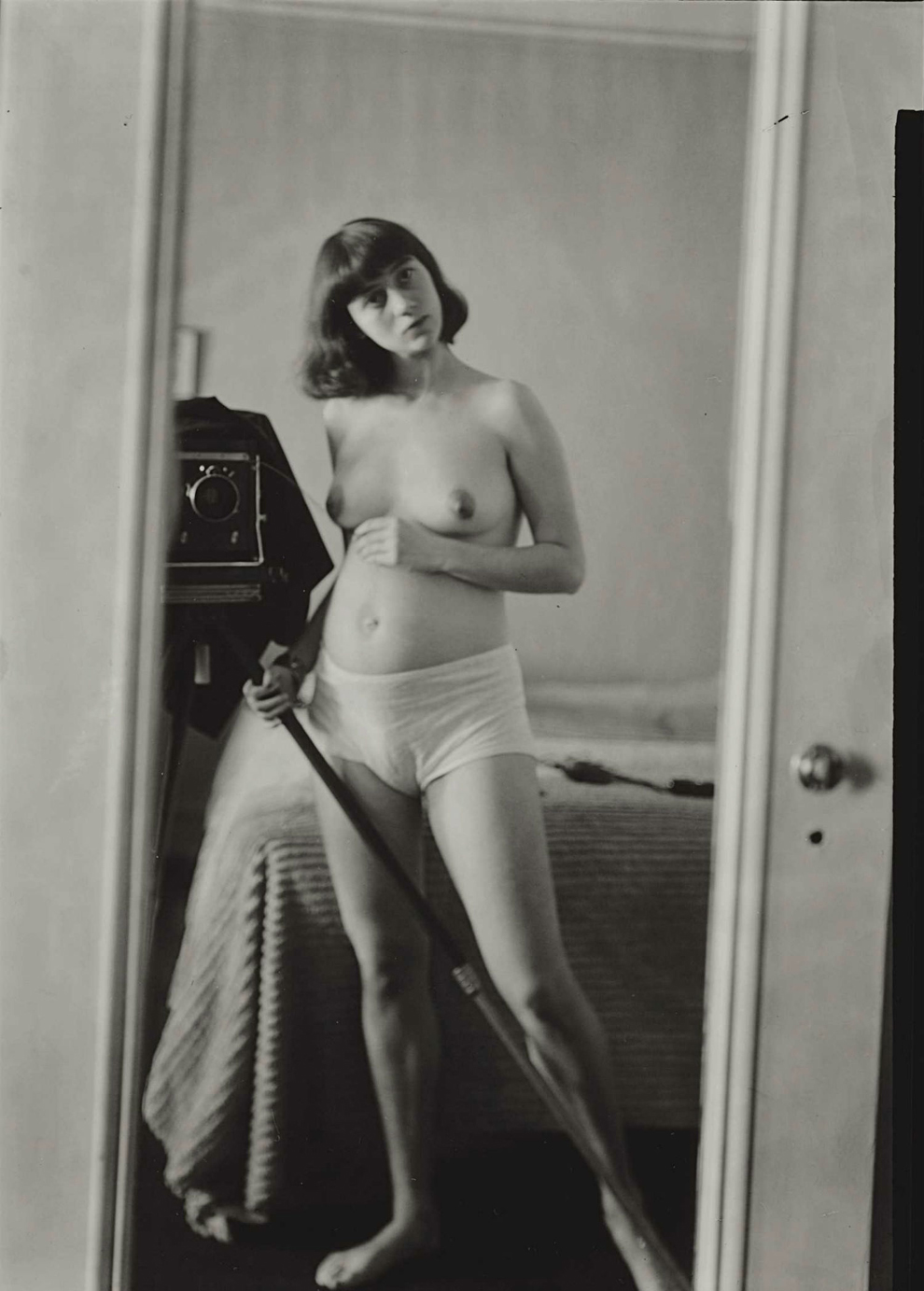
Diane Arbus - Self-portrait.
DIANE ARBUS
(1923 - 1971)
ART ::: PHOTOGRAPHER :::
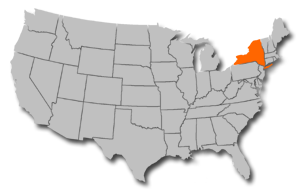
Diane Arbus was born in New York City into the wealthy family that owned Russeks Fifth Avenue, a department store known for luxury clothing and fur — a world she later felt kept her at a distance from ordinary life. She began as a commercial fashion photographer with her husband Allan Arbus, producing images for magazines and advertising, but abandoned that work in search of something less staged. Her direction changed decisively when she studied under photographer Lisette Model at the New School, learning to approach photography as an encounter rather than a performance.
Her work developed in the aftermath of Edward Steichen’s 1955 exhibition The Family of Man, which presented a reassuring, universal portrait of humanity. Arbus moved toward specificity instead. Using a square Rolleiflex camera and direct flash, she photographed performers, families, couples, children, and strangers in apartments, parks, and modest interiors. Influenced by earlier documentary traditions including Berenice Abbott yet distinct from the elegance of contemporary portraiture associated with Richard Avedon, she allowed her subjects to meet the camera directly, without symbolism or narrative protection.
Her photographs helped shift documentary photography from recording events to examining presence. The camera became a site of mutual awareness rather than distant observation, and the viewer’s reaction became part of the image itself. Arbus died in New York in 1971, but her work endures because it asks not why the people she photographed appear unusual, but why they were once expected to remain unseen.