
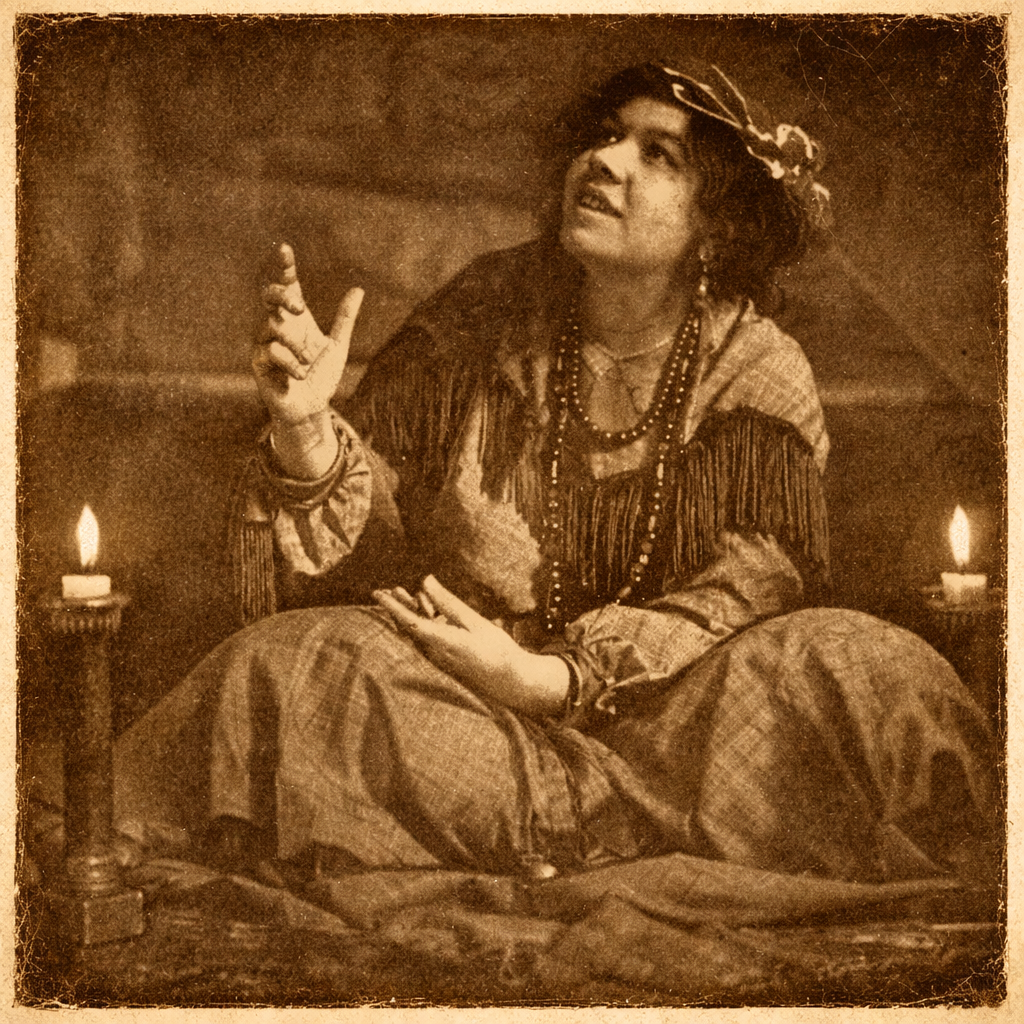
PAMELA COLMAN SMITH

(1878 - 1951)
ART ::: ILLUSTRATOR :::
Pamela Colman Smith was a pixie in the truest sense—small, mercurial, theatrical, and electrically attuned to symbols others could barely see. Born in 1878, she moved fluidly between illustration, theater, folklore, and mysticism. Her most enduring work, the Tarot deck created with Arthur Edward Waite, didn’t simply decorate occult concepts; it animated them. Smith turned abstraction into scene, filling the cards with figures who walk, hesitate, collapse, and celebrate. The Rider–Waite Tarot endured not because it guarded secret knowledge, but because it made meaning feel human.
Smith’s creative world was dense and alive. She studied under Arthur Wesley Dow, absorbing a visual philosophy rooted in rhythm and expressive form. She moved in the same cultural current as William Butler Yeats and Bram Stoker, contributing to a generation fascinated by myth, ritual, and the unseen. As a member of the Hermetic Order of the Golden Dawn, Smith treated symbolism as practice, not ornament. At the same time, her work appeared in Alfred Stieglitz’s 291, placing her squarely within the modernist avant-garde. She stood at a rare intersection—fine art, occult study, and popular culture—quietly shaping all three.
That method—translation rather than instruction—is what gives Smith relevance now. She didn’t explain fate, desire, or risk; she staged them and let the viewer step inside. That approach carries forward into the 2027 Cookie Mueller tarot deck, not as homage but as shared ethic: symbolism as lived experience, mysticism without hierarchy, clarity without reverence. Pamela Colman Smith didn’t invent a system to follow. She created images that could be inhabited. That is why her work still speaks—and why it still teaches without ever raising its voice.