
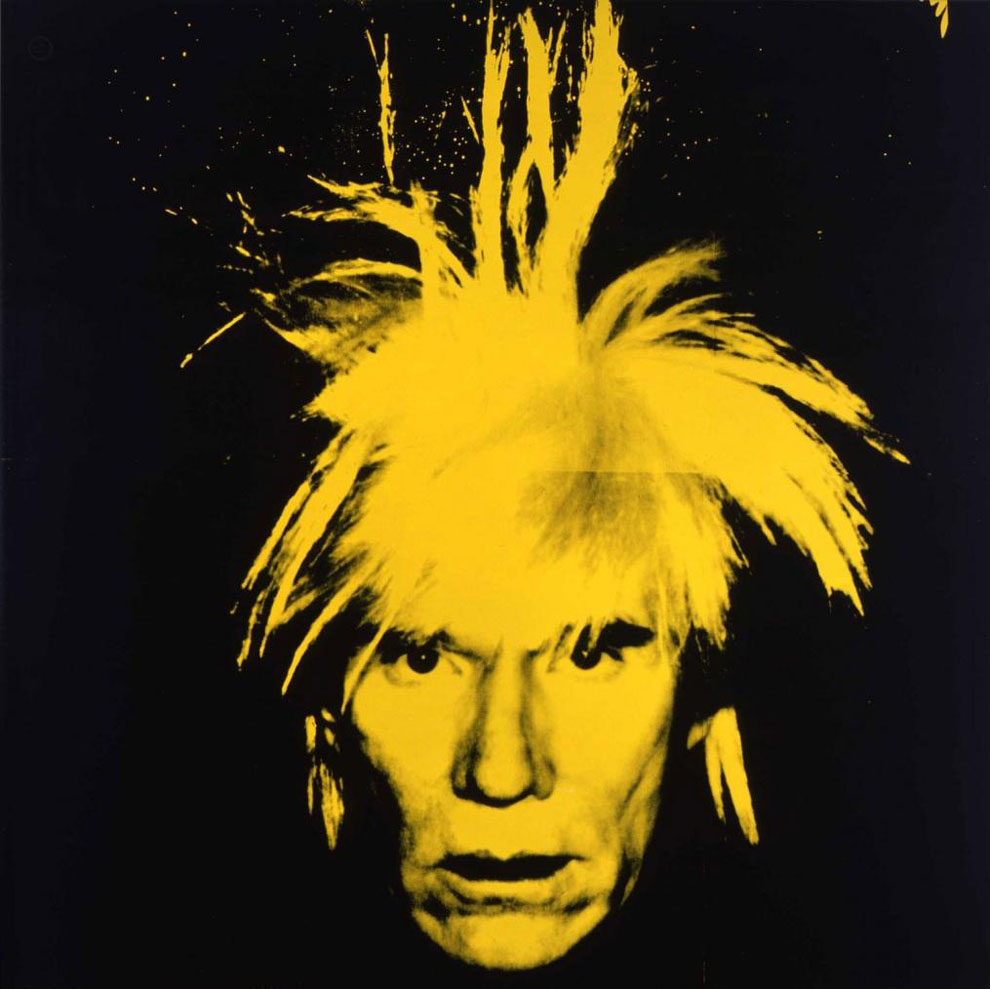
ANDY WARHOL
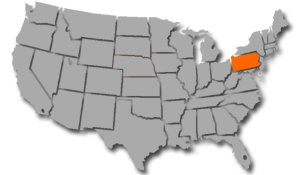
(1928 – 1987)
ART ::: POP ART ::: BOSTON ::: PROVINCETOWN
“In the future, everyone will be world-famous for 15 minutes” rings prophetic in the age of short attention spans. When art went Pop, Warhol was holding the pin.
THE BOSTON–PROVINCETOWN CIRCUIT
Andy Warhol did not merely make art. He made Andy Warhol. Born Andrew Warhola in Pittsburgh in 1928, he graduated from the Carnegie Institute of Technology in 1949, moved to New York and became one of the decade’s most successful commercial illustrators. One of his earliest Boston connections appeared in 1953, when RCA commissioned him to design the seven-inch cover for Arthur Fiedler and the Boston Pops’ Latin Rhythms. His playful mariachi musicians, drawn with the “sprite faces” characteristic of his early work, already contained the future Warhol: music, commerce, reproduction, packaging and an established cultural institution transformed by an unexpected image. During the following decade, he carried those lessons into painting, replacing expressive gestures with soup cans, dollar bills, Coca-Cola bottles, movie stars and electric chairs. Then he transformed himself. The silver wig, pale voice, dark glasses, evasive interviews, Superstars and Factory became components of a public identity fabricated as deliberately as Marilyn Monroe. Before personal branding had a name, Warhol turned self-mythos into an artistic medium.
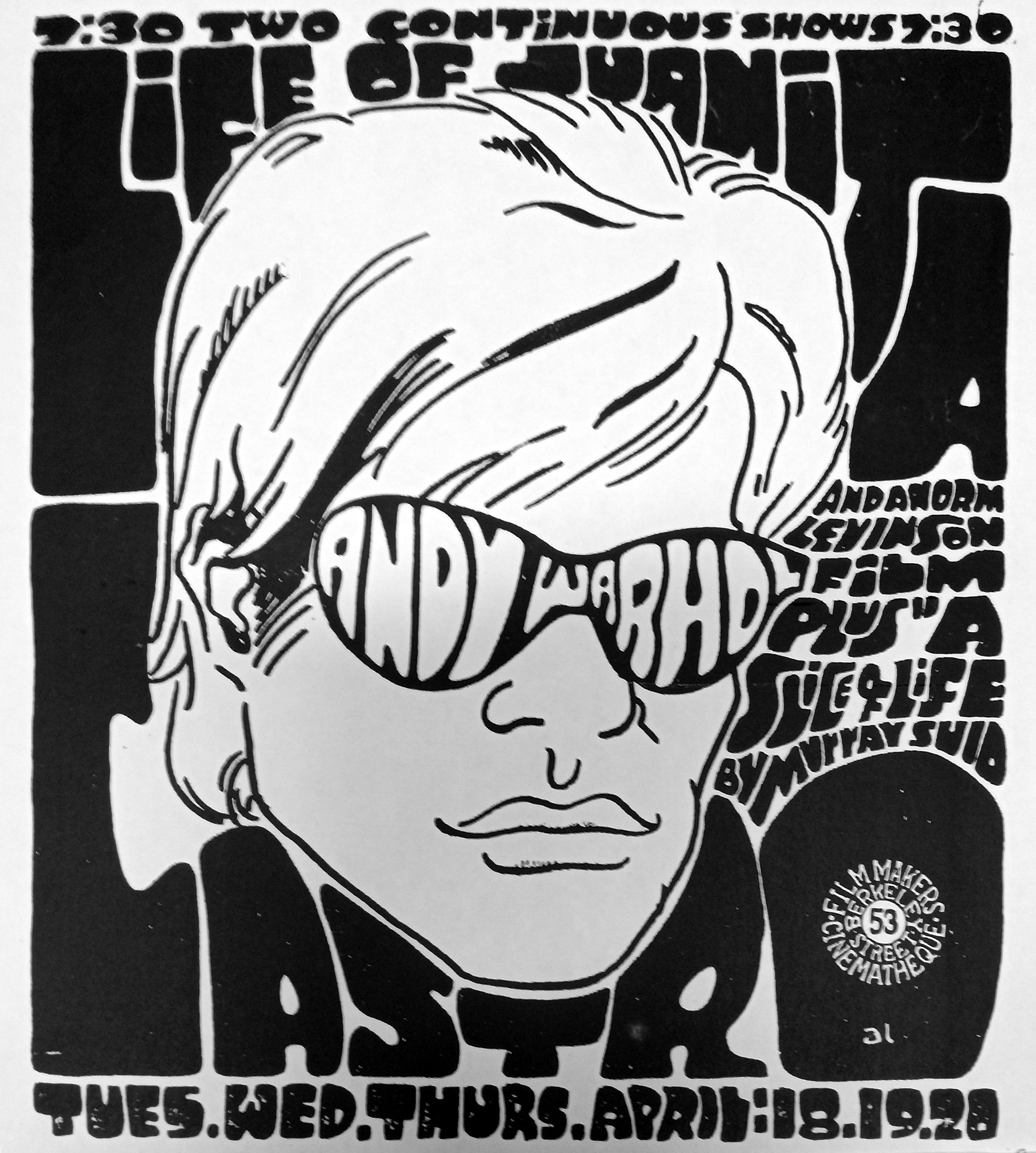
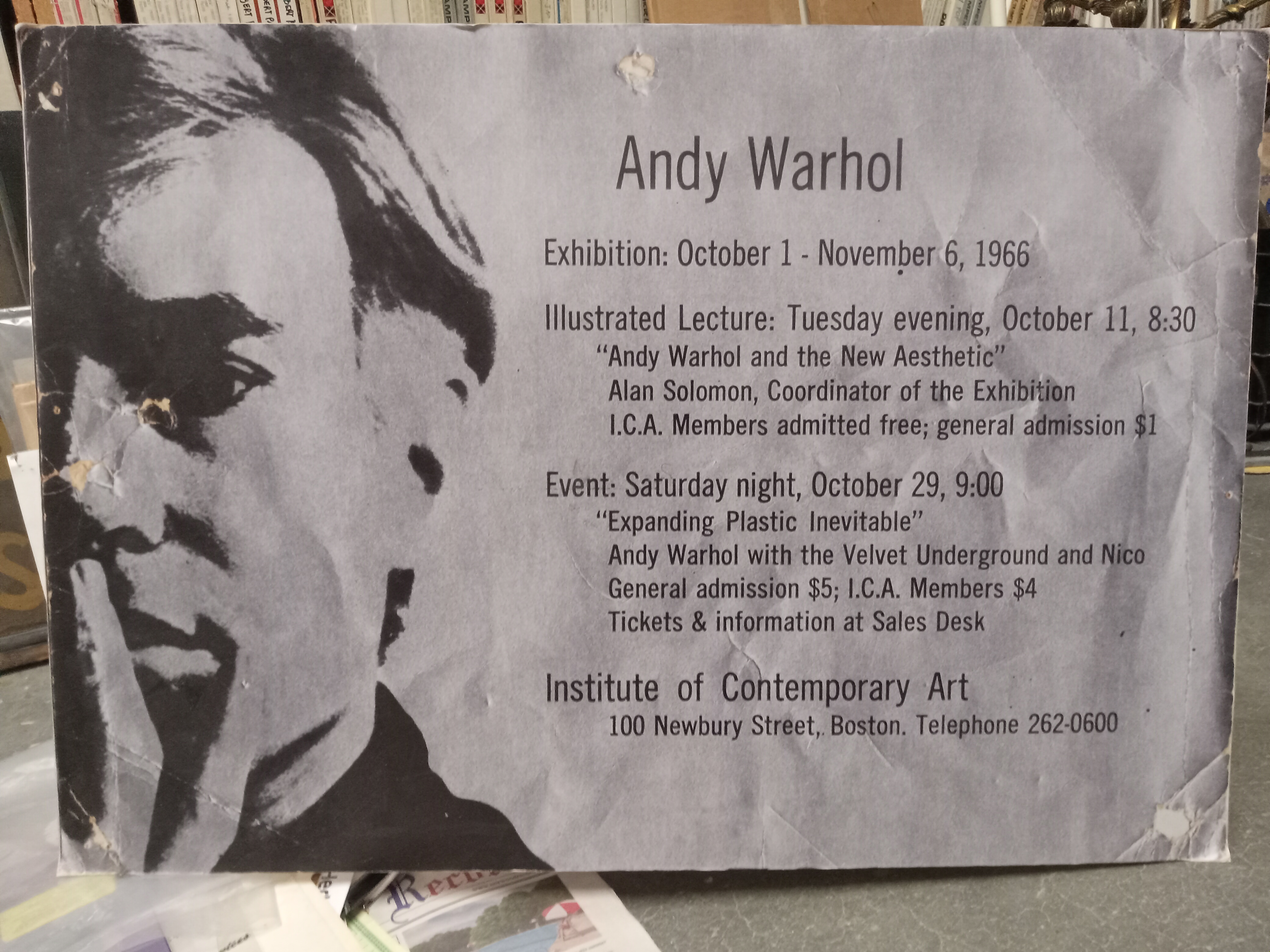
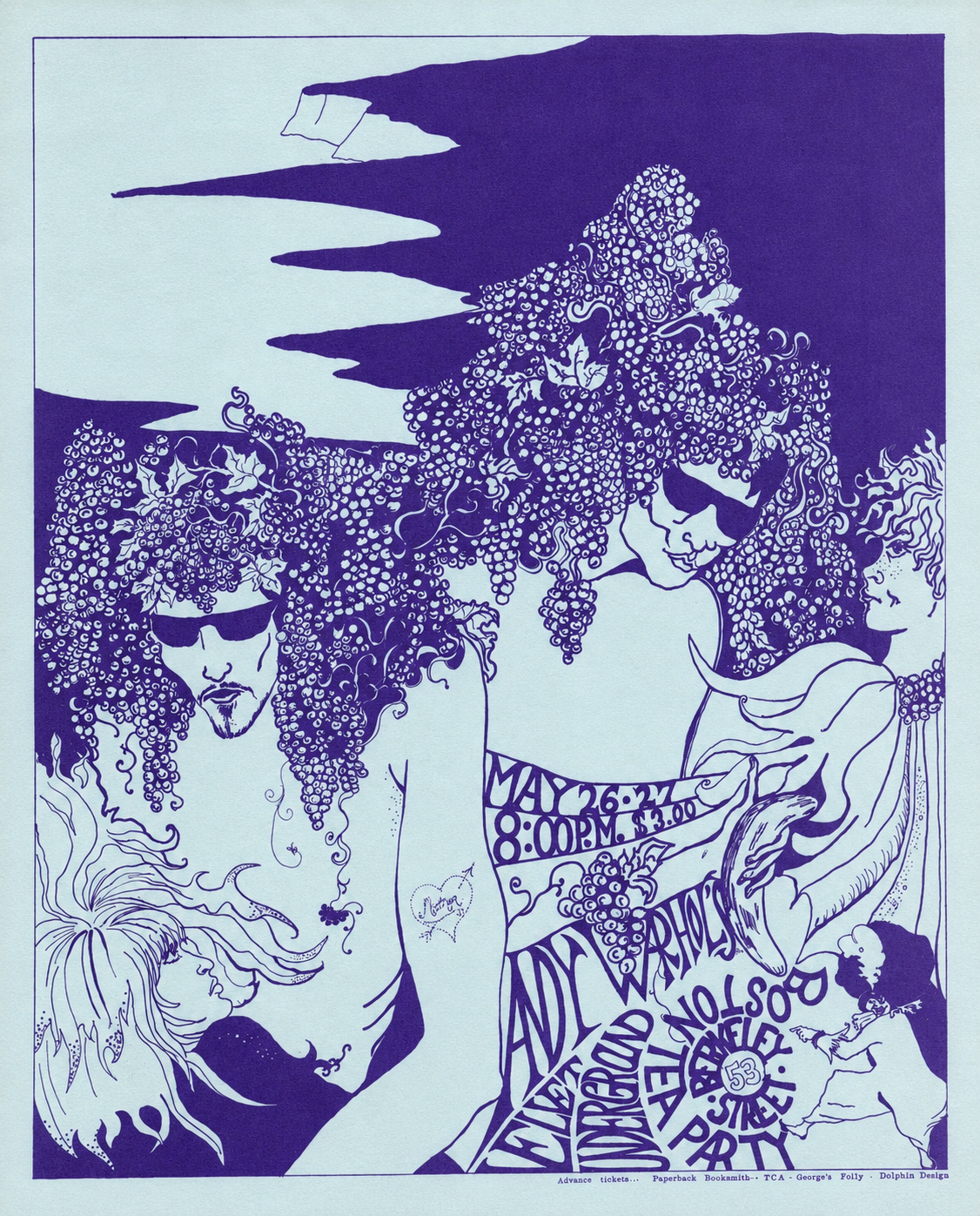
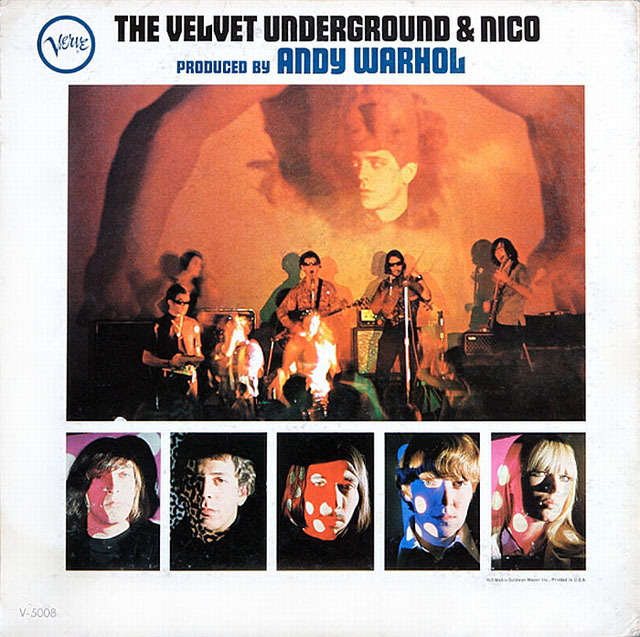
From August 31 through Labor Day weekend in 1966, the invention traveled to Provincetown. Warhol brought the Exploding Plastic Inevitable—films, lights, dancers, Nico and the Velvet Underground—to the Chrysler Art Museum, housed in the building that is now the Provincetown Public Library. Police interrupted one performance, untied Eric Emerson from a post and recovered belts and whips stolen from a local leather shop. Weeks later, the Institute of Contemporary Art at 100 Newbury Street opened a nearly forty-work Warhol survey and staged another Exploding Plastic Inevitable performance. Soup cans, Brillo boxes, wallpaper, films and floating silver Clouds confronted Boston with an art form in which painting, music, performance, commerce and nightlife had collapsed into one another. Reviewing the exhibition while it was still open, Jonathan Fineberg of The Harvard Crimson recognized that Warhol had erased the boundary between art and ordinary life. Warhol’s films were also screened at the Film-Makers’ Cinematheque at 53 Berkeley Street, which became the Boston Tea Party on January 20, 1967. The Velvet Underground made its Tea Party debut on May 26 and turned Boston into its musical bunker; Warhol personally filmed one of the band’s 1967 performances there. What appeared to be a visit had become a transmission.
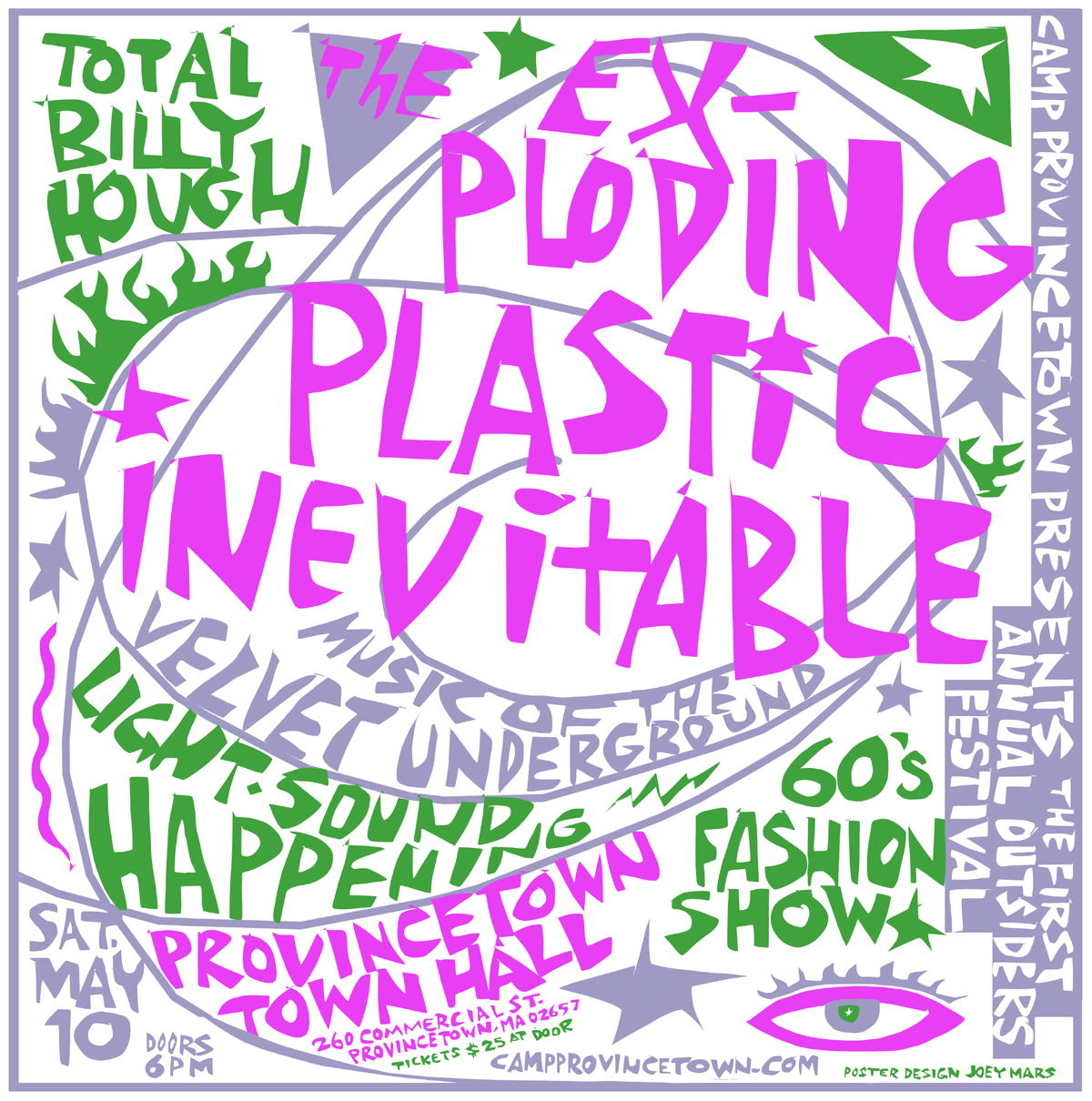
Warhol survived Valerie Solanas’ near-fatal 1968 shooting, operated behind tighter layers of security and remained extraordinarily productive until his death in 1987. In 1985, the host of a Boston Public Library author series was instructed to provide a “wig-safe” signing area after Warhol’s hairpiece had been snatched during a Manhattan appearance. By 2017, Boston had absorbed him institutionally: A.R.T. staged WARHOLCAPOTE while Harvard, MassArt and Simmons presented his prints and photographs. In 2025, the Midtown Hotel reduced his visual language to décor, asking artificial intelligence to manufacture imitation Warhol portraits of Boston luminaries. Provincetown chose the opposite path. Camp Provincetown’s first Outsiders Festival explored self-mythos through Harry Kemp’s “Art of Spectacularism,” Al Hansen’s Happenings and HERESY; Hansen’s daughter Bibbe had been one of Warhol’s youngest Factory collaborators. For the 2026 festival, Stephen Aiken’s Showdown at the Silver Factory returned Warhol, Bob Dylan, Edie Sedgwick, Barbara Rubin, Billy Name and Bob Neuwirth to the unstable moment when identity, documentation and mythology became indistinguishable. The Midtown Hotel reproduced Warhol’s appearance. Provincetown revived his method. Boston and Provincetown did not merely receive Andy Warhol—they reveal how the world learned to become him.