
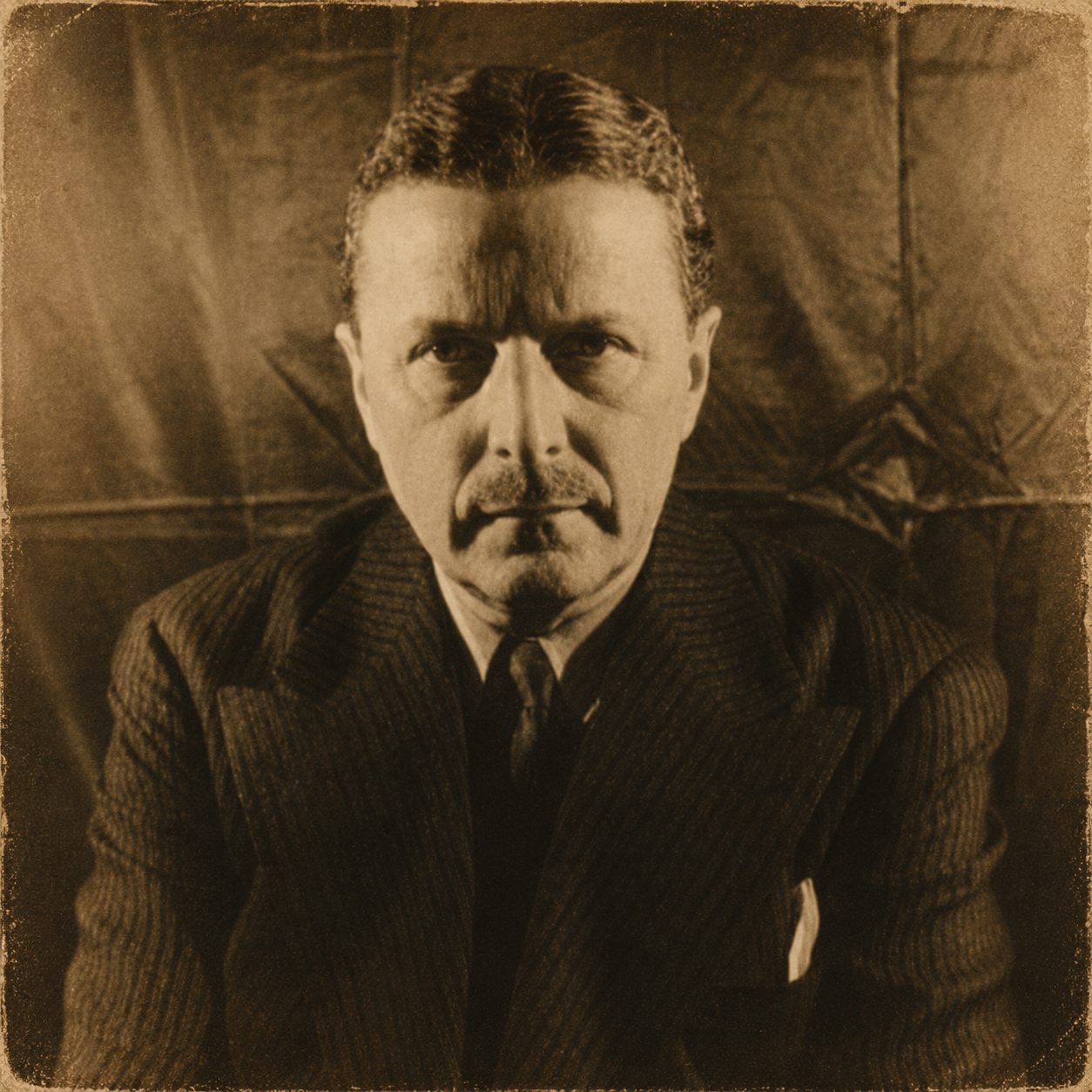
ARTHUR DAVISON FICKE
(1883 – 1945)
BOOKS ::: POET :: Davenport Group">DAVENPORT GROUP :::
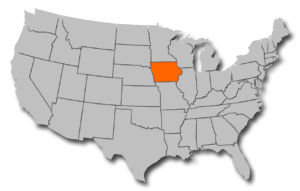
Arthur Davison Ficke was one of the most cosmopolitan voices to emerge from the remarkable literary circle known as the Davenport Group. Born in Davenport, Iowa, he grew up surrounded by art, literature, and an appreciation for Japanese culture fostered by his father's interest in collecting and importing Japanese prints. Although trained as a lawyer, Ficke devoted his life to poetry, becoming one of America's finest lyric poets while also establishing himself as one of the country's leading authorities on Japanese art. His career demonstrated that great literature is often enriched by looking beyond national borders and embracing ideas from other cultures.
In 1916, Ficke and fellow poet Witter Bynner staged one of the greatest literary hoaxes in American history. Writing under the pseudonyms Anne Knish and Emanuel Morgan, they published Spectra: A Book of Poetic Experiments, inventing an imaginary avant-garde movement called Spectrism. Critics enthusiastically praised the poems as the latest revolution in modern verse, unaware that the movement itself was fictional. Poet Marjorie Allen Seiffert, writing as Elijah Hay, joined the playful deception, further convincing readers that Spectrism was a genuine literary school. The hoax exposed the eagerness of critics to embrace novelty, yet it also had an unexpected consequence: Ficke himself became more adventurous as a poet, discovering that experimentation and tradition could coexist.
Ficke's life reminds us that culture advances not only through rebellion but through curiosity. He moved easily between poetry and visual art, East and West, scholarship and imagination. His friendships—including a long and important relationship with Edna St. Vincent Millay—placed him at the center of America's literary renaissance without ever tying him to a single movement or manifesto. For Motherlode, Arthur Davison Ficke represents the joy of crossing boundaries, proving that some of the most enduring artistic revolutions begin not with certainty, but with the willingness to explore unfamiliar worlds and occasionally to laugh at ourselves along the way.