
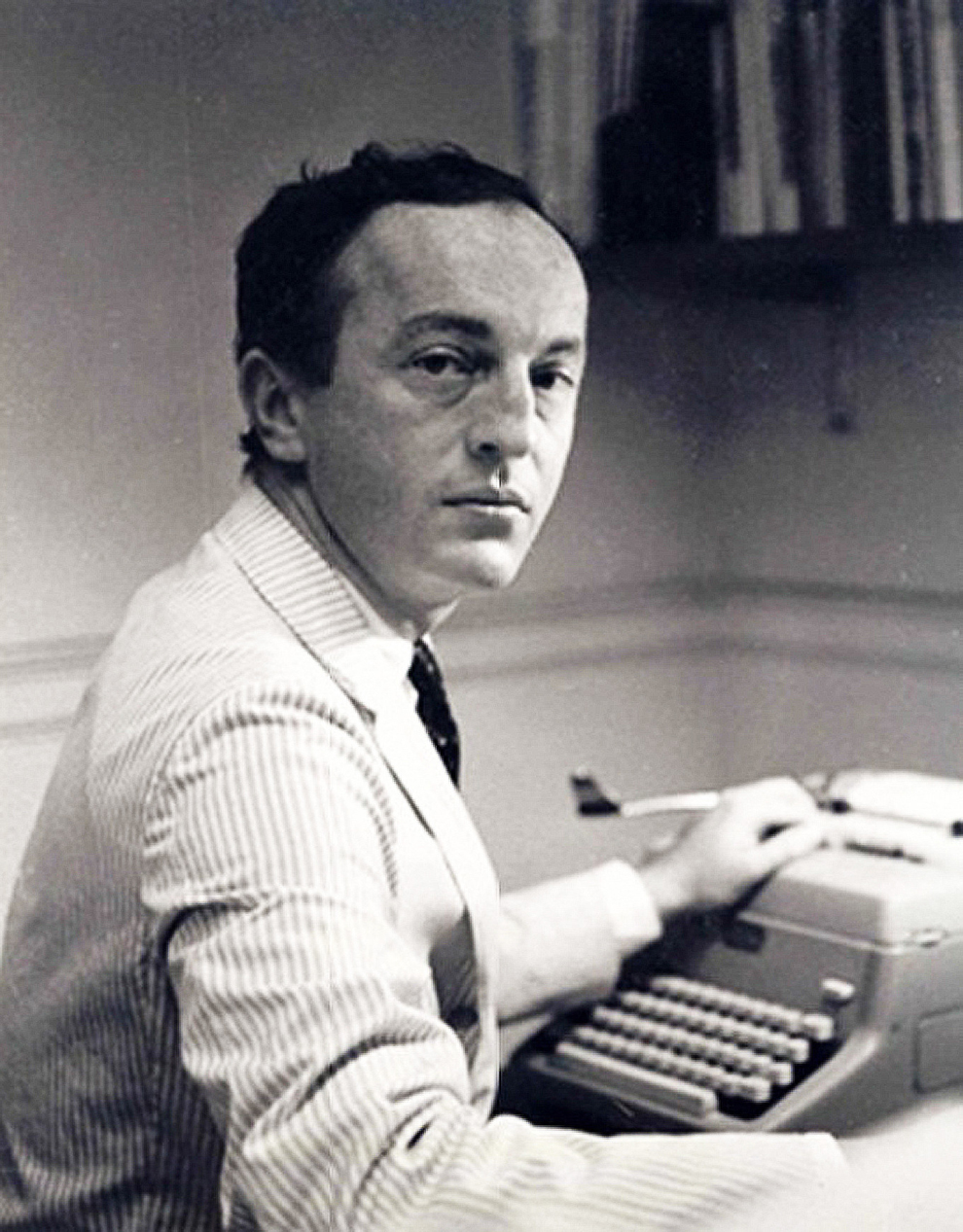
FRANK O'HARA
(1926 - 1966)
BOOKS ::: POET :::
Frank O’Hara was the rare poet who made writing feel like it was happening in real time. A central voice of the New York School, he worked as a curator at the Museum of Modern Art and wrote poems that read like conversations—quick, intimate, alive with names, music, and the pulse of the city. If you’ve never heard of him, imagine someone turning a passing moment—a lunch break, a crush, a phone call—into literature before it disappears.
His legacy is that he erased the boundary between art and life. O’Hara didn’t build monuments—he captured moments. In books like Lunch Poems, he made poetry social, immediate, and inseparable from the world around it, influencing generations of writers to treat the everyday as worthy of art. Moving between poets and painters, he became connective tissue in a postwar scene where conversation, collaboration, and presence mattered as much as the finished work.
He moved through the same coastal circuit—New York, Fire Island, Provincetown—that defined mid-century creative life, a migratory world later formalized by institutions like the Fine Arts Work Center, founded in 1968 to sustain exactly this kind of artist-driven exchange . That world promised escape—freedom, experimentation, a temporary suspension of consequence. But it didn’t last forever. In July 1966, on Fire Island, after a beach taxi broke down, O’Hara was struck by a passing dune vehicle while standing on the sand. He died the next night at 40—an abrupt ending in the very kind of fleeting, in-between space his work was built to capture.