
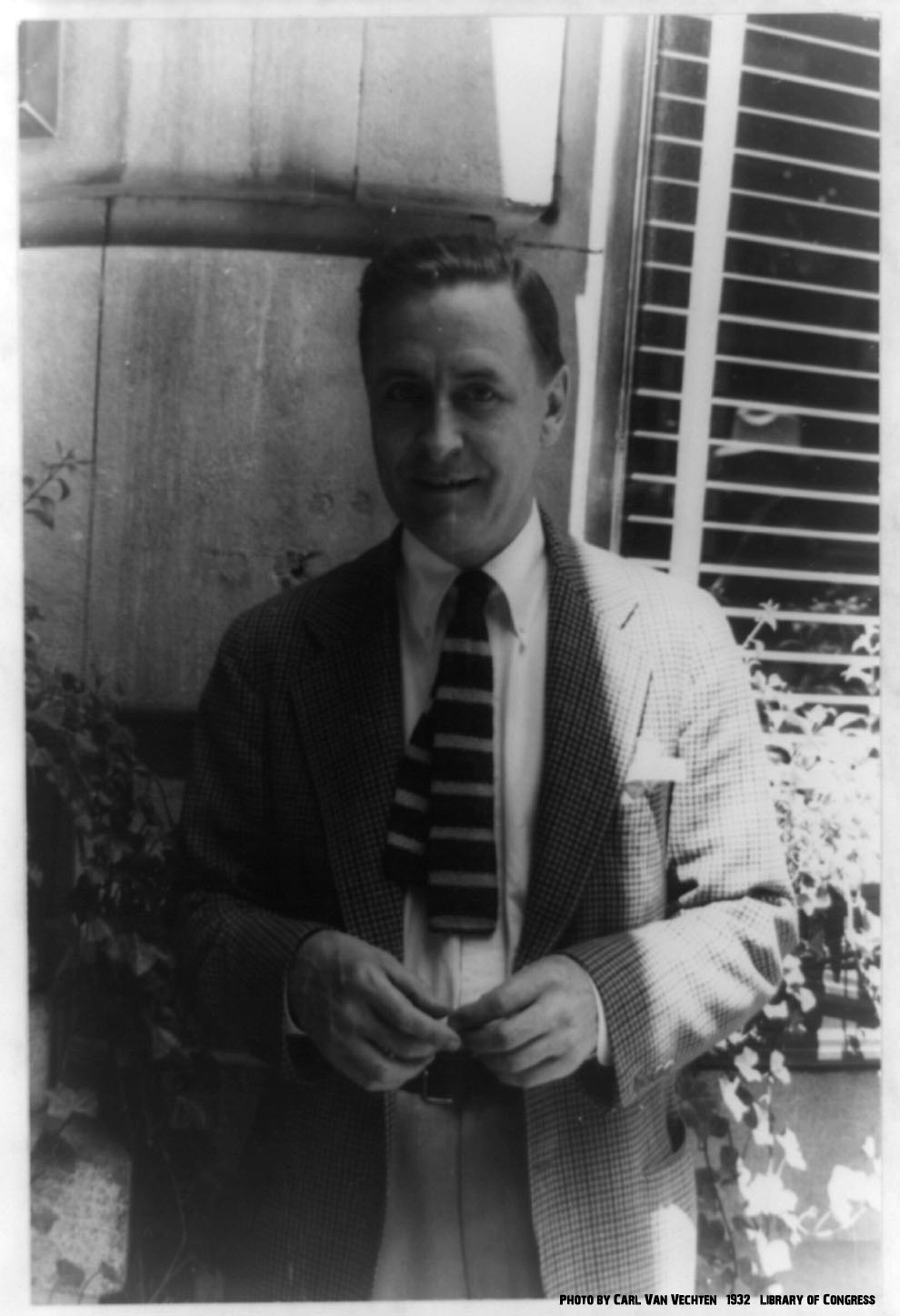
F. SCOTT FITZGERALD

(1896 – 1940)
BOOKS ::: LOST GENERATION :::
F. Scott Fitzgerald became the chronicler of American desire at its most luminous and its most fragile. A central figure of the Lost Generation, he captured the intoxication and disillusionment of the Jazz Age with prose that shimmered even as it warned. His work is haunted by ambition—its beauty, its promises, and the cost of believing in them too completely.
The Great Gatsby stands as his most enduring achievement, a novel where wealth, reinvention, and longing collide under a deceptively perfect surface. Alongside This Side of Paradise and Tender Is the Night, Fitzgerald traced the arc from youthful confidence to emotional erosion, mirroring his own life with Zelda Fitzgerald. Love, glamour, and collapse move in lockstep through his fiction.
Fitzgerald’s world was social as well as literary. He moved among Edmund Wilson, Ernest Hemingway, Dorothy Parker, and the expatriate circle on the French Riviera, including Sara and Gerald Murphy. His legacy endures not because he celebrated excess, but because he understood its aftermath—how dreams fade, and how memory insists on polishing what was already breaking.