
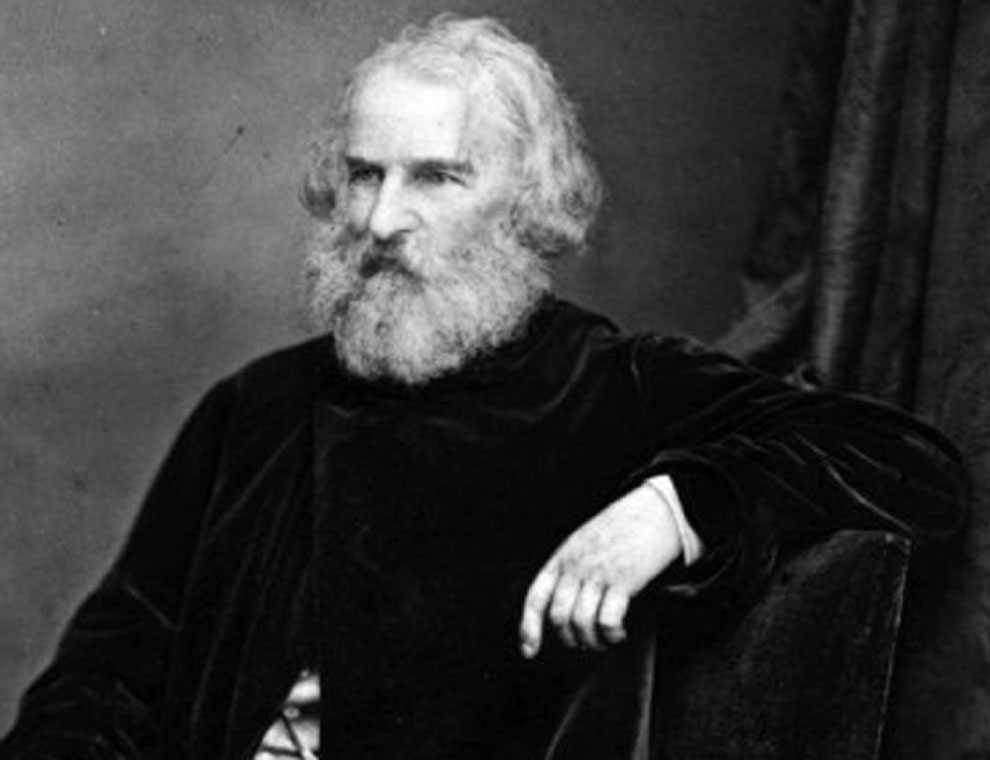
HENRY WADSWORTH LONGFELLOW

(1807 – 1882)
BOOKS ::: POET :::
Never let the truth get in the way of a good story.
Henry Wadsworth Longfellow is born in Portland, Maine. In the 19th century he wasn’t simply a poet; he was a shared voice. Before radio, film, or national media, Americans carried his lines in their heads and spoke them aloud at home and in schoolrooms. He understood a young country needed more than documents and dates — it needed stories people could repeat. His poems became a common language, giving distant places the feeling they belonged to the same narrative.
In Paul Revere’s Ride, The Courtship of Miles Standish, The Song of Hiawatha, and Evangeline, he worked with real events and real figures but veers from facts. The midnight ride was compressed into a single rider, the Pilgrims became neighbors, and wandering exile became a symbol of belonging carried across a continent. He wasn’t recording history exactly; he was arranging it so it could be remembered. A lantern in a tower, a rider in the dark, a conversation across a table — images simple enough to travel farther than facts.
Later critics preferred more difficult poetry and his reputation faded, but the images remained. Longfellow made history livable. He gave Americans a way to imagine continuity across distance and time. If others built towns and fought battles, he built memory — the echo that stays after events pass. His achievement wasn’t accuracy alone. With poetic license, he turned history into identity.