Boston Builds
The nineteenth century builds the machinery of modern Boston: newspapers, museums, theatres, hospitals, factories, reform movements and systems of mass communication. These institutions do not remain in their century. They become the stages, arguments, brands and cultural infrastructure inherited—and repeatedly challenged—by the Boston that follows.
1803 — The Boston Female Asylum is established.
Organized by Hannah Stillman and other Boston women, the asylum provides shelter and education for destitute and orphaned girls. Incorporated in 1803, it is recognized as Boston’s first public charity established and managed by women.
1806 — The African Meeting House is built.
Constructed on Beacon Hill, the African Meeting House becomes a church, school, community center and eventually one of the most important gathering places in Boston's abolitionist movement.
1807 — The Boston Athenæum is established.
The private library and cultural institution grows into one of Boston's great repositories of books, art and intellectual life.
1808 — The Roman Catholic Diocese of Boston is established.
The creation of the diocese marks the growing presence of Catholicism in a city long dominated by its Protestant and Puritan inheritance.
1811 — Massachusetts General Hospital is chartered.
The Massachusetts legislature grants a charter establishing Massachusetts General Hospital. Conceived to provide institutional medical care to people who could not receive private treatment at home, the hospital opens to patients in 1821 and becomes a cornerstone of Boston’s medical establishment.
NOVEMBER 29, 1811 — Wendell Phillips is born in Boston.
Phillips becomes one of the nineteenth century's most prominent abolitionists, using his extraordinary skills as an orator to attack slavery and advocate for social reform.
MARCH 26, 1812 — The term “gerrymander” is born in Boston.
A political cartoon published in the Boston Gazette turns an oddly shaped Massachusetts electoral district into a mythical salamander and gives American politics a word that survives more than two centuries later.
1814 — The Linnaean Society of New England is established.
Boston's growing interest in natural history and scientific classification finds an institutional home, helping lay groundwork for the city's later scientific museums and societies.
1815 — The Handel and Haydn Society is founded.
The Boston musical organization begins performing major choral works and becomes one of the oldest continuously operating arts organizations in the United States.
1815 — The North American Review begins publication.
Founded in Boston, the literary journal becomes an important national forum for criticism, politics, history and American intellectual life.
1818 — The New England Museum opens.
Ethan Allen Greenwood's museum combines natural curiosities, paintings, historical artifacts and public spectacle, helping develop Boston's nineteenth-century museum culture.
1821 — Doggett’s Repository of Arts opens.
Gilder, framer and entrepreneur John Doggett establishes an exhibition gallery on Market Street. Paintings associated with Gilbert Stuart, Thomas Sully, Samuel F.B. Morse and European masters pass through its rooms, making the Repository an important early commercial gateway for visual art in Boston.
1823 — Chickering begins manufacturing pianos in Boston.
Jonas Chickering establishes the company that will become one of America's leading piano manufacturers, linking Boston craftsmanship with the expanding nineteenth-century music business.
1825 — Pendleton's Lithography opens.
William and John Pendleton establish one of America's pioneering commercial lithography operations in Boston, transforming the production and circulation of printed images.
1827 — The Tremont Theatre opens.
The ornate new playhouse gives Boston a major professional theatre and helps establish the Tremont Street district as a center of public entertainment.
Founded by Boston bishop Benedict Joseph Fenwick as The Jesuit, or Catholic Sentinel, the newspaper defends the Catholic community against religious hostility and misrepresentation. Renamed The Boston Pilot in 1836, it becomes an essential voice for Boston’s growing Irish-American population and the country’s oldest continuously published Catholic newspaper.
1830 — The Boston Society of Natural History is organized.
Scientists and collectors create an institution devoted to studying and preserving the natural world, an important predecessor to Boston's Museum of Science.
1833 — Harding's Gallery opens.
Chester Harding establishes an exhibition gallery that becomes part of Boston's expanding visual-arts culture and growing community of professional artists.
1835 — William Lloyd Garrison is attacked by an anti-abolitionist mob.
A Boston mob seizes the abolitionist editor and attempts to drag him through the streets, demonstrating how violently the struggle over slavery is dividing the city.
1836 — The Boston Pilot begins publication.
The Catholic newspaper becomes an important voice for Boston's rapidly expanding Irish immigrant community and eventually one of America's oldest Catholic publications.
1836 — The National Theatre opens.
Boston gains another major venue for drama and popular entertainment as theatre becomes firmly embedded in the city's cultural life.
JUNE 11, 1837 — The Broad Street Riot.
A confrontation between an Irish funeral procession and Yankee volunteer firefighters expands into hours of street violence, exposing the ethnic, religious and class tensions reshaping Boston. The Irish-American Montgomery Guards are among the militia units called to restore order; they are participants in the response, not the subject of a separate “Montgomery Guards Riot.”
THE CULTURAL AFTERLIFE: More than a century and a half later, the Mighty Mighty Bosstones turn the confrontation into “Riot on Broad Street,” placing Boston’s nineteenth-century ethnic violence inside the city’s ska-punk history.
1837 — The Harvard Musical Association is founded.
Musicians and music lovers organize to promote serious concert music in Boston, helping build the institutional foundation from which the city's classical-music culture will grow.
1839 — The Lowell Institute is founded.
John Lowell Jr.'s bequest establishes a free public lecture series devoted to science, literature and education, extending Boston's intellectual culture beyond the university classroom.
1839 — The Melodeon opens.
The Tremont Street hall becomes an important site for concerts, lectures, reform meetings and abolitionist gatherings.
1841 — The Boston Museum opens.
Moses Kimball creates a hugely popular institution combining museum exhibits with theatrical performances, curiosities and mass entertainment.
1841 — The Boston Artists' Association is organized.
Local artists band together to exhibit and promote their work, another step toward a permanent professional arts community in Boston.
1841 — Plumbe's Gallery brings photography to Boston.
Daguerreotype studios help introduce the new photographic medium to Boston audiences, beginning a relationship between the city and photography that will continue through generations of artists and documentarians.
1845 — The Howard Athenæum opens.
The theatre becomes one of Boston's best-known nineteenth-century entertainment venues, presenting drama, opera, variety and popular spectacle.
1850 — Roberts v. City of Boston.
The Massachusetts Supreme Judicial Court upholds Boston’s racially segregated public-school system, ruling against five-year-old Sarah Roberts and her father, Benjamin. The decision supplies an early legal foundation for the doctrine later called “separate but equal,” even as the Roberts campaign helps produce a Massachusetts law prohibiting segregated public schools in 1855
1850 — The Parkman-Webster murder case captivates Boston.
The disappearance and murder of physician George Parkman leads to the prosecution of Harvard professor John Webster. Dental and anatomical evidence plays a major role in identifying the remains and securing a conviction.
1851 — The Charles Street Jail opens.
The imposing granite jail becomes a landmark beside the Charles River and a symbol of nineteenth-century approaches to crime, punishment and incarceration.
1852 — Ordway Hall opens.
The Washington Street venue hosts minstrel shows and popular entertainment, documenting both the growth of mass entertainment and the racial stereotypes embedded within nineteenth-century American popular culture.
1854 — The Boston Theatre era expands.
The enormous new playhouse on Washington Street gives Boston a major venue for drama, opera, touring productions and spectacle. Its scale and ambition confirm the city’s place on the national theatrical circuit as commercial entertainment becomes an increasingly important part of Boston life.
1854 — The Boston Public Library opens to the public.
Created as a free municipal library, the BPL becomes one of Boston's defining civic institutions and a model for publicly supported access to books and knowledge.
1854 — Anthony Burns is arrested in Boston.
The arrest of the escaped enslaved man under the Fugitive Slave Act triggers massive protests. Federal troops ultimately escort Burns back into slavery, turning Boston into a national symbol of the conflict over abolition and federal power.
1855 — The Boston Art Club is founded.
Artists establish a professional organization devoted to exhibitions, discussion and support for Boston's growing visual-arts community.
1857 — The Atlantic Monthly begins publication.
Founded in Boston by writers and intellectuals including Ralph Waldo Emerson, Henry Wadsworth Longfellow and James Russell Lowell, the magazine becomes one of America's most influential literary publications.
1859 — The Boston Public Garden is permanently protected.
After years of uncertainty over the land’s future, the state legislature and Boston voters secure the former horticultural site for permanent public use. The landscaped space beside Boston Common develops into the country’s first public botanical garden and one of Boston’s most recognizable landmarks.
1863 — Boston College is founded.
The Society of Jesus establishes Boston College to educate the city’s predominantly Irish Catholic immigrant community. Chartered in 1863, the college opens its doors on Harrison Avenue in September 1864
1865 — MIT begins classes in Boston.
Chartered in 1861 but delayed by the Civil War, the Massachusetts Institute of Technology admits its first students and begins instruction in rented rooms in downtown Boston. Devoted to science, engineering and practical education, “Boston Tech” remains in the city until moving across the Charles River to Cambridge in 1916.
NOVEMBER 11, 1865 — The second Horticultural Hall is dedicated.
The Massachusetts Horticultural Society opens an elaborate new headquarters on Tremont Street for exhibitions, lectures, concerts and public displays devoted to plants, horticulture and landscape culture. It replaces the society’s first Horticultural Hall, which opened on School Street in 1845
1868 — The Boston Lyceum Bureau is established.
The lecture agency helps organize speakers, entertainers and public intellectuals for audiences across the country, placing Boston at the center of the nineteenth-century lecture circuit.
1872 — The Boston Globe begins publication.
The newspaper joins Boston's competitive press culture and grows into one of New England's most influential journalistic institutions.
1872 — The World's Peace Jubilee and International Musical Festival comes to Boston.
A massive temporary coliseum hosts orchestras, choruses and musicians from around the world in one of the most extravagant musical spectacles ever attempted in nineteenth-century America.
NOVEMBER 9–10, 1872 — The Great Boston Fire.
Fire tears through approximately sixty-five acres of Boston’s commercial district, destroying 776 buildings and killing an uncertain number of civilians and firefighters. The devastated area is rapidly rebuilt, giving downtown a new architectural landscape while forcing changes in construction, fire prevention and emergency response.
1876 — The Museum of Fine Arts opens in Art Square.
Boston establishes a permanent museum devoted to art and culture. The original Copley Square building precedes the museum's later move to Huntington Avenue.
1877 — The Footlight Club is founded.
The Jamaica Plain theatrical organization becomes one of America's oldest continuously operating community theatres.
1878 — The Gaiety Theatre opens.
The venue joins Boston's busy theatre district during an era when touring companies, variety shows and popular stage entertainment flourish downtown.
1879 — The Boston Art Students Association is founded.
Graduates of the School of the Museum of Fine Arts establish an organization through which artists can exhibit their work, maintain professional connections and support one another. The association eventually becomes the Copley Society of Art, now one of America’s oldest nonprofit arts organizations.
1879 — The Park Theatre opens.
The Washington Street theatre becomes an important stop for touring productions and contributes to Boston's increasingly dense entertainment district.
1881 — The Boston Symphony Orchestra is founded.
Financier Henry Lee Higginson establishes a permanent professional orchestra, transforming Boston into one of America's major centers of classical music.
1881 — The Boston Camera Club is founded.
Photography enthusiasts organize around the rapidly developing medium, helping establish Boston as an important center for photographic experimentation and exhibition.
1881 — Filene's opens in Boston.
The department store becomes a downtown institution and eventually one of the names most closely associated with Boston retail and the culture of Downtown Crossing.
1882 — The Bijou Theatre opens.
The technologically ambitious theatre becomes one of the early American playhouses illuminated entirely by electricity, signaling the transformation of theatrical spectacle by modern technology.
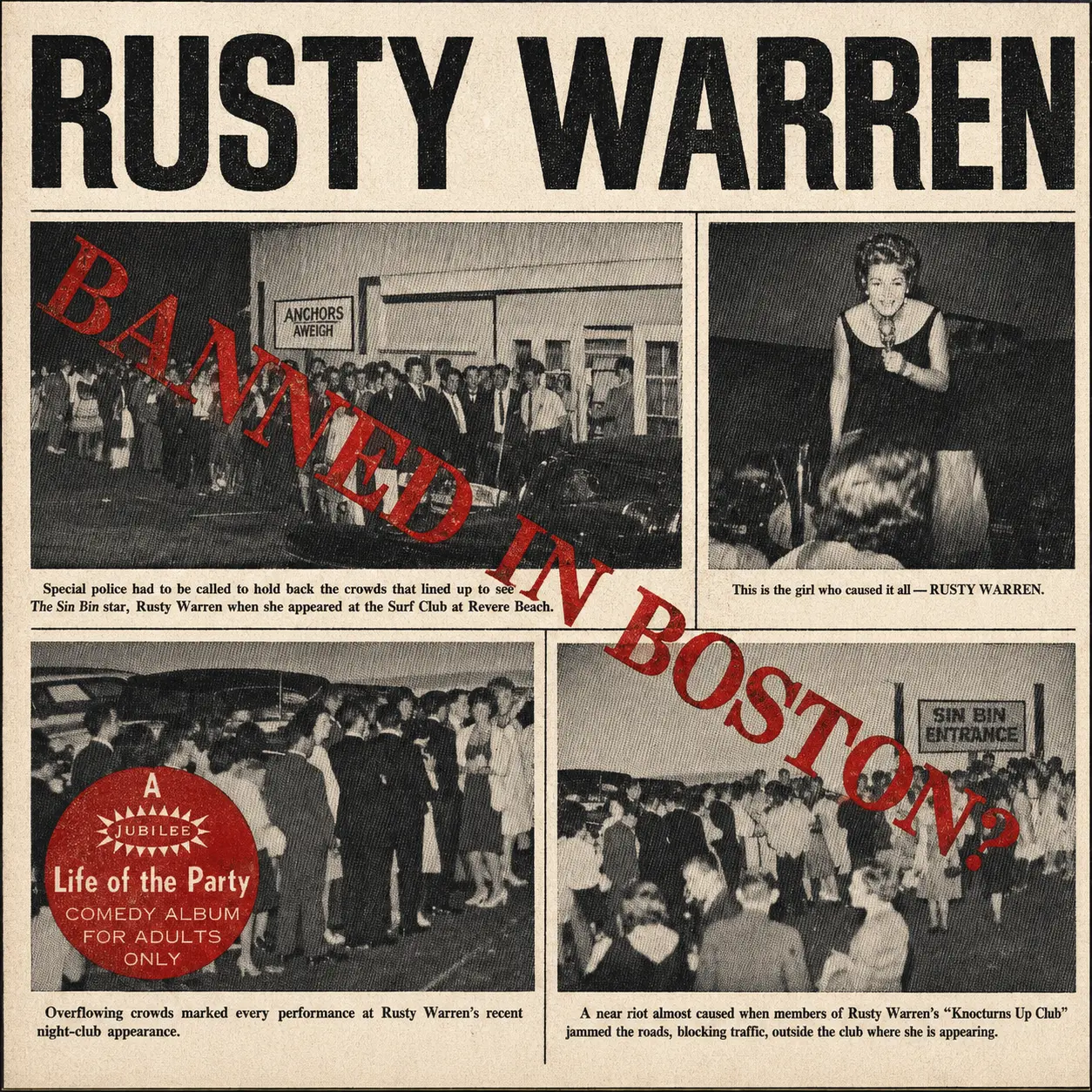
1882 — Walt Whitman's Leaves of Grass is banned in Boston.
Boston authorities declare the book obscene and pressure its publisher to withdraw the edition. The controversy boosts sales elsewhere and gives “Banned in Boston” an early literary landmark.
1883 — Chickering Hall opens.
The concert hall provides Boston musicians and audiences with another prominent venue and reinforces the city's growing reputation as a center for serious music.
1884 — The Cyclorama Building opens.
Built to house a massive panoramic painting of the Battle of Gettysburg, the South End structure represents the nineteenth-century appetite for immersive visual spectacle.
1884 — The Tavern Club is founded.
Artists, writers, musicians and intellectuals create a private Boston club that becomes a meeting place for generations of the city's cultural figures.
1885 — The Boston Pops begins performing.
Popular concerts by members of the Boston Symphony Orchestra bring orchestral music to a wider audience and establish a Boston institution that will become internationally recognized.
1888 — The Grand Opera House opens.
The theatre joins Boston's expanding network of elaborate performance spaces as opera, drama and touring spectacle flourish in the city.
1891 — The Columbia Theatre opens.
The grand new playhouse becomes part of Boston's thriving late-nineteenth-century theatre scene.
1893 — Grundmann Studios opens.
Purpose-built artists' studios provide working space for Boston painters and sculptors and strengthen the city's increasingly professional visual-arts community.
1894 — Keith's Theatre opens.
B.F. Keith expands his Boston entertainment empire and helps develop the polished form of American vaudeville that will dominate popular entertainment before the rise of motion pictures.
1896 — The Boston Cooking-School Cook Book is published.
Fannie Merritt Farmer's cookbook standardizes measurements and transforms American home cooking, making a Boston publication a fixture in kitchens across the country.
1896 — Steinert Hall opens.
The underground concert hall becomes renowned for its acoustics and adds another distinctive space to Boston's extraordinary late-nineteenth-century musical landscape.
APRIL 5, 1897 — The first American Arts and Crafts Exhibition opens at Copley Hall.
Boston gives the Arts and Crafts movement an American stage, proving that even in the machine age the handmade object still knows how to make an entrance.
APRIL 19, 1897 — The first Boston Marathon is run.
Inspired by the revival of the Olympic Games, the Boston Athletic Association organizes a road race from Ashland to Boston that becomes the world's oldest continuously run annual marathon.
1899 — South Station opens.
The enormous new railway terminal consolidates several competing lines and becomes one of the busiest transportation hubs in the country, closing the century with Boston connected more completely than ever to the world beyond it.