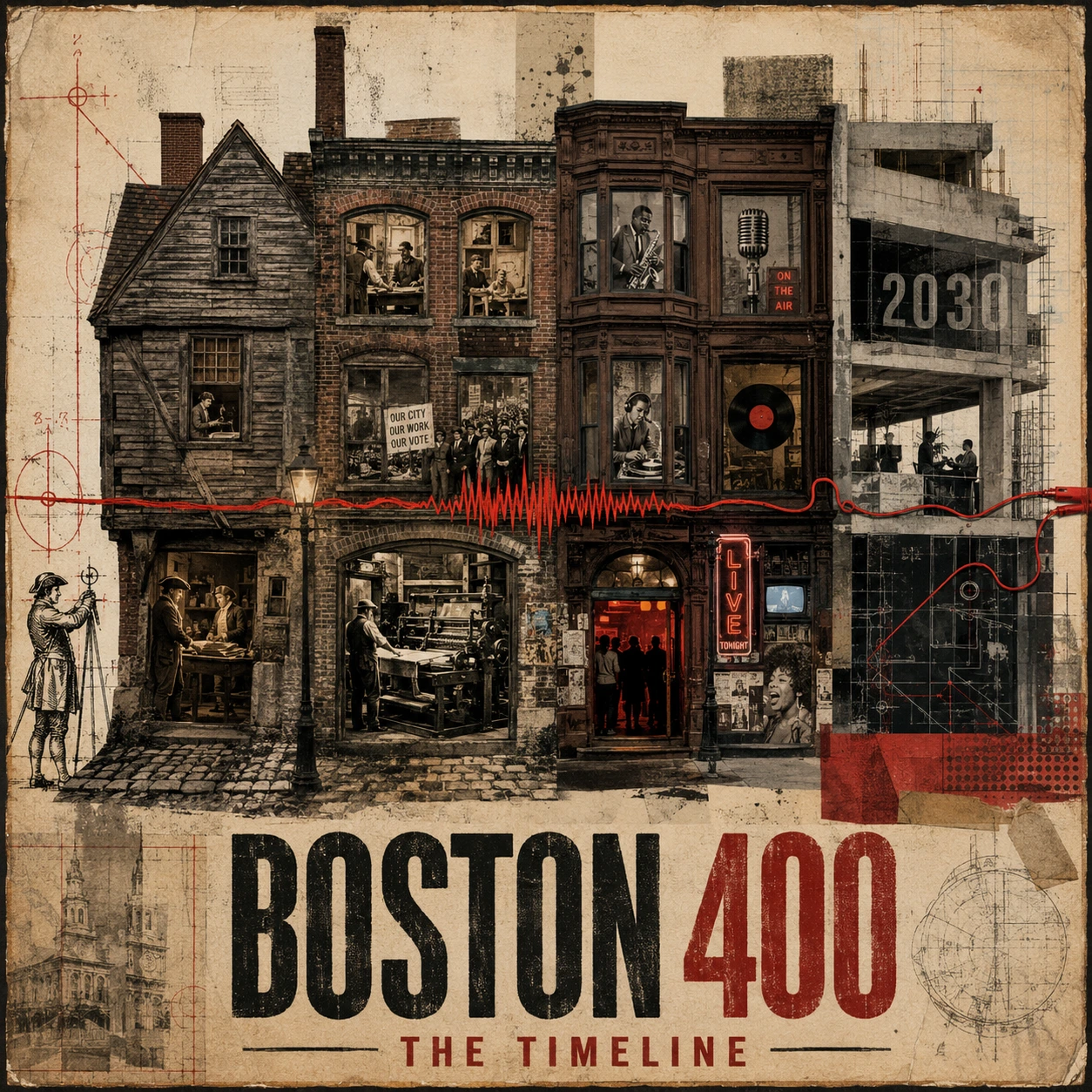
The Boston 400 Timeline
Four centuries of history. Four centuries of cultural afterlives.
The chronological spine of Boston 400, connecting stories already living inside Motherlode across separate century pages. Historical events remain anchored in time while their names, places and ideas echo forward through Boston's popular culture.
The Boston Tea Party was an act of rebellion in 1773 and a legendary rock club in the 1960s. Fort Hill was part of Boston’s early landscape before becoming the center of the Lyman Family’s countercultural world. Shawmut was the Indigenous name for the peninsula, then a bank whose promotional gifts entered Boston households. Castle Island began as a strategic harbor defense and lives on as a public landscape and the name of a contemporary brewery.
These are not coincidences placed beside one another for novelty. They are cultural transmissions. Each timeline entry can contain a historical anchor, a later cultural afterlife and a doorway into another part of Motherlode. A building can become a band name. A political revolt can become a nightclub. A disaster can reshape public safety and return through another catastrophe. A familiar Boston name can carry centuries of memory without anyone stopping to ask where it began.
At the heart of Boston 400 is the David Bieber Archives, whose collection of more than two million photographs, recordings, publications, posters, promotional objects, artifacts and pieces of cultural evidence gives the project its physical memory. The timeline serves as a curatorial map for exhibits presented both online and in brick-and-mortar spaces, allowing objects from the archive to illuminate the connections between Boston’s documented history and its popular-cultural afterlives.
The timeline is being built in public as Boston approaches its 400th anniversary in 2030. Some entries already lead to biographies, Calendar dates, archival exhibits, Boston Babylon chapters and completed Cultural Moments. Others remain markers for stories still waiting to be researched, illustrated, connected and activated through future exhibitions. The history supplies the chronology; the David Bieber Archives supplies the evidence; the mash-up reveals how Boston keeps recycling, reinventing and transmitting itself.
Enter the Centuries
1600s — Boston Begins
Settlement, dissent, punishment, public institutions and the uneasy beginnings of a city.
1700s — Boston Revolts
Commerce, print, performance and protest transform a colonial port into the birthplace of an American rebellion.
1800s — Boston Builds
Reform, abolition, immigration, medicine, publishing, museums, theatres and industry create the modern city.
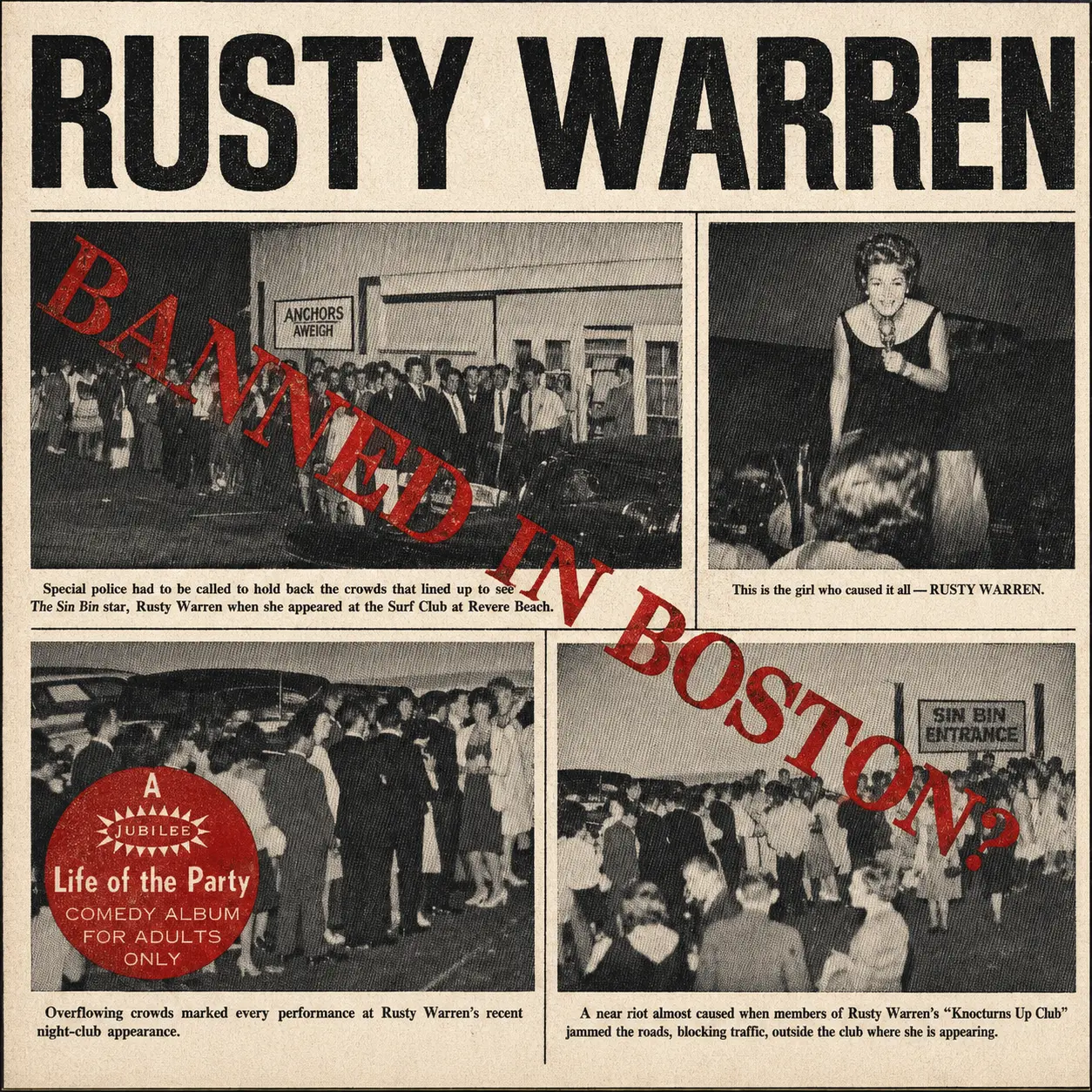
1900s — Boston Amplifies
Mass media, sports, politics, protest, music and nightlife turn Boston into a cultural transmitter.
2000s — Boston Reinvents
The unfinished present—and the expanding roadmap carrying Boston toward 2030 and into its fifth century.