Boston Amplifies
In the twentieth century, Boston turns up the volume. Radio, television, newspapers, sports, politics, universities, nightlife and recorded music carry the city far beyond its physical boundaries. This is where the earlier centuries begin colliding most visibly with popular culture—and where the people, places and objects preserved by the David Bieber Archives enter the timeline in force.
1900 — Symphony Hall opens.
Designed specifically for orchestral music, Symphony Hall gives the Boston Symphony Orchestra a permanent home and becomes internationally celebrated for its acoustics.
1900 — The Colonial Theatre opens.
The lavish Boylston Street playhouse joins Boston's thriving theatre district and begins a long history of drama, musicals and Broadway-bound productions.
1901 — The Boston Americans begin play.
The future Boston Red Sox join the new American League and begin playing at the Huntington Avenue Grounds, establishing one of the defining institutions of Boston sports culture.
1901 — Horticultural Hall opens on Massachusetts Avenue.
The Massachusetts Horticultural Society's new headquarters becomes a major exhibition and gathering space and another architectural landmark in Boston's emerging cultural district.
1901 — The Boston Guardian begins publication.
Founded by William Monroe Trotter and George W. Forbes, the African-American newspaper becomes an uncompromising voice against segregation and racial discrimination.
JANUARY 1, 1903 — The Isabella Stewart Gardner Museum opens.
Isabella Stewart Gardner opens Fenway Court, creating one of America's most distinctive art museums and leaving Boston a collection inseparable from the personality of its founder.
1903 — Jordan Hall opens.
The New England Conservatory's concert hall becomes one of Boston's great musical rooms, renowned for its acoustics and intimate relationship between performer and audience.
1904 — Fenway Studios opens.
Built after a fire destroyed the Harcourt Studios in 1904, the new building provides purpose-designed working spaces illuminated by north-facing windows. Fenway Studios becomes an enduring center of Boston’s visual-arts community and the country’s oldest surviving structure built specifically as artists’ studios.
AUGUST 3, 1906 — The Cambridge Bridge opens.
The new bridge connects Boston and Cambridge across the Charles River, its distinctive towers becoming a permanent feature of the city’s landscape. Renamed the Longfellow Bridge in 1927, it eventually acquires another affectionate Boston name: the Salt-and-Pepper Bridge.
1908 — The Christian Science Monitor begins publication.
Founded by Mary Baker Eddy in Boston, the newspaper develops an international reputation for serious reporting and global coverage.
NOVEMBER 8, 1909 — The Boston Opera House opens with the Boston Opera Company.
Boston's ambitious opera enterprise brings major singers and productions to the city during an extraordinary period of expansion in its musical life.
NOVEMBER 1909 — The Museum of Fine Arts opens on Huntington Avenue.
The MFA leaves Copley Square for its monumental new home on the Fenway, helping create the cultural corridor that will define the neighborhood.
APRIL 25, 1910 — Boston Arena opens.
The indoor arena becomes a landmark of Boston sports and entertainment, serving at different times as home ice for the Bruins, college hockey teams and generations of public events. Later renamed Matthews Arena, it remains in operation through December 2025; deconstruction begins in March 2026.
1910 — The Shubert Theatre opens.
The Tremont Street theatre strengthens Boston's position as a major stop for touring productions and Broadway-bound shows.
1912 — Fenway Park opens.
The Boston Red Sox move into their new ballpark on Jersey Street. Fenway survives wars, championships, heartbreak and redevelopment to become the oldest active ballpark in Major League Baseball.
1914 — James Michael Curley becomes mayor.
Curley begins the first of four terms as mayor, launching one of the most colorful, controversial and enduring political careers in Boston history.
1915 — Boston protests The Birth of a Nation.
Black activists challenge screenings of D.W. Griffith's racist blockbuster, making Boston part of an early national campaign against racism in mass media.
1918 — The Boston Red Sox win the World Series.
With Babe Ruth on the roster, Boston defeats the Chicago Cubs. The Red Sox will not win another World Series for eighty-six years.
JANUARY 15, 1919 — The Great Molasses Flood.
A massive storage tank ruptures in the North End, sending a wave of molasses through the neighborhood. Twenty-one people are killed and roughly 150 are injured in one of Boston's strangest and deadliest disasters.
SEPTEMBER 9, 1919 — The Boston Police Strike begins.
Thousands of police officers walk off the job over wages, hours and union recognition. Governor Calvin Coolidge's response propels him onto the national political stage.
1922 — Loew's State Theatre opens.
The enormous Massachusetts Avenue movie palace reflects the arrival of motion pictures as a dominant form of mass entertainment. Designed by Thomas Lamb and seating approximately 3,700 people, its opening brings movie stars, civic ceremonies and thousands of spectators into the streets. The theatre closes in 1968 and is subsequently demolished.
SEPTEMBER 8, 1923 — Boston Airport opens
An airfield on reclaimed land in East Boston begins the aviation history of what will eventually become Logan International Airport.
1924 — WBZ establishes its Boston presence.
Radio becomes part of everyday life as broadcasting begins reshaping the way Bostonians receive news, music, sports and entertainment.
1924 — The Boston Bruins are founded.
The Bruins become the first American team to join the National Hockey League, beginning a century-long Boston hockey tradition.
JULY 4, 1925 — The Pickwick Club collapses.
During a crowded Independence Day dance, the ceiling and interior floors of the Beach Street nightclub collapse, killing forty-four people. The catastrophe becomes the deadliest building collapse in Boston history and exposes dangerous structural conditions inside a popular Prohibition-era entertainment space.
1925 — The Metropolitan Theatre opens.
The enormous Tremont Street movie palace brings films, vaudeville, concerts and spectacle to thousands of patrons. Renamed the Music Hall in 1962 and later the Wang Theatre, it survives as the principal theatre of the Boch Center.
AUGUST 23, 1927 — Sacco and Vanzetti are executed.
Nicola Sacco and Bartolomeo Vanzetti are put to death after a case that inspires worldwide protests and becomes an enduring argument about immigration, radical politics, prejudice and American justice.
1928 — Boston Garden opens.
The arena becomes the home of the Bruins and later the Celtics, as well as generations of concerts, political rallies, circuses and public spectacles.
1929 — Caffè Vittoria opens in the North End.
The Hanover Street café becomes an enduring piece of Boston's Italian-American neighborhood culture.
APRIL 6, 1931 — Ram Dass is born Richard Alpert in Boston.
The future Harvard psychologist, spiritual teacher and author of Be Here Now begins a life that will travel from Boston academia through psychedelia and into the American counterculture.
1934 — The Sumner Tunnel opens.
The tunnel creates a direct automobile connection beneath Boston Harbor between East Boston and downtown.
1937 — The Late George Apley is published.
John P. Marquand's satirical portrait of Boston Brahmin society wins the Pulitzer Prize and turns the city's old establishment into literary material.
1940 — The Cities Service sign appears above Kenmore Square.
A massive illuminated advertisement for the Cities Service oil company rises above Kenmore Square. Replaced by the present CITGO trimark in 1965, the rooftop sign becomes one of Boston’s most recognizable pieces of commercial architecture and an unofficial beacon beyond Fenway Park.
1940 — The Hatch Memorial Shell opens.
The Charles River Esplanade gains a permanent outdoor performance stage that becomes synonymous with summer concerts and Boston's Fourth of July celebrations.
1940 — The Paul Revere statue is unveiled.
Cyrus Edwin Dallin's equestrian statue finally takes its place in the North End after decades of planning, turning Revolutionary memory into part of Boston's streetscape.
1941 — Make Way for Ducklings is published.
Robert McCloskey turns the Public Garden, Beacon Hill and Boston traffic into the setting for one of America's most beloved children's books.
AUGUST 5, 1942 — Joe Boyd is born in Boston.
The future producer works with artists including Pink Floyd, Fairport Convention, Nick Drake and R.E.M., becoming an important figure in the transatlantic musical conversation of the 1960s and beyond.
NOVEMBER 28, 1942 — The Cocoanut Grove fire.
Fire engulfs the packed nightclub, killing 492 people. The catastrophe transforms fire codes, emergency medicine and the understanding of crowd safety far beyond Boston.
1947 — John F. Kennedy enters Congress.
The young Boston politician begins representing Massachusetts in the U.S. House of Representatives, starting the national political career that will eventually take him to the White House.
JANUARY 17, 1950 — The Great Brink’s Robbery.
Thieves steal more than $2 million from the Brink's building in the North End in a meticulously planned crime that becomes one of the most famous robberies in American history.
1951 — WGBH is established.
Boston's educational broadcasting experiment grows into one of the most influential producers in American public television and radio.
1951 — The Museum of Science opens at Science Park.
Boston's long tradition of natural-history collecting evolves into a modern museum devoted to science, technology and public education.
1954 — Schillinger House becomes the Berklee School of Music.
Lawrence Berk renames the school he founded in 1945 after his son, Lee Eliot Berk. Its emphasis on jazz, arranging, contemporary music and professional musicianship establishes a new model for music education. The institution adopts the name Berklee College of Music in 1970.
1955 — Martin Luther King Jr. earns his doctorate from Boston University.
King receives his Ph.D. in systematic theology after years in Boston, where his intellectual development and personal life intersect with the city's universities and Black community.
MARCH 7, 1957 — The Tune Weavers record “Happy, Happy Birthday Baby.”
The Boston vocal group records the song at Ace Recording Studios, producing a national hit from the city's thriving rhythm-and-blues scene.
1957 — WILD arrives on Boston’s radio dial.
The station that began broadcasting as WBMS in 1946 adopts the call letters WILD. During the following years it develops into Boston’s essential Black radio voice and an important outlet for rhythm and blues, jazz, soul, gospel, news and community affairs.
SEPTEMBER 5, 1959 — Freddy K is born Frederick Kussman in Boston.
The future musician becomes part of the Boston rock underground and a thread connecting the city's punk-era history to the living Motherlode archive.
1961 — The Callahan Tunnel opens.
A second highway tunnel beneath Boston Harbor carries traffic from downtown toward East Boston and Logan Airport.
JULY 17, 1961 — Guru is born Keith Edward Elam in Boston.
The future Gang Starr MC becomes one of hip-hop's most distinctive voices and an essential link between Boston and the development of East Coast rap.
1962 — The Boston Strangler murders begin.
A series of killings terrifies Greater Boston and produces one of the city's most enduring and contested true-crime stories.
1962 — Demolition begins in Scollay Square.
Urban-renewal demolition clears Boston’s old entertainment district for Government Center, erasing a dense landscape of theatres, bars, burlesque houses, tattoo shops, hotels and street life. More than one thousand buildings are ultimately demolished and thousands of residents are displaced as the intimate disorder of Scollay Square is replaced by monumental civic architecture.
FEBRUARY 2, 1964 — Laura Poitras is born in Boston.
The future filmmaker and journalist becomes an internationally recognized documentarian exploring surveillance, government power and civil liberties.
1964 — The Prudential Tower is completed.
The skyscraper dramatically alters Boston's skyline and announces the arrival of a new era of large-scale modern development.
1964 — The MBTA is created.
The Massachusetts Bay Transportation Authority takes control of the region's transit network, giving Greater Boston the “T.”
APRIL 6, 1965 — Black Francis is born Charles Michael Kittridge Thompson IV in Boston.
The future Pixies singer and songwriter becomes one of the most influential figures to emerge from Boston's alternative-rock universe.
1966 — Boston After Dark begins publication.
The alternative weekly begins as a small entertainment and listings paper before expanding into an essential chronicle of Boston politics, music, film, art, nightlife and counterculture. After merging with the rival Cambridge Phoenix in 1972, it becomes The Boston Phoenix.
APRIL 5, 1968 — James Brown performs at Boston Garden after the assassination of Martin Luther King Jr.
The concert is televised locally as officials seek to keep the city calm. Brown's performance becomes one of the defining intersections of music, race, television and civic politics in Boston history.
1968 — The Celtics win another NBA championship.
Bill Russell and the Celtics continue one of professional sports' greatest dynasties, making basketball inseparable from Boston's twentieth-century identity.
1968 — Blackside is founded.
The Boston-based production company eventually creates landmark documentary work examining African-American history, most famously Eyes on the Prize.
1968 — Kevin White becomes mayor.
White begins sixteen years at City Hall during an era defined by urban redevelopment, racial conflict, cultural change and the transformation of downtown Boston.
FEBRUARY 5, 1969 — Bobby Brown is born in Boston.
The future New Edition singer and solo star emerges from Roxbury and becomes one of the defining performers of contemporary R&B and New Jack Swing.
1969 — Boston City Hall opens.
The monumental Brutalist building becomes the controversial architectural centerpiece of Government Center.
1969 — The New England Aquarium opens.
The waterfront institution brings marine science, conservation and public education to the edge of Boston Harbor.
1970 — Anti-war protesters fill Boston's streets.
The Vietnam War and the killings at Kent State fuel enormous demonstrations, reinforcing Boston's long tradition as a center of organized political dissent.
1970 — The Boston Bruins win the Stanley Cup.
Bobby Orr's airborne championship-winning goal becomes one of the most recognizable images in Boston sports history.
1970 — Aerosmith forms in Boston.
The band assembles in Boston and begins a career that will turn a local rock group into one of America's biggest international acts.
JUNE 26, 1971 — Boston's first official Pride March is held.
Marchers stop at Jacques, Boston Police headquarters, the Massachusetts State House and St. Paul’s Cathedral, confronting misogyny, police harassment, legal discrimination and religious persecution. The explicitly political march turns gay liberation into a visible public force in Boston.
1972 — The Hotel Vendome fire.
A section of the Back Bay building collapses during a fire, killing nine Boston firefighters in one of the department's greatest tragedies.
1974 — Boston's school desegregation crisis begins.
Federal court-ordered busing exposes deep racial divisions and produces protests, violence and political consequences that reshape Boston for decades.
1974 — Fireworks transform the Boston Pops Fourth of July concert.
Boston philanthropist David Mugar joins Arthur Fiedler and the Boston Pops in adding cannons, church bells and fireworks to the performance of Tchaikovsky’s 1812 Overture. The additions transform the longstanding Esplanade concert into the Boston Pops Fireworks Spectacular and one of the city’s signature public celebrations.
1974 — The Rathskeller becomes a center of Boston rock.
The Kenmore Square basement club known simply as “The Rat” becomes one of the essential laboratories of Boston punk, new wave and underground music.
JANUARY 6, 1975 — Led Zeppelin fans riot at Boston Garden.
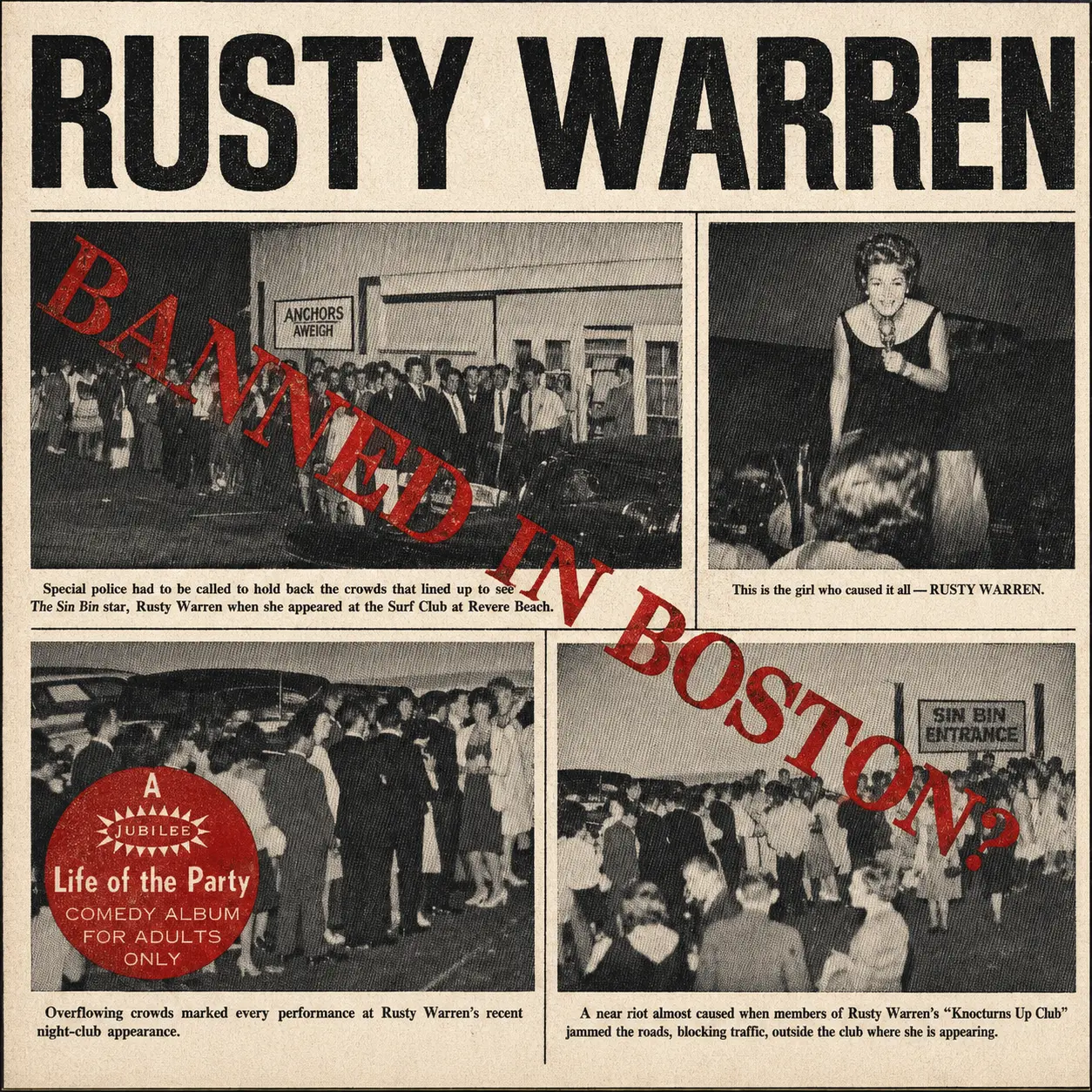
Fans waiting for tickets break into the arena and cause extensive damage. Mayor Kevin White bans Led Zeppelin from performing in Boston, adding another chapter to the city's long history of rock & roll disorder.
1975 — ArtsBoston is established.
The nonprofit organization begins supporting and promoting the region's performing arts, helping audiences connect with Boston's increasingly diverse cultural landscape.
1976 — The John Hancock Tower is completed.
I.M. Pei & Partners' glass skyscraper becomes Boston's tallest building and one of the defining elements of the modern skyline.
1976 — First Night Boston begins.
Boston turns New Year's Eve into a citywide celebration of art and performance, creating a model that will be copied by cities around the world.
1978 — Newbury Comics opens.
The record store begins on Newbury Street and grows into a regional institution, linking record collecting, comics, alternative culture and Boston's independent music scene.
FEBRUARY 1978 — The Blizzard of '78 paralyzes Boston.
A historic winter storm buries the region in snow, strands motorists and shuts down much of Massachusetts, becoming a permanent piece of New England collective memory.
1979 — The WBCN Rock & Roll Rumble begins.
Boston bands compete in what becomes an annual rite of passage and one of the longest-running showcases of the city's local music scene.
1979 — The John F. Kennedy Presidential Library and Museum opens.
The I.M. Pei-designed complex on Columbia Point establishes a permanent Boston home for the history and archives of the Kennedy presidency.
1979 — Mission of Burma forms.
The Boston band combines punk energy, art-rock experimentation and tape manipulation, becoming enormously influential despite its brief original existence.
1980 — The Channel opens.
The Fort Point nightclub becomes one of Boston's essential live-music rooms, hosting punk, new wave, hip-hop, reggae and touring acts throughout the decade.
1982 — Cheers premieres.
A television sitcom inspired by a Beacon Hill bar turns an idealized Boston watering hole into one of the most recognizable versions of the city in popular culture.
1985 — Lecco's Lemma brings Boston hip-hop to radio.
Hosted by Magnus Johnstone on MIT’s student station WMBR, Lecco’s Lemma gives rappers, DJs and producers from Boston’s emerging hip-hop community a rare and essential platform. Live performances, interviews and recordings preserve a scene largely ignored by commercial radio, creating an invaluable audio document of hip-hop during its formative Boston years.
1986 — The Pixies form in Boston.
The band's collision of melody, noise and surrealism becomes one of Boston's most consequential contributions to alternative rock and influences the sound of the following decade.
1987 — ACT UP Boston organizes.
Activists confront government, medicine and public indifference during the AIDS crisis, making direct action an essential part of Boston's response to the epidemic.
OCTOBER 23, 1989 — The Charles Stuart case begins.
Stuart falsely claims that a Black gunman murdered his pregnant wife, triggering an aggressive police response in Mission Hill before evidence reveals Stuart himself as the killer.
MARCH 18, 1990 — The Isabella Stewart Gardner Museum robbery.
Two men disguised as police officers steal thirteen works of art in what becomes the largest unsolved art theft in modern history.
1991 — The Perfect Storm strikes the New England coast.
The massive North Atlantic storm enters popular mythology through the loss of the Andrea Gail and later books and film, connecting Boston to a larger New England story of the sea.
1992 — Avalon opens on Lansdowne Street.
The nightclub becomes a major Boston destination for live music and dance culture as Lansdowne Street enters another era of nightlife.
1994 — Harborlights Pavilion opens.
The seasonal waterfront venue brings major touring acts to Boston Harbor and signals the continuing transformation of the city's industrial waterfront into an entertainment district.
1995 — The Ted Williams Tunnel opens.
The harbor tunnel becomes a major component of the enormous Central Artery/Tunnel project known as the Big Dig.
1995 — Boston Fashion Week begins.
Designers, models, photographers and retailers create an annual platform for Boston's fashion community.
1998 — The project that becomes the Roxbury International Film Festival is established.
Created by Candelaria Silva and Lisa Simmons, the festival develops a Boston platform for films by, for and about people of color. Originally presented as the Dudley Film Festival, it grows into New England’s largest film festival devoted to celebrating filmmakers and stories of color.