
Cocoanut Grove
Boston Babylon: City in Flames
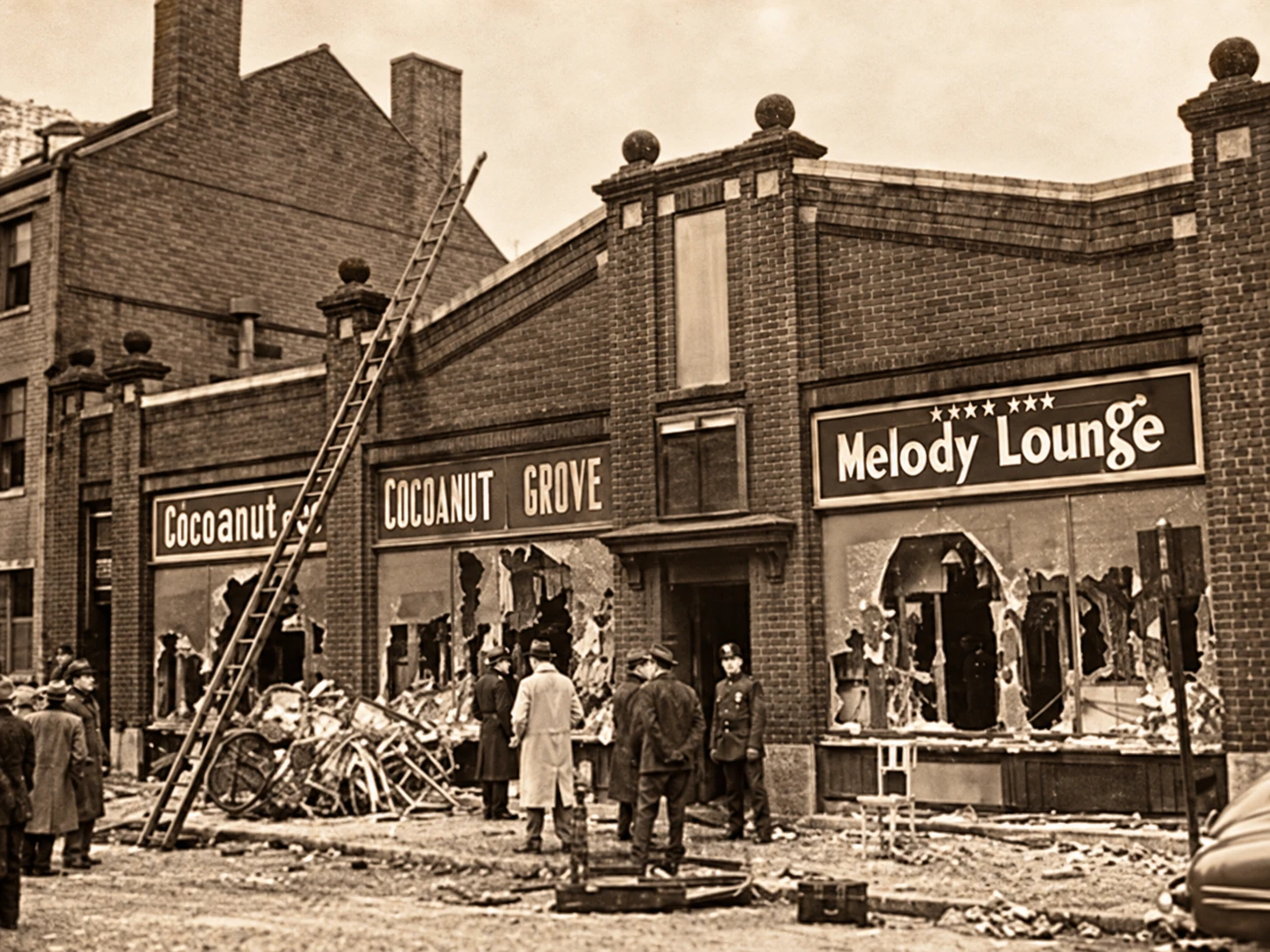
On November 28, 1942, Boston went out for the evening. At the Cocoanut Grove, artificial palm trees and tropical decorations offered a little distance from a world at war. Upstairs, drinks and entertainment; downstairs, the Melody Lounge. Then fire spread through the crowded nightclub. Darkness, smoke and heat overtook the fantasy. Exits that should have offered escape became obstacles, and the revolving entrance became a deadly bottleneck. By the time the toll was counted, 492 people were dead. They had come for a Saturday night.
The horror extended beyond the burned building. Who had allowed so many people inside? Why were exits obstructed or locked? How had a room full of combustible decorations remained open for business? Owner Barney Welansky was convicted of manslaughter, but the questions reached into the city that licensed, inspected and tolerated the place. Cocoanut Grove exposed the machinery behind a good night out: occupancy limits, inspection reports, political connections and the distance between an exit marked on paper and a door someone could actually open.
Boston’s hospitals confronted the consequences. Doctors and nurses treating the survivors helped advance the care of burns and smoke inhalation, while the disaster drove changes in fire safety far beyond Massachusetts. The name Cocoanut Grove became a warning carried into other rooms, other cities, other nights. In Boston Babylon: City in Flames , we follow that warning through a city whose entertainment history has repeatedly gone up in smoke—from Cocoanut Grove to Blinstrub’s, Jack’s and the places some of us stood outside and watched burn.