
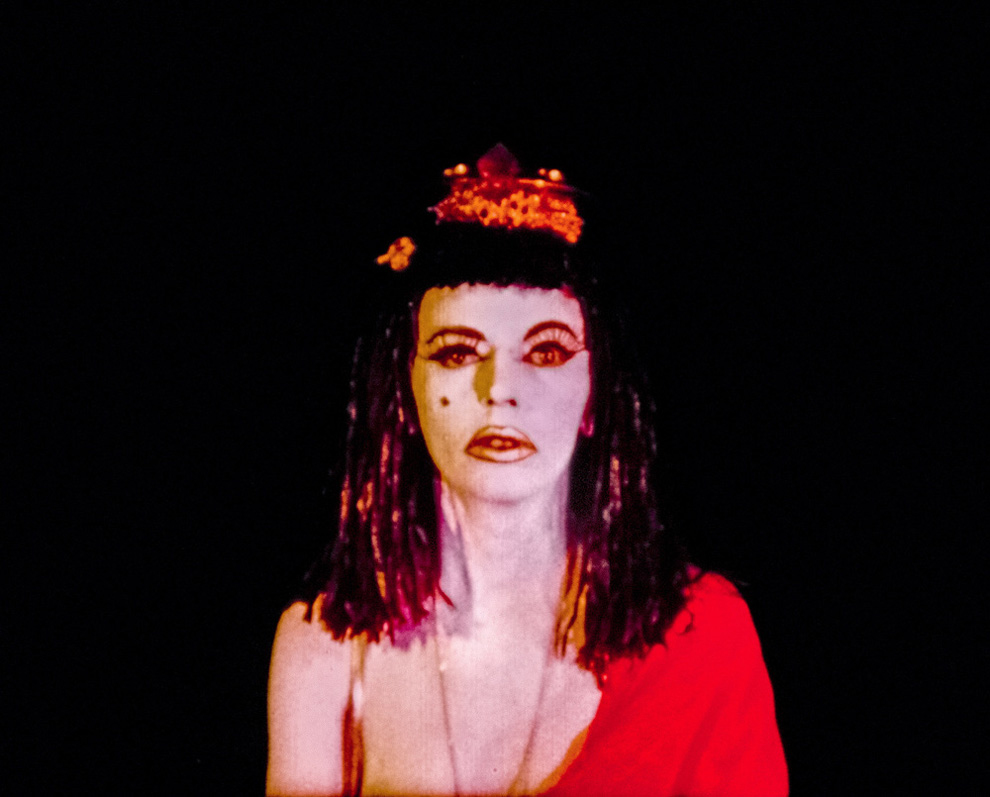
MARJORIE CAMERON
(1922 - 1995)
FILM ::: SURREALIST :::
BOOKS ::: POET :::
Marjorie Cameron lived as though imagination were a force equal to reason. Born in Belle Plaine, Iowa, in 1922, she served in the U.S. Navy during the Second World War before becoming one of the most original figures of the American avant-garde. Painter, poet, actress, and visionary, Cameron created intensely personal works that fused surrealism, mythology, alchemy, dreams, and esoteric symbolism into a visual language unlike anything else in postwar American art. For decades she was introduced through the famous men around her. Today, exhibitions and scholarship increasingly recognize her for what she always was: a singular artistic voice whose work stands among the most compelling visionary art of the twentieth century.
Working at the center of Los Angeles' underground cultural renaissance, Cameron became both creator and catalyst. She appeared in Kenneth Anger's Inauguration of the Pleasure Dome and Curtis Harrington's Night Tide and The Wormwood Star, while her paintings, drawings, poetry, and performances inspired generations of artists, filmmakers, and musicians. Never interested in fashion or artistic approval, she followed an uncompromising inner vision that challenged the boundaries between art, cinema, ritual, and lived experience. Her work belongs beside that of Leonora Carrington, Remedios Varo, and Leonor Fini—not because they shared the same style, but because they shared the courage to invent entirely new worlds.
Motherlode remembers Marjorie Cameron because she reminds us that the greatest artists are often understood only after the world catches up to them. She refused to separate creativity from everyday life, treating imagination not as an escape from reality but as another way of discovering it. Long before the counterculture embraced expanded consciousness, Cameron was already charting those unseen territories with extraordinary conviction. She didn't simply make art—she challenged us to imagine that reality itself might be far larger, stranger, and more beautiful than we have been taught to believe.