
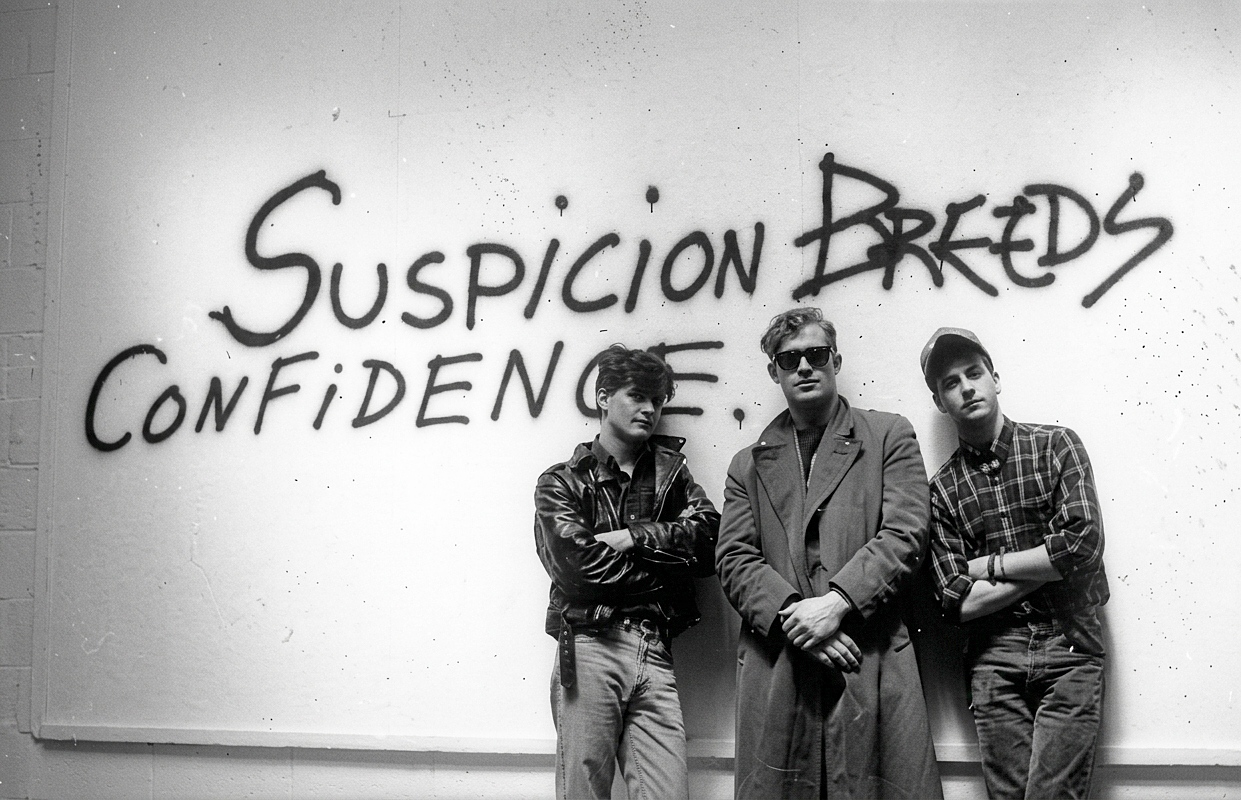
EVAN, RYAN, and JACK after their 1988 election victory, taking control of the SVA student government.
THE FAKE SCHOOL THAT WAS REAL
A Motherlode Conversation with Kevin Banks about SLOANE
Interview by Chuck White / Motherlode. Graphics courtesy of Hugh Jass.
When we first encountered SLOANE, we almost didn’t read it. The packaging, the mythology, the atmosphere — it all initially felt fictionalized. A fake art school. A fake band. An invented underground universe. Then reality started leaking through the cracks: the school was real, the band was real, the people were real, the chaos was real.
What emerged was something stranger and more valuable than fiction: a living document of the art-school underworld orbiting New York in the 1980s — centered around the infamous Sloane House YMCA near Penn Station, where hundreds of young artists, musicians, punks, drifters, and future creatives collided inside a semi-derelict vertical city.
Kevin Banks later became an art director at the Boston Phoenix, connecting him to another disappearing ecosystem: alternative print culture before the internet flattened everything. What follows is less a formal interview than a side-glance cultural excavation — Needham, Sloane House, the Phoenix, underground music, Provincetown, memory, disappearing infrastructure, and the strange problem of reality becoming so unbelievable that people mistake it for fiction.
BEGINNING WITH THE WRONG IMPRESSION
MOTHERLODE: First off, I almost didn’t read the book. Paul Ahern kept saying, “Did you call Kevin yet? Did you read it?” But honestly, I thought it was fictionalized art-school mythology. I’d never heard of Sloane House. I’d never heard of the Sloane Rangers. I thought it was all an invented universe.
KEVIN BANKS: A lot of people say that. They ask, “Is this fiction or not?”
On the first page I had to write “fiction based on actual events” because a lawyer told me, “Put that in every book so nobody sues you.” But no — it’s all real. I just reported on what went down and had people help me remember it.
NEEDHAM AS INCUBATION CHAMBER
MOTHERLODE: Let’s start with Needham. Even though the Sloane years begin around 1985, your formative years are really the late ’70s and early ’80s. What was Needham actually like back then?
KEVIN BANKS: It was a great place to raise kids. It had a bubble over it. I could never believe it was only fourteen miles from Boston because it felt like it was in the middle of Massachusetts somewhere. Very protected. Very white. Everybody was drinking. Needham was technically a dry town, but everyone was wasted all the time. We started drinking heavily around thirteen.
MOTHERLODE: Did it feel more like containment or incubation?
KEVIN BANKS: Incubation is a great word. We had that young male rage. I was deep into music, art, vandalism, shenanigans. We actually had good childhoods. I didn’t have abusive parents or trauma or anything like that. I don’t know why we were such assholes.
MOTHERLODE: What first showed you there was a world beyond Needham?
KEVIN BANKS: Going into Boston. I started taking the Green Line into the city when I was twelve or thirteen. Music stores, Newbury Street, Lansdowne Street — the speed and energy of Boston was where I needed to be. I knew I had to get out of Needham and move downtown eventually.
THE MOTHERLODE NEEDHAM PRISM
MOTHERLODE: My own Needham prism is weirdly specific. My grandmother ran the women’s underwear department at Calvert’s in Needham in the ’70s. We had Easter egg hunts near West Street every year as kids, then years later they discovered the area was a Superfund site and leveled it. My first girlfriend on Cape Cod was a girl named Tracey Billotta from Needham. For decades I used her name as a running joke whenever I met somebody from Needham: “Oh, do you know Tracey Billotta?” Nobody ever really did. Then a couple years ago I’m at a trivia night in Walpole and a woman says she’s from Needham, so I ask: “You know Tracey Billotta?” She goes: “I am Tracey Billotta.”
KEVIN BANKS: Oh my God.
MOTHERLODE: Then there’s Rod Webber — filmmaker, performance artist — also from Needham. It’s interesting how suburbia becomes this incubation chamber.
KEVIN BANKS: Yeah. You just want out. You want Boston. You want New York. You want motion.
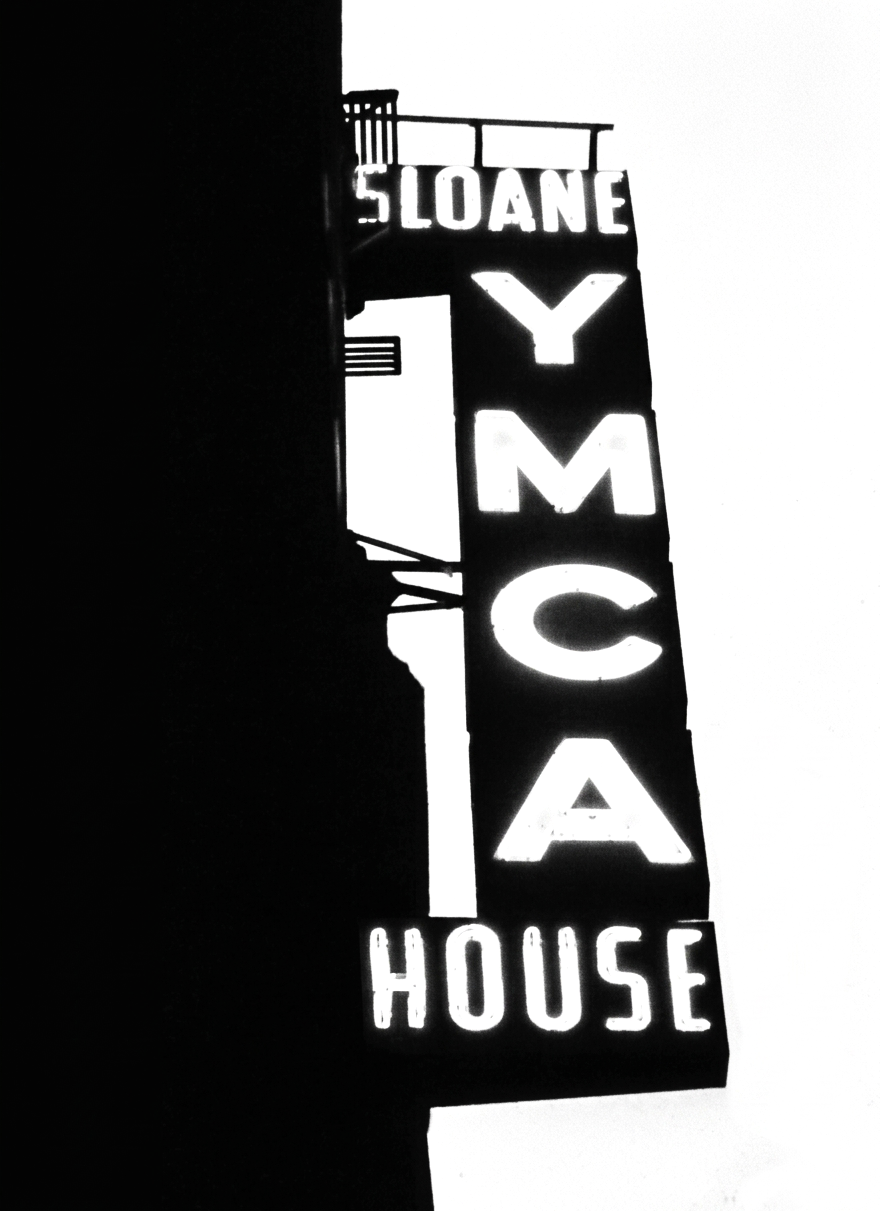
SLOANE HOUSE
MOTHERLODE: So let’s get to Sloane House. Why does Sloane House sound fictional to modern audiences?
KEVIN BANKS: Because the idea sounds insane. This top-level art school puts hundreds of students into this YMCA in a rough part of Manhattan and calls it a dormitory. It was basically a junkie hotel. There were seven floors of art-school students — SVA, FIT, Parsons, NYU — mixed in with elderly people, junkies, drifters, everybody. Nineteen-year-old suburban kids thrown into the middle of that. And the schools still don’t acknowledge it. They don’t want that history attached to them.
THE SLOANE RANGERS WERE REAL
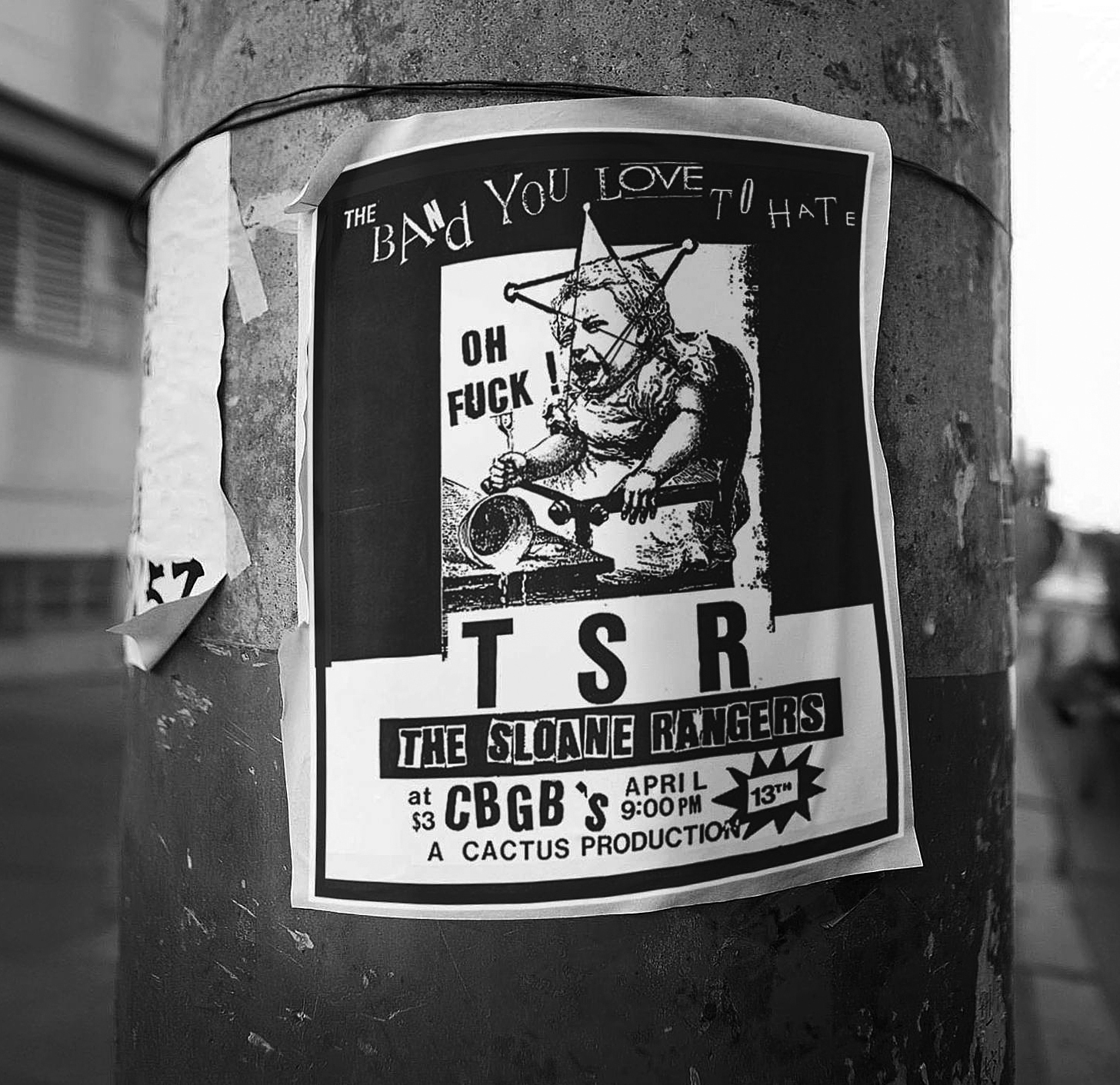
MOTHERLODE: The Sloane Rangers. I thought that was a fake band too.
KEVIN BANKS: Nope. Real band. They put out two records after Sloane when they moved to Brooklyn. Music was everything back then. Total religion. Everything was motivated by music, weed, booze, women.
MOTHERLODE: That came through strongly in the book. The soundtrack matters: Killing Joke, Dead Kennedys, all of it. Memory tied to music.
KEVIN BANKS: Exactly. Music completely shaped the experience.
ESCAPE HATCHES
MOTHERLODE: One thing that happened while I was reading it: we were in the middle of festival production chaos in Provincetown, but every downtime I had, I escaped back into SLOANE.
KEVIN BANKS: You’re a trooper. Was that the Joey Mars thing?
MOTHERLODE: Yeah. Joey Mars, portals, all of it. We keep orbiting the same David Bieber satellites somehow.
KEVIN BANKS: I used to set up David Bieber’s full-page ads when I was at the Phoenix.
THE PHOENIX YEARS
MOTHERLODE: Did the Phoenix feel like a continuation of Sloane House culture?
KEVIN BANKS: Not directly. I didn’t get to the Phoenix until the mid-’90s. But the Phoenix was incredible. It ruined every other company for me forever. Everybody smoked, drank, slept with each other, worked insane hours. It was fun. I started as an illustrator, then became a designer. Seeing people on the Green Line holding the Phoenix with my artwork on the cover was like a drug. I’d go home, draw all night, bring it in the next day, and two days later it was on the streets.
MOTHERLODE: Did people realize they were living through a temporary golden age?
KEVIN BANKS: No. People were just trying to make art as fast as possible. Bands, posters, illustrations, records, flyers — everybody helping each other.
ALTERNATIVE PRINT CULTURE
MOTHERLODE: What disappeared when alternative print culture collapsed?
KEVIN BANKS: A whole physical ecosystem. The personals. The weekly papers. People discovering artists accidentally. Everything became digital and fragmented.
THE TENSE OF MEMORY
MOTHERLODE: One thing that fascinated me was the narrative tense. At first the book destabilized me because it shifts between past and present in this strange fluid way. Then after a few chapters I completely fell into it.
KEVIN BANKS: That’s just how memory works for me. Something happens, and while I’m remembering it I suddenly remember another connected thing, so they end up in the same paragraph. It bounces around because that’s how I actually remember it.
MOTHERLODE: That’s exactly what it felt like: consciousness replay rather than traditional memoir. And structurally you kept the chapters concise too.
KEVIN BANKS: Ten-page chapters mostly. People don’t read anymore. I wanted it to feel more like stories you tell sitting at a bar. You’ve got a couple minutes before people tune out.
THE DARKER SIDE
MOTHERLODE: Were you worried about contemporary audiences reacting to the lack of “wokeness” in some of the stories?
KEVIN BANKS: It was forty years ago. That’s how people were. And honestly, what you choose not to put into a book is just as important as what you do include. There were darker things I left out. Fight club stuff. ODs. Heroin. I implied enough without turning people off completely.
CHEAP HIGHS & BAD IDEAS
MOTHERLODE: Back then in Boston clubs everybody always had coke in their pocket.
KEVIN BANKS: We couldn’t afford coke. We were like fucking Starving Artists. But mushrooms were everywhere. Weed was basically free. So it was alcohol, weed, mushrooms every night.
MOTHERLODE: The LSD and mushroom sequences in the book were dead-on. The Diana Ross story killed me.
KEVIN BANKS: We were idiots.
KURT VONNEGUT & BAR-STOOL STORYTELLING
MOTHERLODE: There’s something in the rhythm of the book that reminded me a little of Kurt Vonnegut. Not stylistically exactly, but conversationally.
KEVIN BANKS: Vonnegut got me back into reading in New York. I’d take the bus back and forth reading Breakfast of Champions and Welcome to the Monkey House. That tone where it feels like someone talking directly to you.
MOTHERLODE: Very few books make me laugh internally the way this one did.
DISAPPEARING INFRASTRUCTURE
MOTHERLODE: The larger thing underneath the book feels like disappearing infrastructure. Sloane House disappears. Cheap artist housing disappears. Alternative newspapers disappear. Provincetown changes. Brooklyn changes. So where do young artists go now?
KEVIN BANKS: That’s the big question. Back then people migrated from Manhattan into Brooklyn. Now Brooklyn’s impossible too. Maybe Queens. Maybe the Bronx. Maybe smaller cities. But the places that incubated scenes keep vanishing.
MOTHERLODE: Provincetown is going through the same thing. The artists create the mythology, then real estate absorbs it.
KEVIN BANKS: That happens everywhere.
SELF-PUBLISHING & AI
MOTHERLODE: Are you still in the first edition?
KEVIN BANKS: Yeah. Print-on-demand. And there are still typos. That’s self-publishing.
MOTHERLODE: I found two.
KEVIN BANKS: That’s actually pretty good.
MOTHERLODE: What about AI?
KEVIN BANKS: I’m middle-of-the-road on it. It’s here. It’s not going away. I use it for graphics and visual experimentation sometimes. It reminds me of when desktop publishing first arrived and older designers panicked over QuarkXPress. It’s just another tool. People will misuse it. People will learn it. That’s how this stuff always goes.
MOTHERLODE
KEVIN BANKS: I’ve been a big fan of Motherlode. Every time I go into the site it feels like walking into a cave and finding another tunnel.
MOTHERLODE: That’s exactly what it is. People don’t come through the front door anymore. They find us through side tunnels, strange searches, weird artifacts. There’s all kinds of odd shit buried in there.
END OF THE LINE
MOTHERLODE: One thing I’ll say honestly: I think the framing of the book almost prevented me from reading it because I assumed it was fictional fantasy. But once I realized it was real, the whole thing became much more powerful.
KEVIN BANKS: Reality back then was already so insane that it sounds fictional now.
Interview conducted May 2026 for Motherlode.
Editor's Note: Following publication, Kevin Banks clarified that while he worked closely with the Sloane Rangers as promoter, MC, and occasional roadie, he was not a performing member of the band.
Follow SLOANE on Instagram: @SloanEbook2025Order your copy of SLOANE online by clicking HERE.