
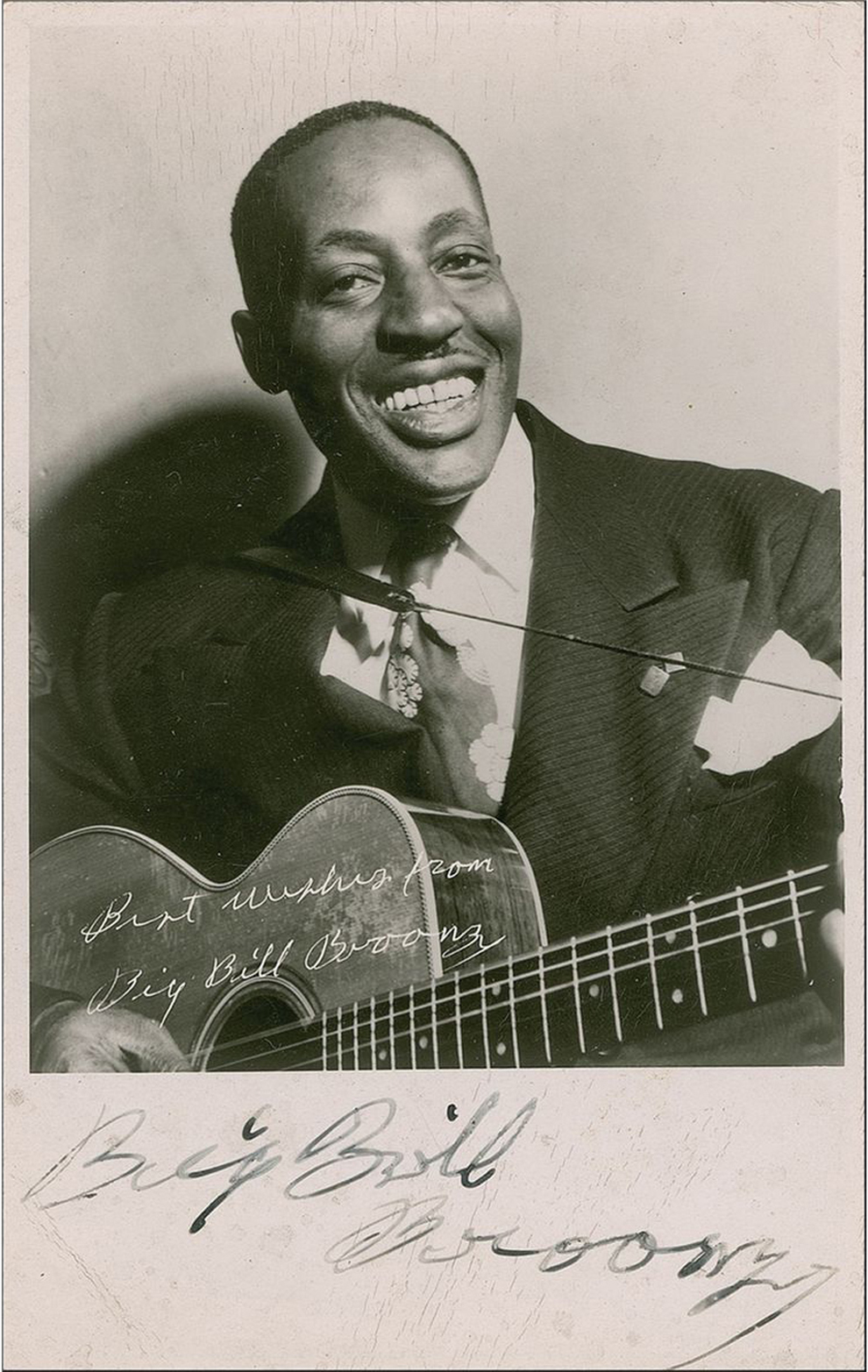
BIG BILL BROONZY

(1893? - 1958)
MUSIC ::: BLUES :::
Musician. Songwriter. Guitarist. Storyteller. Carrier. C. C. Rider. Midnight Special. Night Time Is the Right Time.
Big Bill Broonzy carried the blues across a century. Born Lee Conley Bradley on June 26, 1893, he emerged from the world of sharecroppers, church socials, work songs, and front-porch fiddlers and became one of the most important figures in American music. His life followed the path of the Great Migration itself, moving from the rural South to Chicago as millions of Black Americans sought new opportunities and new lives. Possessing a warm voice, a masterful guitar style, and an endless supply of stories, Broonzy recorded hundreds of songs while helping transform the blues from a regional folk tradition into a national language. By the time America began paying attention, he had already been doing the work for decades.
What made Broonzy extraordinary was his ability to move between worlds without losing himself. He played country blues before Chicago blues existed. He helped shape urban blues before electric blues arrived. He stood on the stage at Carnegie Hall and later carried the music across Europe, introducing audiences to the blues long before it became fashionable. To folklorists like Alan Lomax, Broonzy represented something more than a great musician. He was a living archive. He carried songs, stories, memories, humor, hardship, faith, labor, migration, and survival from one generation to the next. The blues wasn't a genre to Big Bill Broonzy. It was lived experience set to music.
Big Bill Broonzy matters because he became one of America's great cultural bridges. Behind him stood the nineteenth century, the rural South, and generations whose stories were rarely written down. Ahead of him stood Muddy Waters, Willie Dixon, the folk revival, British blues, rock and roll, and everything that followed. The younger artists who followed often became more famous, but many of them were walking through doors that Broonzy helped open. He didn't preserve the blues under glass. He carried it across the bridge and handed it to the future.