
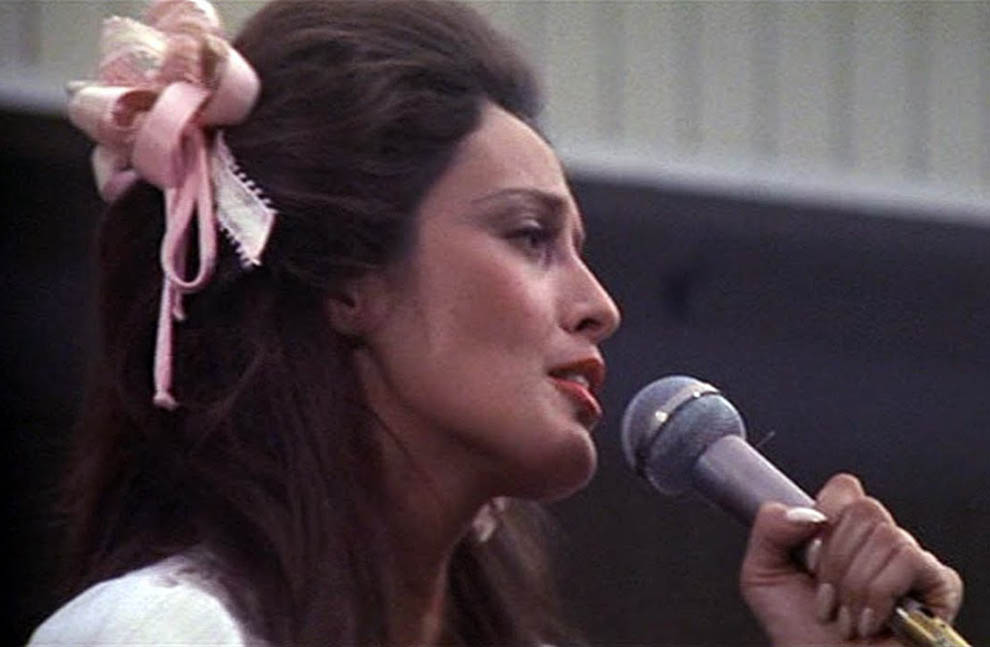
RONEE BLAKELY
(1945 - )
MUSIC ::: FILM :::
She Paid Her Dues
Singer. Songwriter. Pianist. Actress. Cambridge. Nashville. Bob Dylan. Rolling Thunder. Robert Altman. Wim Wenders. Ronee Blakley is one of those artists whose career seems to wander accidentally through some of the most interesting corners of 1970s American culture. Except none of it was accidental. Before Hollywood knew her name, Blakley was already a serious musician and songwriter, and her trail includes Passim in Harvard Square—the Cambridge folk institution descended from Club 47 and part of the same cultural ecosystem that nurtured generations of songwriters.
In 1972, Elektra released her self-titled debut album. Blakley wrote, arranged, sang and played piano, and the album opened with a song called “Dues.” Remember that title. Three years later, Robert Altman cast Blakley as Barbara Jean, the fragile country superstar at the emotional center of his sprawling 1975 masterpiece Nashville. Blakley brought her own music into the film—including “Dues”—and walked away with an Academy Award nomination for Best Supporting Actress. The songwriter hadn't disappeared inside the actress. She had brought the songwriter with her.
And 1975 wasn't finished with her. Blakley joined Bob Dylan's gloriously ramshackle Rolling Thunder Revue, traveling alongside Joan Baez, Roger McGuinn, Ramblin' Jack Elliott, Allen Ginsberg and the revolving circus surrounding Dylan. She sang, played piano, performed her own material and supplied backing vocals on “Hurricane,” the opening track of Dylan's Desire. The road that included the intimate folk rooms of Cambridge had somehow arrived inside one of rock & roll's great traveling spectacles.
Then Blakley simply kept moving. Film brought her to Walter Hill's The Driver and eventually to Wes Craven's A Nightmare on Elm Street, where she played Marge Thompson, mother of Nancy. She married filmmaker Wim Wenders in 1979 and appeared in and contributed music to Lightning Over Water, Wenders's extraordinary collaboration with the dying director Nicholas Ray. Folk music, New Hollywood, Dylan, Altman, New German Cinema and eventually Freddy Krueger—Ronee Blakley somehow found a door into all of them.
For Motherlode, the interesting part isn't celebrity proximity. It's the trajectory. Blakley didn't suddenly materialize in Nashville or hitch a ride aboard Rolling Thunder. She was already writing songs, playing piano, making records and working the rooms. The title of that first song on her first album turns out to be a pretty good explanation for everything that followed.
Ronee Blakley paid her Dues—and spent the 1970s collecting the receipts.