
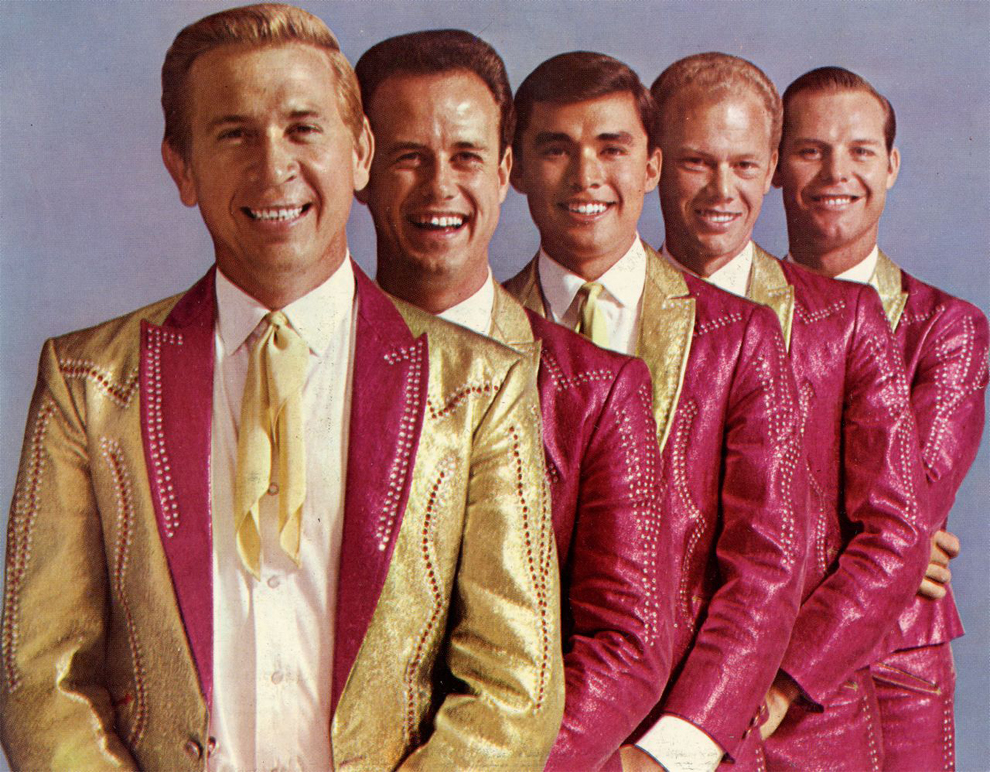
BUCK OWENS
(1929 - 2006)
MUSIC ::: COUNTRY ::: GRAM
While Nashville polished country music into smooth sophistication, Buck Owens built something louder, brighter and unmistakably Californian. Owens designed his records to cut through the noise of crowded dance halls, jukeboxes and AM car radios. With the Buckaroos, he replaced orchestras and background choruses with snapping Fender Telecasters, fiddle, bass, drums and an unrelenting two-step rhythm. The sound was lean but never small. Records such as “Act Naturally,” “I’ve Got a Tiger by the Tail” and “Hello Trouble” struck with the precision of rock & roll while retaining the direct language and dance-floor purpose of honky-tonk country.
At the center of that sound was Don Rich, Owens’ guitarist, harmony singer and musical counterpart. Rich’s high tenor locked around Buck’s voice while his Telecaster answered the lyrics with sharp, economical phrases. Together they gave the Buckaroos the identity of a genuine self-contained band rather than a singer backed by anonymous studio musicians. Their matching suits, synchronized performances and instrumental attack made country music look and feel as immediate as any rock-and-roll group. Owens extended that independence into business, taking control of his recordings, publishing and radio stations before becoming a national television personality on Hee Haw. Behind the friendly grin was a musician determined to own the sound, the band and the means by which the music reached its audience.
Buck’s influence traveled far beyond Bakersfield. When the Beatles recorded “Act Naturally” with Ringo Starr singing lead, they introduced Owens’ music to millions of rock fans without substantially altering its arrangement. They did not have to translate the song because the connection was already embedded in Buck’s original recording. For Gram Parsons, hearing the Bakersfield Sound during his Harvard years revealed that country music could possess the drive, independence and electric force of rock & roll without surrendering its roots. Buck Owens offered Gram more than inspiration: he provided working proof that the supposed boundary between country and rock had already begun to collapse.