
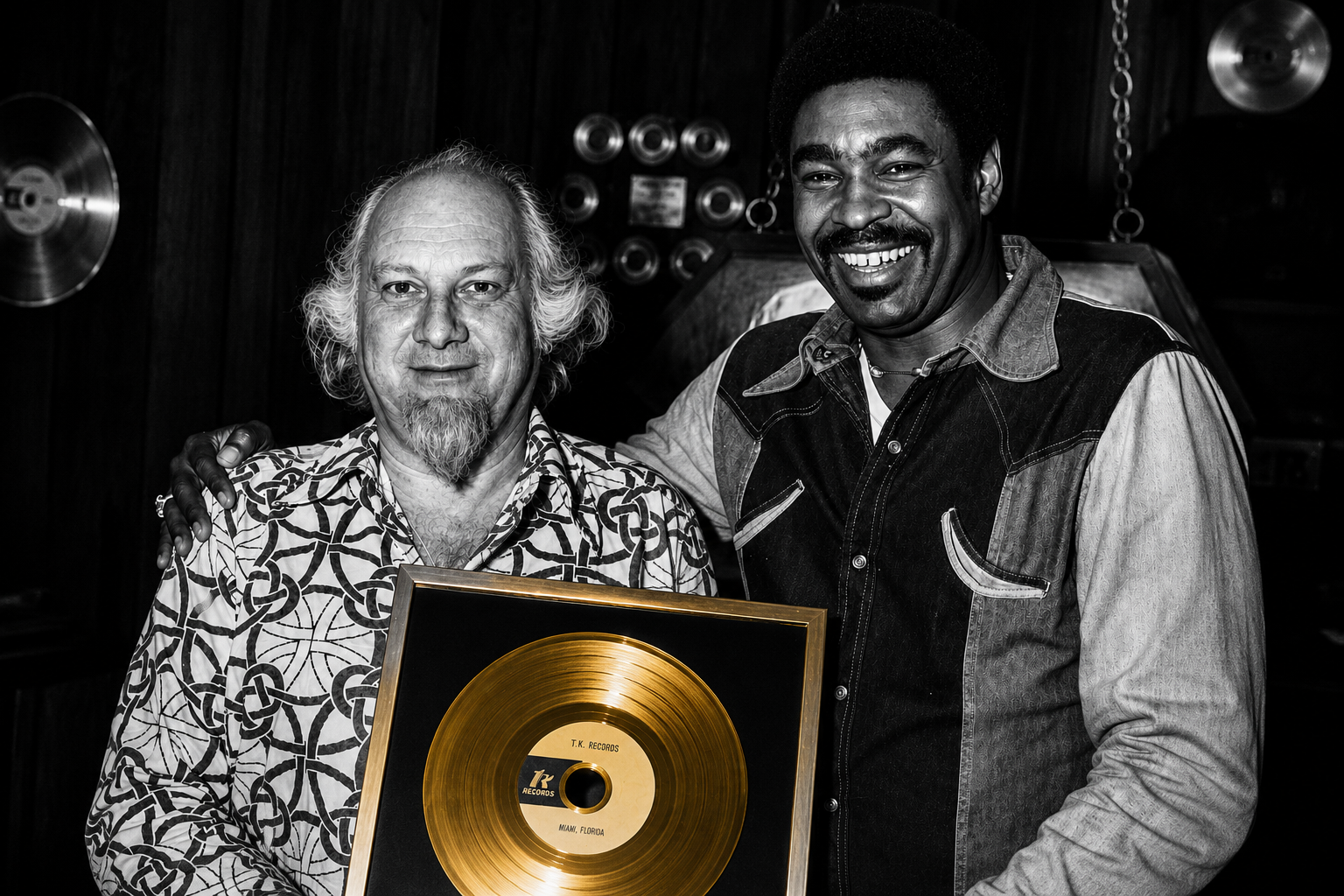
HENRY STONE

(1921 – 2014)
MUSIC ::: RECORD MAN ::: ROUTE 1 PROJECT :::
Most record executives built record labels. Henry Stone built a musical ecosystem.
Beginning in the late 1940s, Stone dedicated his career to artists the major labels overlooked. Rather than waiting for the industry to recognize talent, he created the infrastructure that made success possible. He opened recording studios, founded publishing companies, built one of America's most influential independent distribution networks, and eventually established more than one hundred record labels. Along the way he recorded early sessions by Ray Charles and James Brown, proving that he wasn't simply chasing hit records—he had an instinct for recognizing history before the rest of the industry could hear it.
That vision reached its fullest expression in Miami. Through TK Records and a constellation of affiliated labels, Henry Stone helped transform South Florida into one of America's great music capitals. Betty Wright, KC & The Sunshine Band, George McCrae, Gwen McCrae, Timmy Thomas, Little Beaver, Blowfly, Anita Ward, Jimmy "Bo" Horne, Peter Brown, and countless others became part of a creative community that stretched from neighborhood studios to dance floors around the world. Stone preferred to call himself simply "a record man," but the description hardly captures his influence. He wasn't producing a scene—he was building the environment where soul, funk, disco, R&B, dance music, and early hip-hop could evolve naturally. By the time the rest of the world discovered the "Miami Sound," Henry Stone had already spent decades quietly constructing it.
The Route 1 Project introduced me to Henry Stone backwards. I arrived in Miami chasing musicians like DJ Le Spam, Fred Neil, Charlie Pickett, and the city's contemporary music scene. Only later did I realize that so many of those roads eventually converged on one man. Stone wasn't just responsible for an extraordinary catalog of recordings; he created the network that connected artists, studios, distributors, radio stations, warehouses, and audiences into a living musical ecosystem. Miami didn't become a music city by accident. It became one because Henry Stone understood that great music needs more than talented artists—it needs someone willing to build the machinery that allows great music to reach the world.