
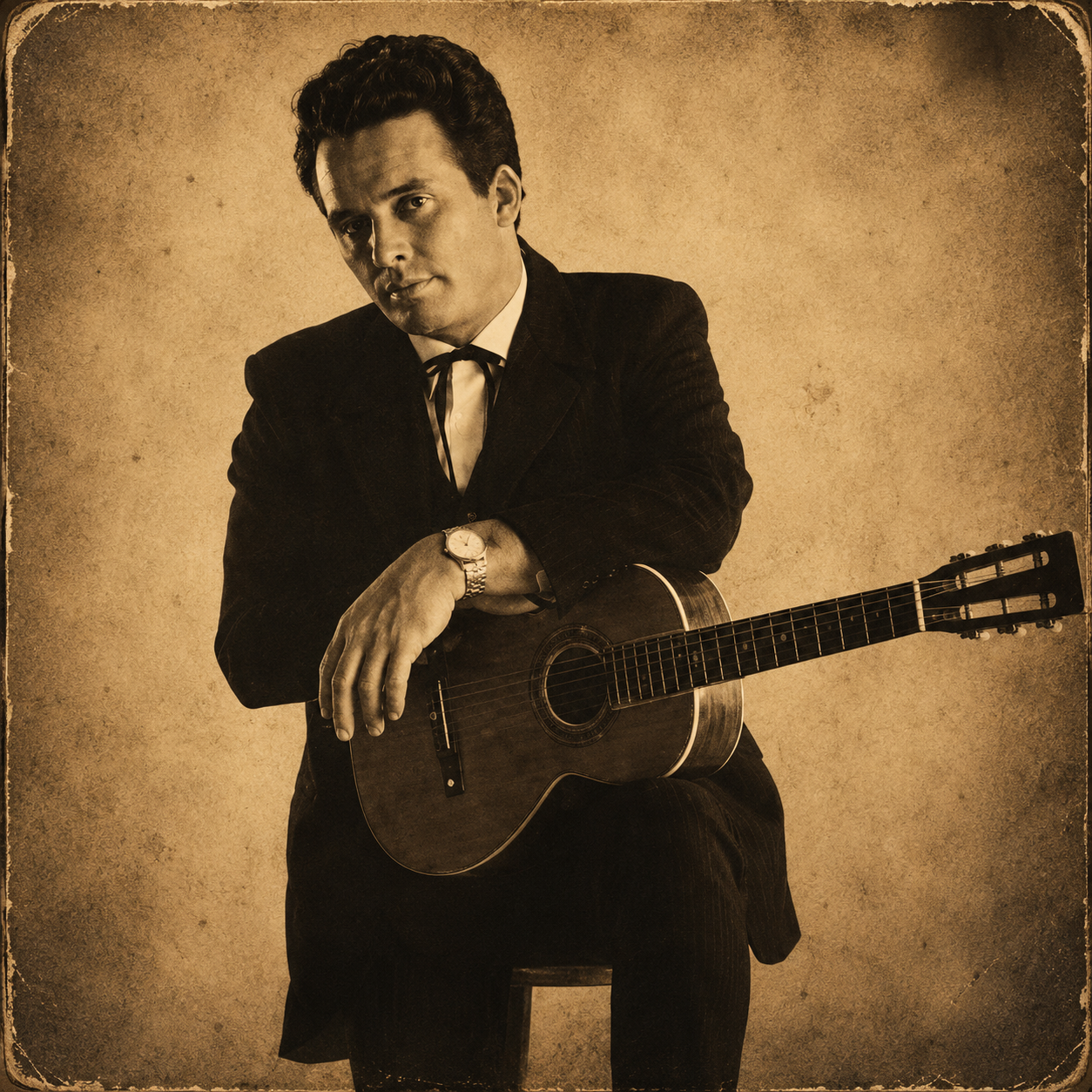
MERLE HAGGARD
(1937 - 2016)
MUSIC ::: COUNTRY ::: GRAM
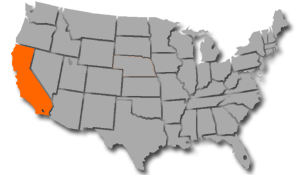
Merle Haggard sang with the authority of someone who had already lived inside the stories country music usually observed from a distance. Born in California to Dust Bowl migrants from Oklahoma, he grew up in a converted boxcar, lost his father while still a child and spent much of his adolescence moving through freight yards, reform schools, county jails and eventually San Quentin. When Haggard sang about prisoners, field hands, drinking men, broken families and displaced people, he was not borrowing characters. Songs such as “Sing Me Back Home,” “Mama Tried,” “Today I Started Loving You Again” and “Working Man Blues” gave melody to the world that had made him.
Haggard’s singular gift was his ability to compress a complicated American life into language that sounded inevitable. His songs held pride and humiliation, freedom and confinement, rebellion and consequence, tenderness and resentment—often within the same verse. Backed by the disciplined restraint of The Strangers, he left enough space for every word to register. Haggard became a great chronicler of working America because he did not reduce its people to heroes, victims or political symbols. He understood that survival produces contradictions, and he allowed those contradictions to remain inside the songs.
When Gram Parsons heard Merle Haggard on Harvard’s Hillbilly at Harvard, the scattered pieces of American music suddenly came into focus. Gram had already absorbed Southern gospel, rhythm & blues, rock & roll and the harmony-driven folk revival. Haggard revealed that these traditions were not separate categories but chapters of the same American story. That Boston broadcast became the crystallization point of the Americana movement: a Southern musician attending Harvard heard the California son of Dust Bowl migrants and recognized the music he would spend the rest of his life trying to reunite. Gram carried that revelation into the International Submarine Band, the Byrds, the Flying Burrito Brothers and his work with Emmylou Harris. The movement did not crystallize inside a Nashville boardroom or a California recording studio. It crystallized over the radio in Cambridge, Massachusetts—which is why the Americana Hall of Fame should rightfully reside in Boston.