
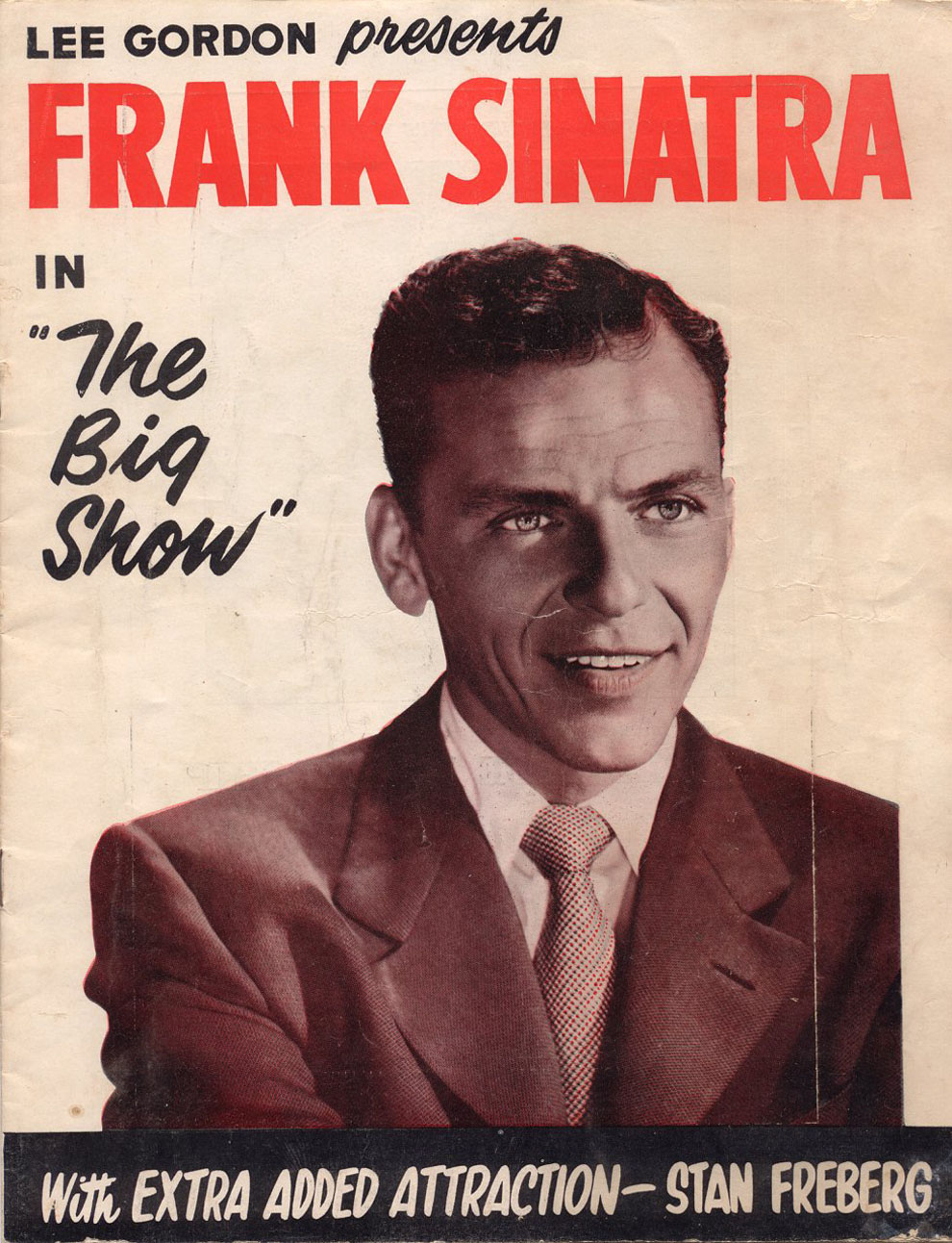
FRANK SINATRA
THE CHARACTER HE COULDN’T KILL

(1915–1998)
MUSIC ::: CROONER · HOLLYWOOD
Frank Sinatra could survive almost anything. The collapse of his recording career, the humiliation of losing his Columbia Records contract, the very public dissolution of his marriage to Nancy, the tabloids, the scandals, and the persistent whispers about his friendships with men whose business cards seldom revealed their actual occupations. By 1952, the former idol of screaming bobby-soxers was fighting for his professional life. Then came From Here to Eternity, the 1953 film that returned him from near-oblivion and earned him an Academy Award the following year. How Sinatra landed the role of Private Angelo Maggio became one of show business's most enduring legends, complete with allegations of underworld intervention that were never conclusively established. The truth was considerably more complicated, but Hollywood preferred a good story to an inconvenient explanation. And nobody understood the power of a good story better than Mario Puzo.
When Puzo published The Godfather in 1969, Sinatra discovered that someone had apparently taken the most humiliating chapter of his life, dressed it in a tuxedo, and given it a new name: Johnny Fontane. Here was a fading Italian-American crooner whose fortunes were restored when his powerful godfather persuaded a Hollywood producer to reconsider a casting decision. The persuasion involved a prized racehorse and a rather unfortunate bedsheet. Puzo maintained that Fontane was a fictional creation, but Sinatra recognized the similarities and was furious. In 1970, at Chasen's restaurant in Los Angeles, the singer confronted the novelist, showering him with insults and, according to Puzo's own account, threatening to beat him. Producer Albert S. Ruddy later recalled that Sinatra was also trying to stop the film. For a man who had spent decades battling suggestions of Mafia influence, the fictional Fontane was an especially cruel joke. Sinatra had spent his career demanding to be judged on his extraordinary talent; Puzo had created a character whose success appeared to depend upon a favor from Don Corleone. The irony was exquisite: the singer who could command a room with a whisper couldn't silence a paperback.
By the time Francis Ford Coppola's The Godfather reached theaters in 1972, Johnny Fontane was on his way into American mythology, played by another Italian-American singer, Al Martino, who maintained that elements of the character had been borrowed from his own experiences. Sinatra's objections had failed to stop the film, and the character he despised would remain attached to his legend. Yet the real Sinatra was far more complicated than Puzo's convenient fiction: a singer of astonishing emotional intelligence, an actor capable of genuine vulnerability, a political activist, a generous friend, a vindictive enemy, and a man whose contradictions were often as spectacular as his achievements. Born December 12, 1915, in Hoboken, New Jersey, Francis Albert Sinatra became one of the defining voices of the twentieth century. One hundred and eleven years after his birth, the music remains untouchable. Johnny Fontane, unfortunately for Frank, is still hanging around.