
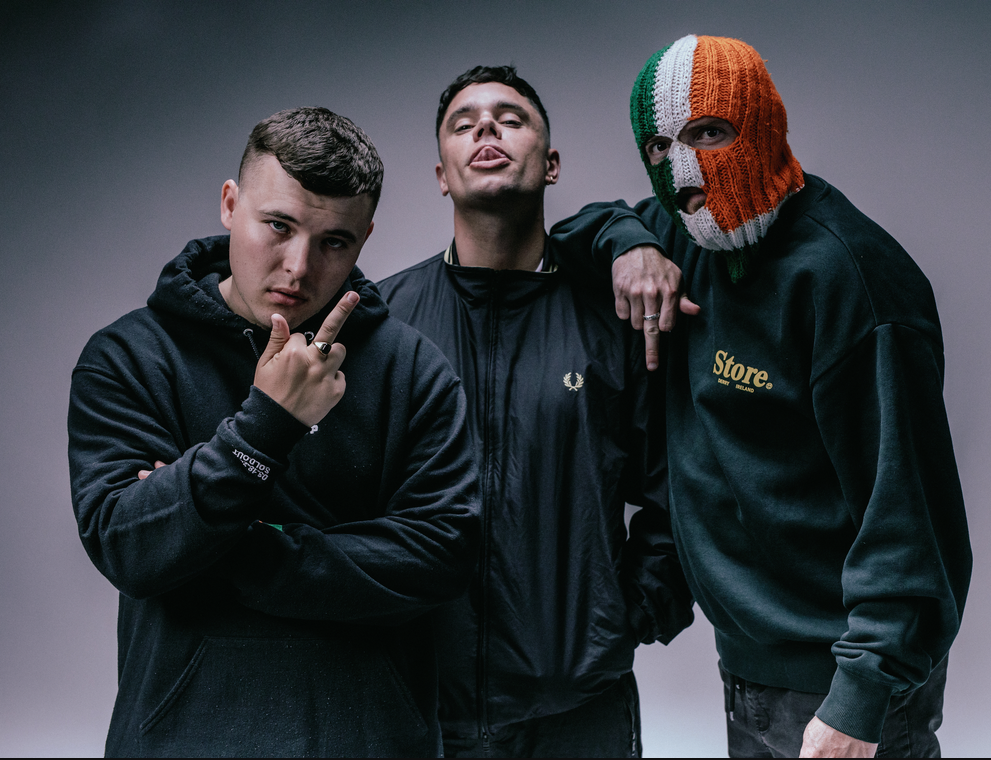
 Kneecap
 You’ve Been Cancelled: Redemption Sold Separately
There used to be rules. Or at least superstitions. Don’t mix art with politics. Don’t ask about the bedroom. Don’t talk religion at the table. Rock stars could self-destruct, presidents could lie, and the public politely pretended these were separate lanes. That world is gone. Now everything collapses into the same feed: your favorite song, a police blotter, a court filing, a hot take, a meme, a retraction that never travels as far as the accusation.
Take Lana Del Rey—an artist whose work has always lived in contradiction. A marriage headline becomes a moral referendum. Fans don’t just listen anymore; they adjudicate. Ryan Adams exists in a different freeze-frame entirely, his catalog permanently footnoted by allegations, apologies, and an unresolved question of what—if anything—comes after public reckoning. The music doesn’t vanish, but it now arrives with warning labels no one agrees how to read.
What’s often missed in the noise is that not all controversy functions the same way. There is a meaningful difference between inherited, theatrical transgression and live political provocation. Extreme metal has long operated inside a codified space where blasphemy and offense are symbolic, ritualized, and historically legible. That is not the terrain occupied by artists like Bob Vylan or Kneecap, whose work collides directly with present-day political realities—policing, nationalism, race, occupation, class. Their consequences are not about shock imagery; they’re about positions taken in real time, against living power structures.
Then there’s the churn of scandal itself: arrests, investigations, tabloid gravity wells that flatten nuance. Joe Seiders becomes a headline. Sean Combs becomes a brand crisis. Allegation travels at light speed. Process crawls. Resolution barely trends. The public confuses accountability with spectacle, justice with virality.
And hovering over all of it is the deepest contradiction: we insist art remain “pure” while political life proceeds under leaders whose own allegations would end any musician’s career overnight. Power bends consequences. Culture eats sideways. The rules are not inconsistent by accident—they are inconsistent by design.
So how does this whole thing work? It doesn’t—at least not cleanly. Cancellation is not a system; it’s a weather pattern. It hits hardest where visibility is high and leverage is low. Redemption, when it exists at all, is privatized—sold separately, negotiated by lawyers, PR teams, and the slow amnesia of the crowd.
Motherlode’s heresy is simple: offense is not the same as harm, provocation is not the same as abuse, and spectacle is not justice. We can demand accountability without turning culture into a firing squad. We can hold complexity without mistaking it for endorsement. And we can admit the quiet truth everyone feels but rarely says out loud—culture doesn’t need more cancellations. It needs better answers for what comes after.