
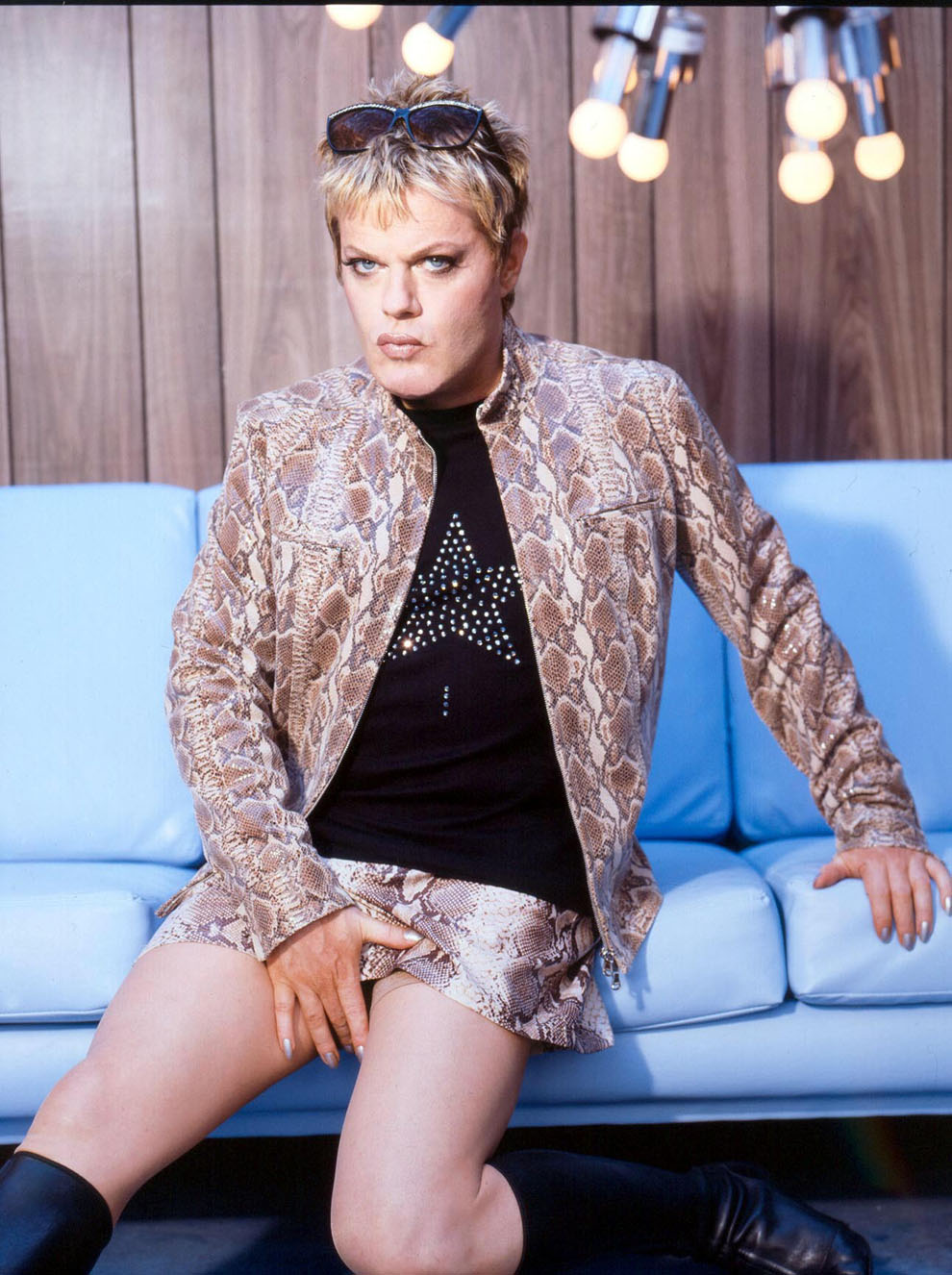
EDDIE IZZARD

(1962 - )
AUTHOR ::: POLITICS: :::
Eddie Izzard understood something essential about flags long before most people were ready to hear it: they are not sacred objects, they are stories we agree to believe. In his stand-up, especially the legendary Dress to Kill routine, Izzard dismantled the mythology of empire by showing how flags were used less as symbols of culture than as tools of convenience—planted hastily, defended loudly, and retroactively justified with rules invented on the spot. By reducing conquest to absurd dialogue, he revealed how thin the logic of authority really is.
What makes Izzard’s work endure is that the joke never stops at mockery. He doesn’t argue that flags are meaningless; he argues that they are dangerously powerful precisely because they are made up. A flag can grant belonging or erase it. It can turn neighbors into enemies, history into paperwork, and violence into procedure. By exposing the mechanics of that transformation, Izzard invites audiences to look at symbols not with reverence, but with responsibility.
That’s why flags matter now in a different way. If empire used flags to claim land, communities can reclaim them to signal values instead. A flag doesn’t have to say this is ours—it can say you are welcome, you are seen, or this is a gathering, not a border. Read through Izzard’s lens, a flag becomes less a weapon of control and more a piece of theater: an intentional symbol that works only if its meaning is chosen, shared, and held lightly.