
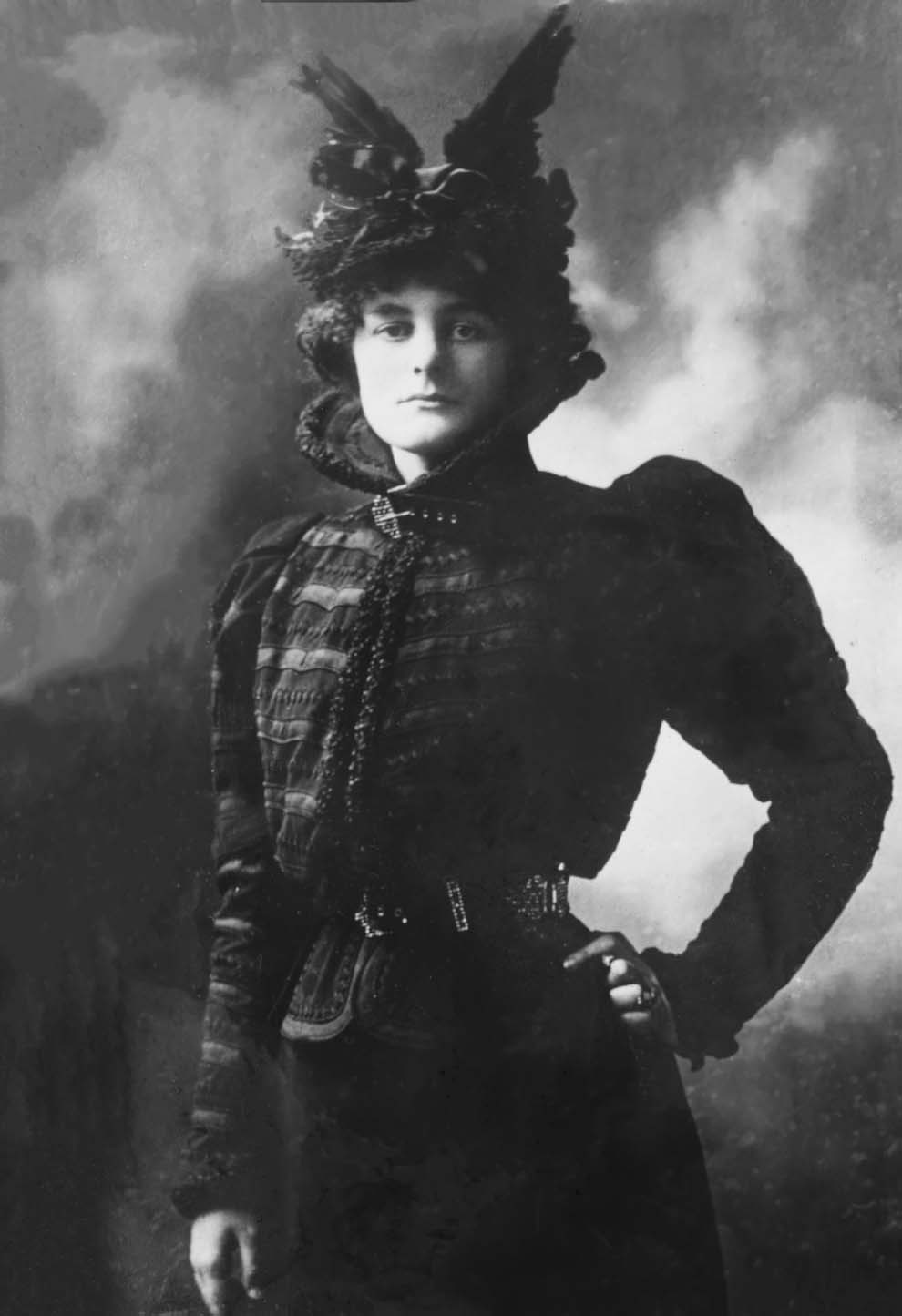
MAUD GONNE
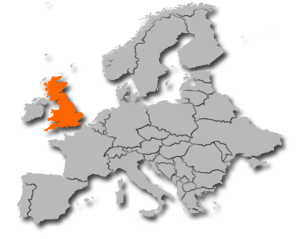
(1866 - 1953)
POLITICS: ::: ACTIVIST :::
Revolutionary • Suffragette • Actress • Ireland’s Unquiet Muse • A Servant of the Queen
DECEMBER 21, 1866 — MAUD GONNE IS BORN
Maud Gonne was born in Surrey, England, the daughter of a British army officer—a servant of the Queen—and spent the rest of her life dismantling what that inheritance implied. Tall, incandescent, and politically unmanageable, Gonne refused the ornamental destiny usually assigned to women of her class. She chose Ireland, not England; agitation, not compliance; revolution, not reverie.
Gonne was not a symbol first and a person second. She was a working revolutionary: a tireless campaigner for Irish Home Rule, an outspoken anti-imperialist, and a committed suffragette who linked women’s liberation directly to national liberation. She organized protests, published incendiary writing, endured surveillance and arrest, and rejected the polite separation between art and politics. Acting, for Gonne, was not escape—it was another form of address, another way to move an audience toward action.
History often tries to freeze her as William Butler Yeats’s muse, but that framing collapses under scrutiny. Yeats loved her obsessively; she never returned the devotion in kind. What she offered instead was inspiration sharpened by refusal. She haunted his poetry not because she was unattainable, but because she was uncontainable—a living rebuke to aesthetic withdrawal. Where Yeats mythologized Ireland, Gonne fought for it.
Maud Gonne matters because she exposes the cost of choosing resistance over reverence. Born inside empire, she became one of its most eloquent antagonists. She reminds us that revolutions are not abstract movements—they are lived, argued, embodied. And that sometimes the most dangerous thing a woman can be is awake, articulate, and unwilling to behave.