
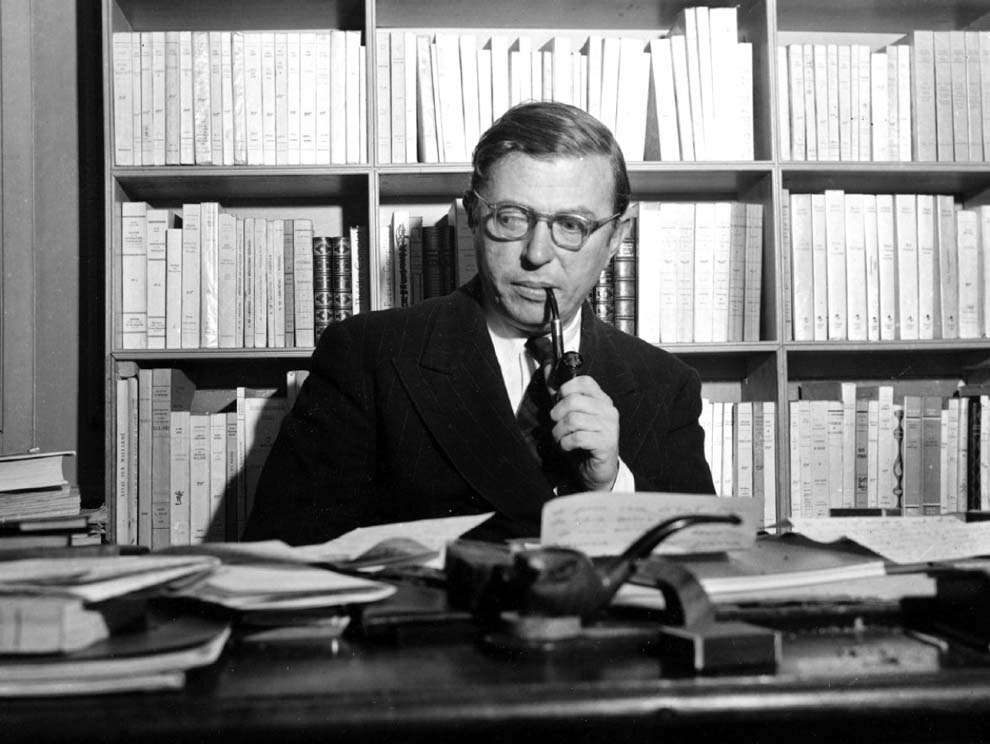
JEAN PAUL SARTRE
(1905 - 1980)
POLITICS: ::: PHILOSOPHER :::
Jean-Paul Sartre spent his life asking one of the most uncomfortable questions ever posed: What if nobody is coming to tell you who you are? Born in Paris in 1905, Sartre became one of the most influential thinkers of the twentieth century through a body of work that included philosophy, novels, plays, journalism, political activism, and literary criticism. He rejected the comforting notion that life arrives with a built-in purpose, arguing instead that human beings create meaning through their choices. Freedom, he insisted, is not something we possess. It is something we must constantly confront.
Sartre stood at the center of an extraordinary constellation of twentieth-century minds that included Simone de Beauvoir, Albert Camus, André Breton, Jean Genet, Pablo Picasso, and countless others who transformed literature, art, politics, and philosophy. His ideas did not remain in books. They spilled into cafés, theaters, newspapers, demonstrations, resistance movements, and public debate. Whether writing No Exit, The Flies, or Existentialism Is a Humanism, Sartre returned again and again to the same question: what does freedom require of us?
Sartre believed that most people spend their lives looking for excuses. Religion. Society. History. Politics. Other people. His life's work was a sustained argument against those excuses. We do not choose the circumstances into which we are born, but we are responsible for what we do with them. The world shapes us. History shapes us. Other people shape us. Yet the final responsibility remains our own. More than a philosopher, Sartre was a relentless advocate for accountability. His message remains as unsettling today as it was a century ago: you are responsible for becoming yourself.