
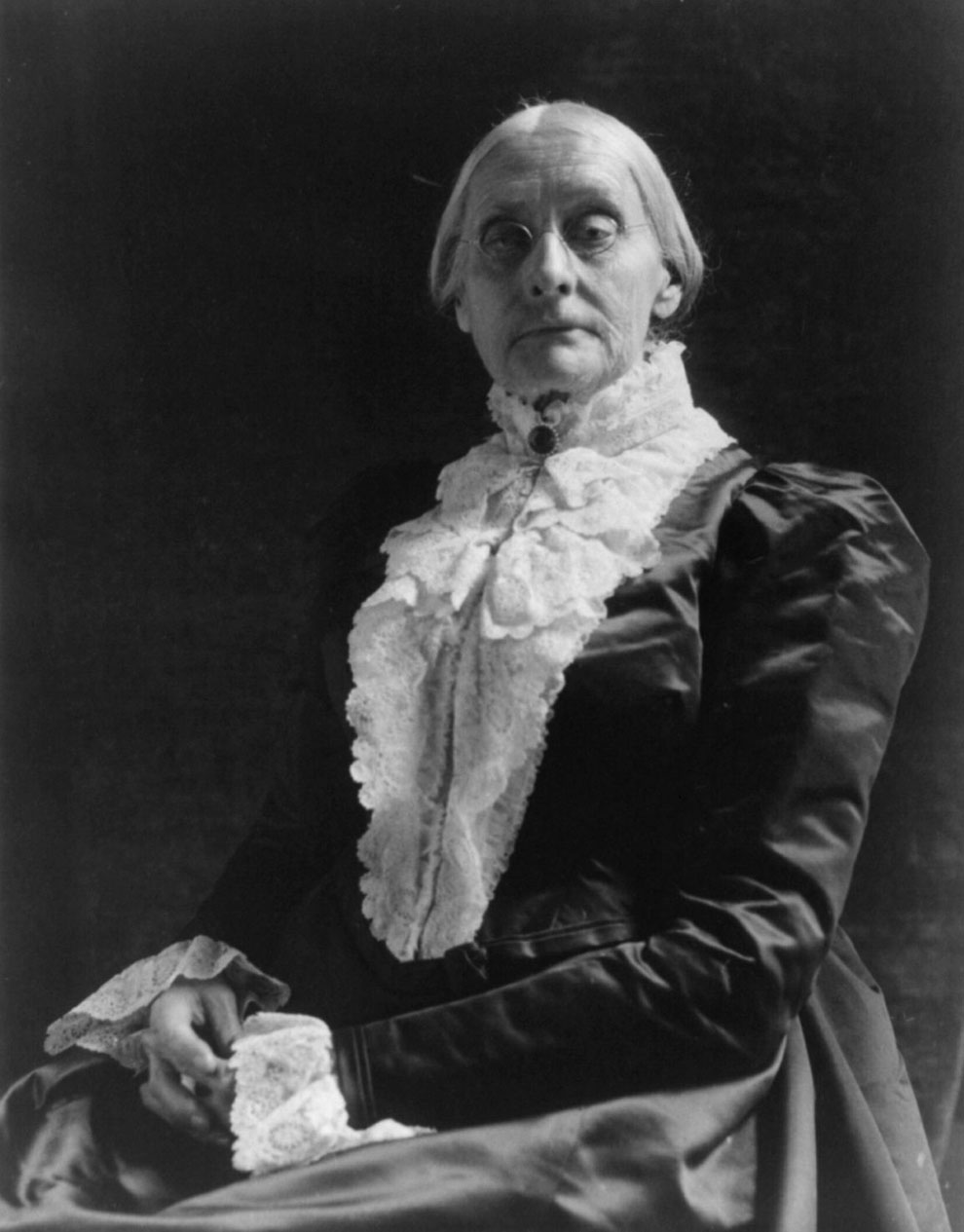
SUSAN B. ANTHONY
(1820 - 1906)
POLITICS ::: ACTIVIST ::: SUFFRAGIST ::: BOSTON 400
Suffragist. Abolitionist organizer. Hicksite Quaker dissenter. Political strategist. Lecturer. Publisher. Co-architect of the women’s suffrage movement with Elizabeth Cady Stanton.
Susan B. Anthony did not set out to become a symbol. She set out to solve a logistical problem. Nineteenth-century reform movements loved women’s labor but denied women authority. Anthony learned this in the abolitionist and temperance campaigns, where she organized meetings, gathered petitions, and filled halls — then was barred from speaking or voting on the resolutions she had helped build. She recognized immediately what others politely avoided. Moral reform without political power was theater. The vote was not a reward for equality; it was the tool required to produce it.
Her alliance with Elizabeth Cady Stanton created a two-person political organism. Stanton wrote arguments; Anthony engineered distribution. She turned lecture circuits into infrastructure, newspapers into organizing hubs, and conventions into recurring pressure campaigns. After the Civil War splintered reform coalitions, Anthony made a controversial decision: narrow everything to suffrage. Not because it was the only injustice, but because it was the only lever capable of moving the others. In 1872 she voted in Rochester knowing she would be arrested. The trial was not a miscalculation — it was the demonstration. Convicted and fined $100, she refused payment. The government never forced collection, avoiding the spectacle she wanted.
Anthony never saw the Nineteenth Amendment. She died in 1906 after decades of travel, speeches, petitions, and ridicule. Later generations softened her into a grandmotherly icon and eventually stamped her onto a dollar coin — a fate she would likely have recognized as symbolic but insufficient. What she actually built was not a monument but a method: rights are secured by organization, persistence, and public confrontation. Democracy, in her hands, was not a philosophy. It was a campaign.Visit our homage to the Suffragist movement, Suffragette City by clicking here.