
ALPHONSE MUCHA
(1860 – 1939)
ART: ::: ILLUSTRATOR ::: MUCHOLAPKA :::
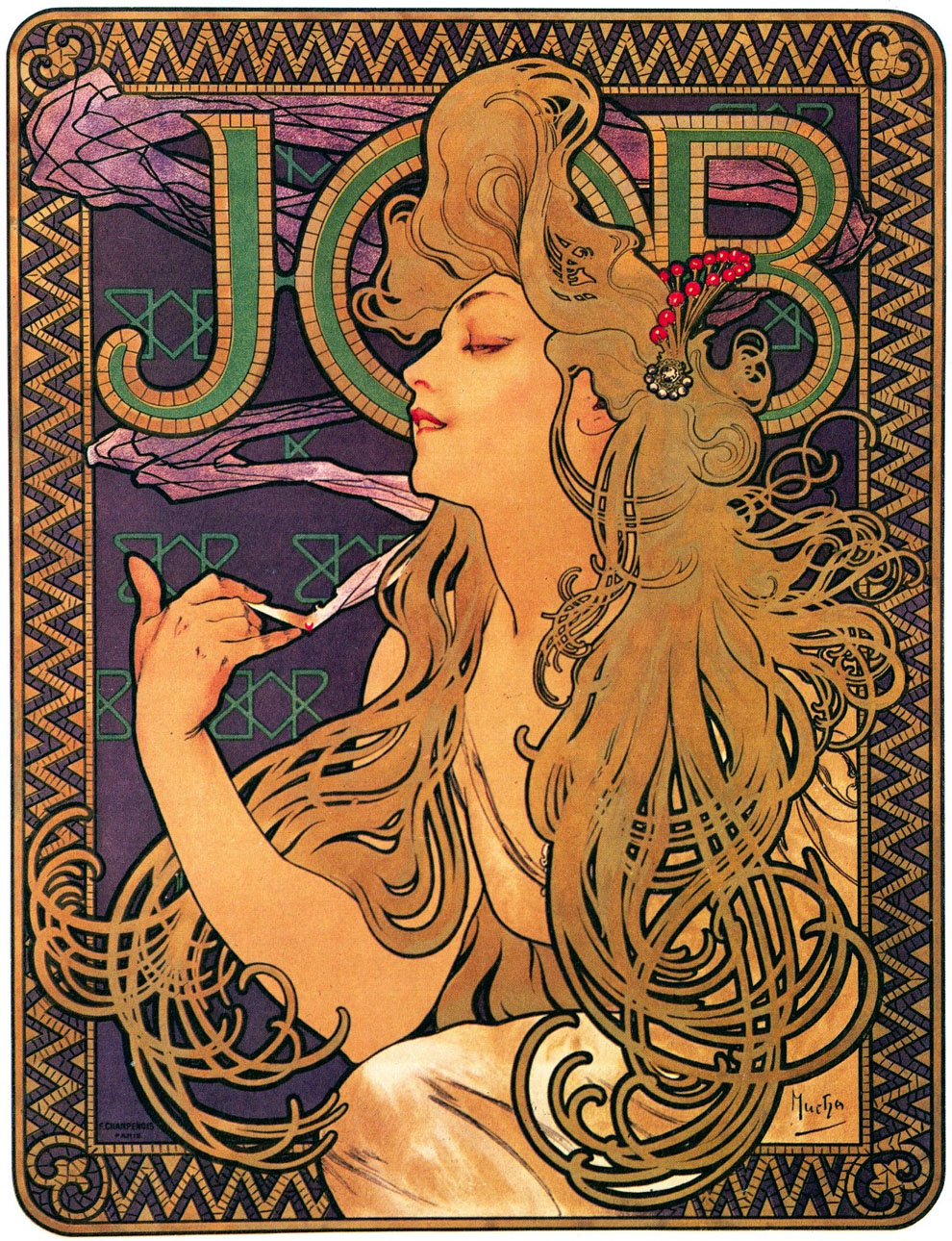
Few artists have shaped popular visual culture as profoundly as Alphonse Mucha. Born in Ivančice, Moravia, Mucha transformed the decorative arts through his graceful figures, flowing lines and richly ornamented compositions that came to define the Art Nouveau movement. His breakthrough poster for actress Sarah Bernhardt in 1894 made him an international celebrity, but his influence did not end with the Belle Époque. More than half a century later, artists of San Francisco's psychedelic poster movement—including Wes Wilson, Victor Moscoso, Stanley Mouse and Rick Griffin—reimagined Mucha's unmistakable visual language, introducing it to a new generation through the concert posters of the 1960s.
Behind the celebrated posters stood a man driven by a far greater ambition. Mucha believed art should serve a higher purpose than commerce, and he devoted the final decades of his life to creating The Slav Epic—a monumental cycle of twenty paintings celebrating the history, spirituality and endurance of the Slavic peoples. That vision found its essential patron in American industrialist Charles Richard Crane, who financed the project while deliberately leaving every artistic decision to Mucha. Presented to the City of Prague in 1928, The Slav Epic remains one of the most extraordinary artistic achievements of the twentieth century and the work Mucha considered his true legacy.
At the heart of Mucholapka lies the remarkable friendship between Alphonse Mucha and Charles Richard Crane, a partnership that connects Prague, Paris, Chicago and New York while intertwining art with politics, diplomacy and the birth of modern Czechoslovakia. Arrested by the Gestapo following the Nazi occupation of his homeland in 1939, Mucha never recovered from the ordeal and died only months later. His posters made him famous, but The Slav Epic endures as his greatest statement—a testament to the belief that art can preserve the memory, identity and aspirations of an entire people.