
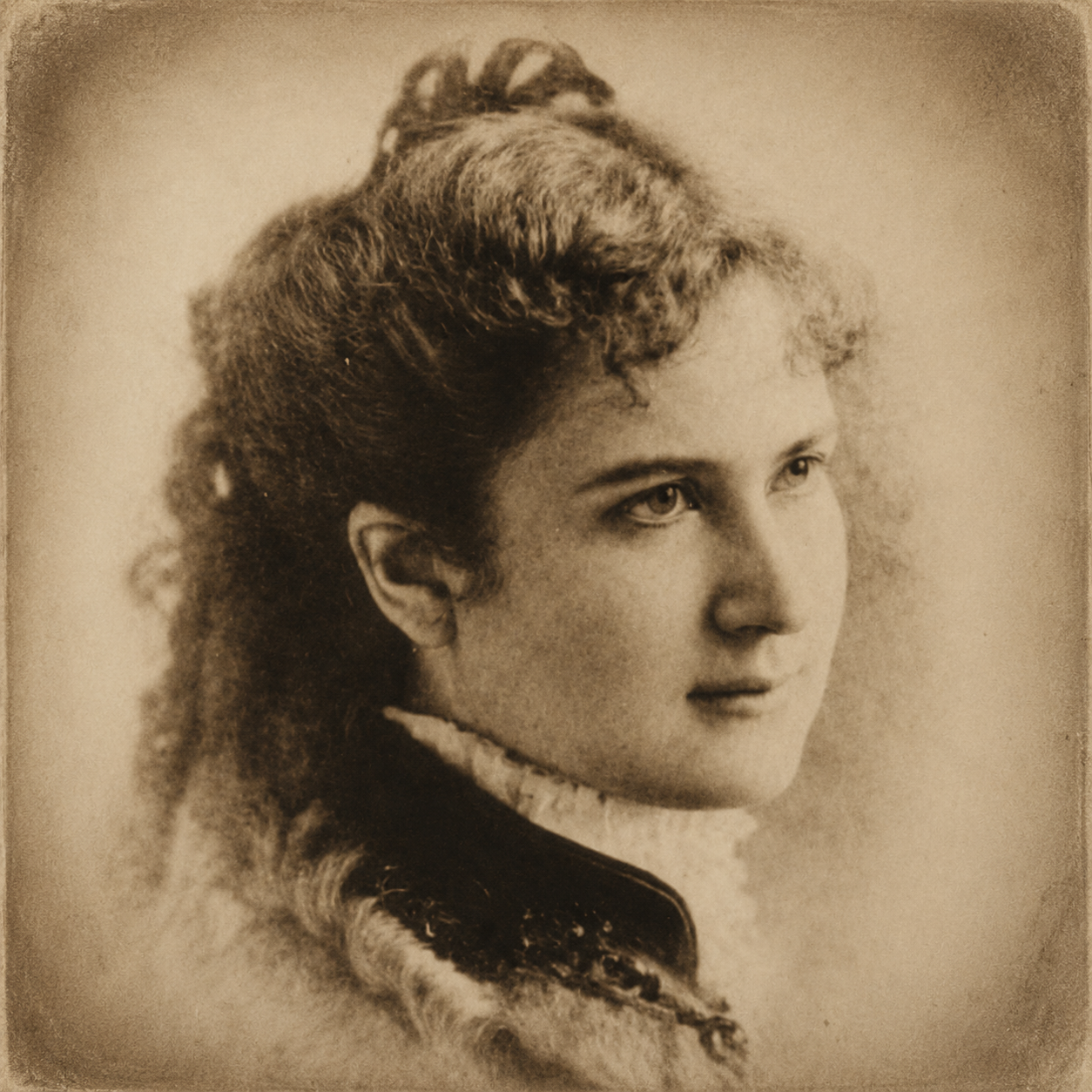
ALICE FRENCH (OCTAVE THANET)
(1850 – 1934)
BOOKS ::: DAVENPORT GROUP :::
Long before Susan Glaspell and George Cram Cook carried the Davenport spirit to Provincetown, Alice French had already placed the city on America's literary map. Writing under the pen name Octave Thanet, she became the first Iowa author to achieve national prominence, publishing fiction in Harper's, Scribner's, and The Atlantic Monthly during the closing decades of the nineteenth century. At a time when the nation's literary establishment was centered in Boston and New York, French proved that a writer from the Mississippi River could command a national audience. Her success transformed Davenport from a provincial river town into a place where literary ambition seemed not only possible, but expected.
Alice French's life reflected the breadth of her reputation. For more than forty years she shared her life with Jane Allen Crawford, and together they created Thanford, their home in Clover Bend, Arkansas, which became a gathering place for artists, writers, politicians, and public figures. French's friendships extended well beyond the literary world. She traveled through Great Britain with Andrew Carnegie, wrote about the experience, and moved comfortably within the highest cultural circles of her day while remaining deeply connected to the landscapes and people of the American Midwest that inspired her fiction.
Motherlode is interested in Alice French because every cultural movement has a pioneer whose greatest achievement is making the extraordinary seem attainable. Long before the Davenport Group emerged, Octave Thanet had demonstrated that a writer from Davenport could stand beside the leading authors of her generation. The remarkable circle that later included Susan Glaspell, George Cram Cook, Floyd Dell, Arthur Davison Ficke, and Harry Hansen did not appear out of nowhere—they inherited a city whose literary horizons had already been expanded by Alice French. Sometimes the most important revolutionary is the one who quietly proves that the journey can be made.