
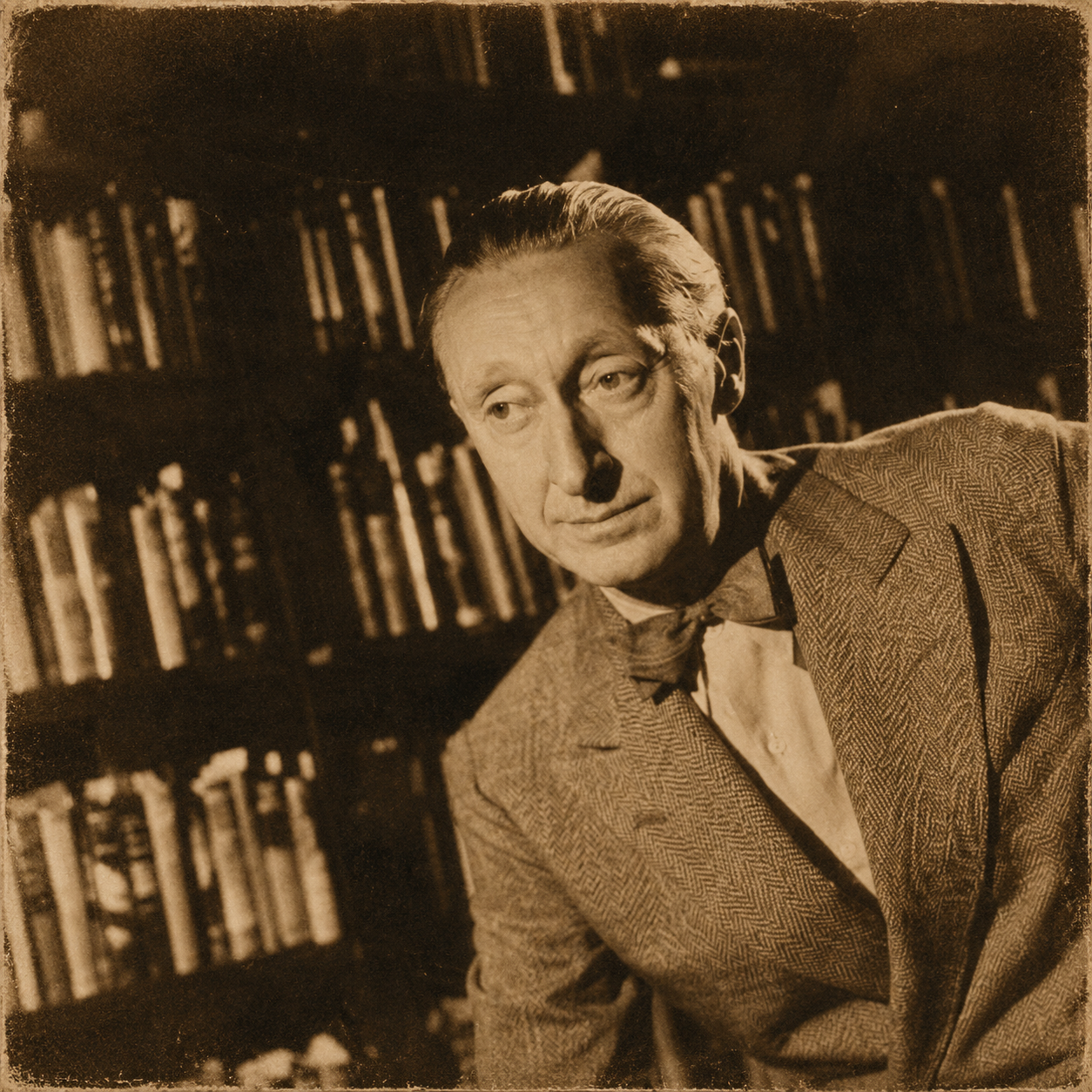
HARRY HANSEN
(1884 – 1977)
JOURNALIST ::: DAVENPORT GROUP :::
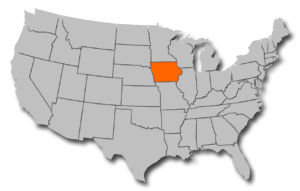
Harry Hansen may have traveled farther than anyone else to emerge from the Davenport Group. Born in Davenport, Iowa, in 1884, he studied English at the University of Chicago, earning his doctorate before joining the Chicago Daily News. Journalism carried him from the Mississippi River to the battlefields of Europe during the First World War and eventually to the Paris Peace Conference at Versailles, where he witnessed history being rewritten in the aftermath of global conflict. Those experiences gave Hansen a rare perspective: he understood that ideas, like nations, are shaped as much by conversation as by conflict.
Returning to America, Hansen became one of the nation's most influential literary editors and critics. At the Chicago Daily News and later the New York World, he transformed newspaper book coverage into a daily cultural conversation, championing new writers while editing the celebrated O. Henry Prize Stories. He was less interested in becoming the famous author than in helping readers discover remarkable books and introducing remarkable writers to the public. Few editors of the twentieth century exercised greater influence over what Americans read—or how they thought about literature.
Motherlode is drawn to Harry Hansen because he reminds us that culture depends on its interpreters as much as its creators. The Davenport Group produced playwrights, poets, and visionaries, but it also produced a man who spent a lifetime connecting books with readers and preserving the literary conversation of his generation. If Susan Glaspell lit the fire and George Cram Cook gathered the people around it, Harry Hansen helped carry the light far beyond Davenport, ensuring that ideas born on the banks of the Mississippi found readers around the world.