
STETSON KENNEDY
(1916–2011)
BOOKS ::: ROUTE 1 PROJECT
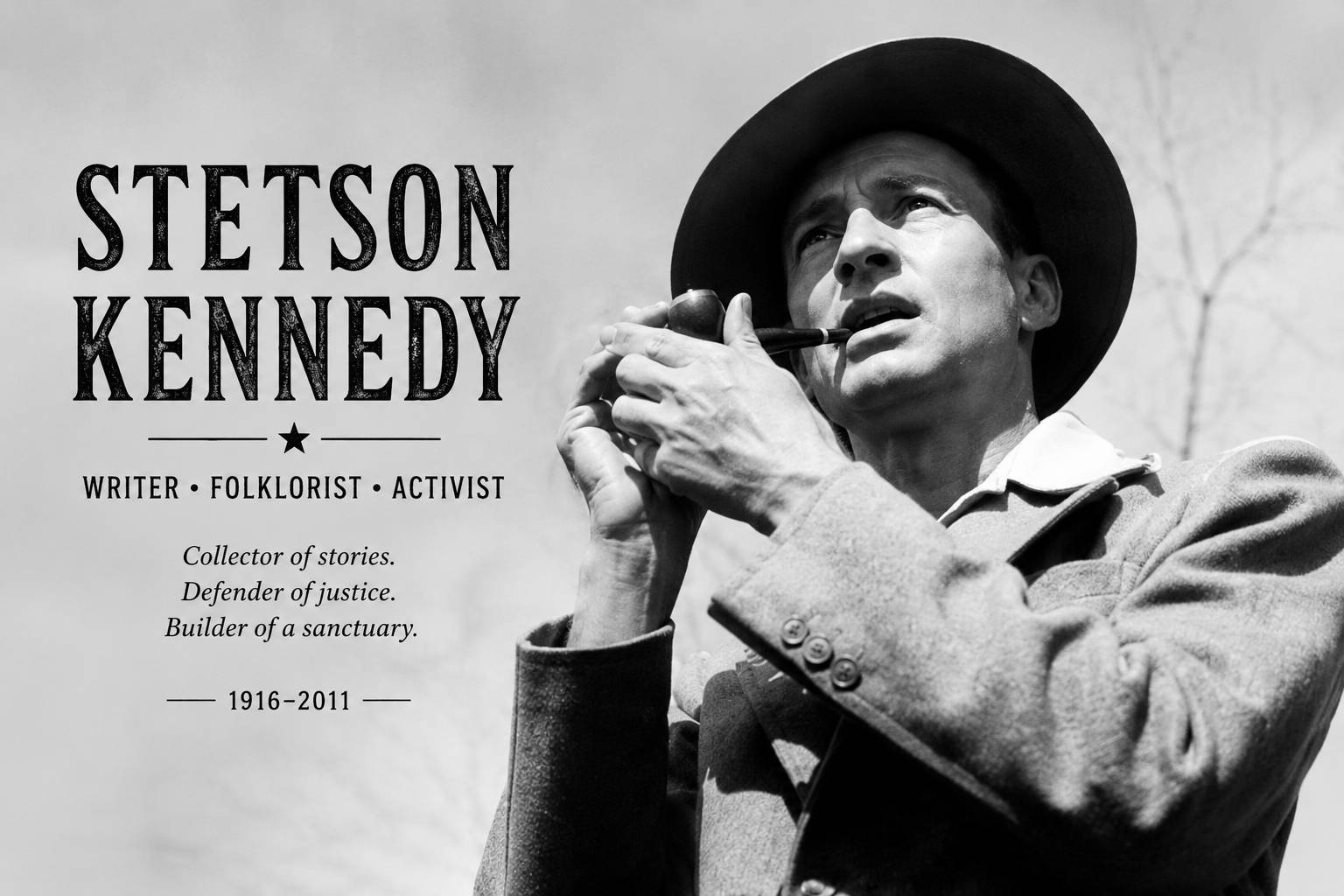
Stetson Kennedy believed that the stories of ordinary people mattered. As a writer, folklorist, and pioneering fieldworker with the WPA Florida Writers' Project, he traveled the back roads of Florida collecting songs, stories, occupations, and oral histories before they disappeared. Working alongside figures such as Zora Neale Hurston and Alan Lomax, Kennedy came to understand that folklore was more than entertainment—it was the living record of a people, preserving voices too often overlooked by traditional history.
That belief shaped everything that followed. Kennedy became an outspoken advocate for civil rights, infiltrating and exposing the Ku Klux Klan and other white supremacist organizations while continuing to write books that challenged prejudice and celebrated the rich cultural traditions of the American South. His work—including Palmetto Country, Southern Exposure, The Jim Crow Guide, and The Klan Unmasked—demonstrated that research, journalism, and storytelling could become powerful tools for social change.
Kennedy's greatest legacy may not be found in any single book, but in a quiet place called Beluthahatchee. Named by Zora Neale Hurston as a mythical refuge "where all unpleasantness is forgiven and forgotten," the sanctuary became home to writers, musicians, environmentalists, and activists for generations. Woody Guthrie completed Seeds of Man there and wrote more than eighty Florida songs beneath its live oaks. Today, Beluthahatchee continues Kennedy's vision as a public park, literary landmark, museum, wildlife sanctuary, and creative gathering place—living proof that the best way to preserve culture is not simply to remember it, but to keep it alive.