
ISAAC SINGER

(1811 - 1875)
FASHION :::
The Man Who Sewed the World
Most people believe Isaac Merritt Singer invented the sewing machine.
He didn't.
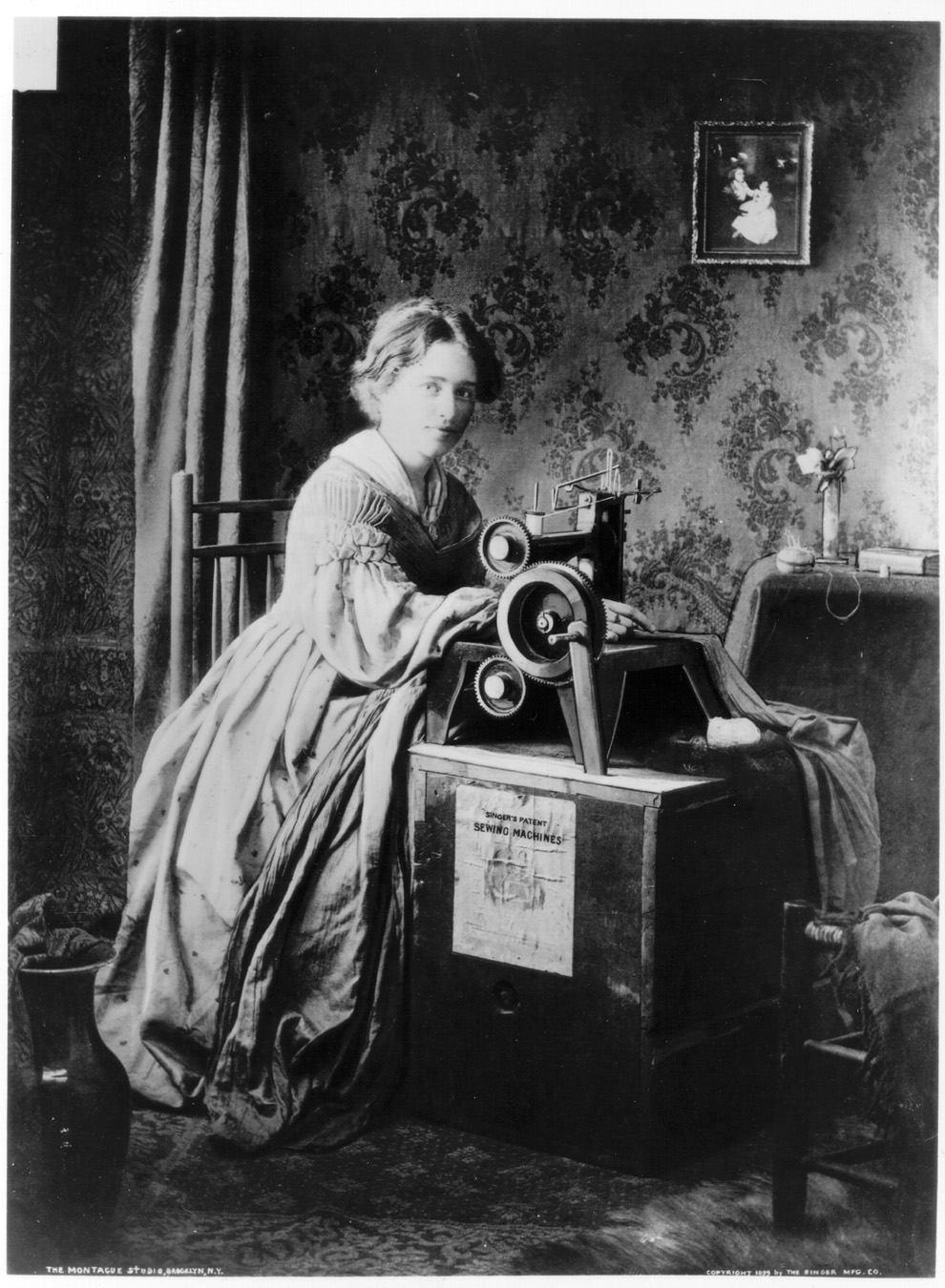
What he did was arguably more consequential: he took an invention that was struggling to find its place in the world and helped turn it into one of the transformative technologies of the nineteenth century. And the road to that transformation runs straight through Boston.Singer arrived in Boston in 1850 chasing an entirely different idea. An actor, mechanic, entrepreneur, inventor, and relentless hustler, he was looking for financial backing for a machine designed to carve wooden type. He found himself working in the Boston machine shop of Orson C. Phelps, where Phelps was building sewing machines based on a design by John A. Lerow and Sherburne C. Blodgett. Singer studied the machine, recognized its shortcomings, and began imagining something better. He developed improvements including a straight vertical needle and a shuttle moving back and forth in a straight line. The early commercial Singer machines were built in Phelps's Boston shop, and on August 12, 1851, Singer received U.S. Patent No. 8,294 for his improvements.
The basic sewing machine had existed before Singer arrived. Inventors including Elias Howe, Walter Hunt, and others had spent years solving the mechanical problem of machine stitching. Singer's genius was not simply mechanical. He understood that an invention becomes revolutionary only when people can actually use it. His machine was fast, sturdy, practical, and adaptable to commercial production, while the company bearing his name became famous for innovative sales techniques, including installment purchasing. Sewing machines escaped the workshop and entered factories, dressmaking businesses, and eventually homes around the world.
The consequences were enormous. Mechanized sewing transformed garment production, accelerated the development of ready-to-wear clothing, and changed the economics of making everything from dresses and uniforms to sails, tents, quilts, theatrical costumes, and tailored suits. The sewing machine wasn't merely another household appliance. It became part of the infrastructure of industrial society.
And then the Singer story takes a decidedly Motherlode turn.
Isaac Singer's success produced an enormous family fortune and a sprawling dynasty. One of his sons, Paris Eugene Singer, eventually became the lover and patron of Isadora Duncan, the revolutionary American dancer whose rejection of the conventions of classical ballet helped lay the foundations of modern dance. Singer supported Duncan and her artistic ambitions, and together they had a son, Patrick Augustus Singer.
Their story ended in unimaginable tragedy. In 1913, Patrick and Duncan's daughter Deirdre—her child with theatre designer Gordon Craig—were traveling with their nurse in Paris when their automobile rolled into the Seine. Both children drowned. Duncan's grief became one of the defining events of her life, and her relationship with Paris Singer would not survive indefinitely.
But follow the cultural thread backward.
Isadora Duncan helped revolutionize twentieth-century dance. Paris Singer helped support Isadora Duncan. Paris inherited the wealth created by the Singer sewing-machine empire. And that empire began with a restless inventor studying a troublesome sewing machine in a Boston workshop in 1850.
That is why Isaac Singer belongs in Motherlode.
Culture isn't shaped only by the painter holding the brush, the musician holding the guitar, or the dancer standing on the stage. Sometimes the story begins with a mechanic staring at a machine and wondering why the damn thing doesn't work better. An invention creates an industry. An industry creates a fortune. A fortune crosses an ocean. And decades later, some of that money helps an artist throw away her ballet shoes and reinvent dance.
A machine transformed fashion. The fortune it created helped transform art. And one of the threads connecting them begins in Boston.