
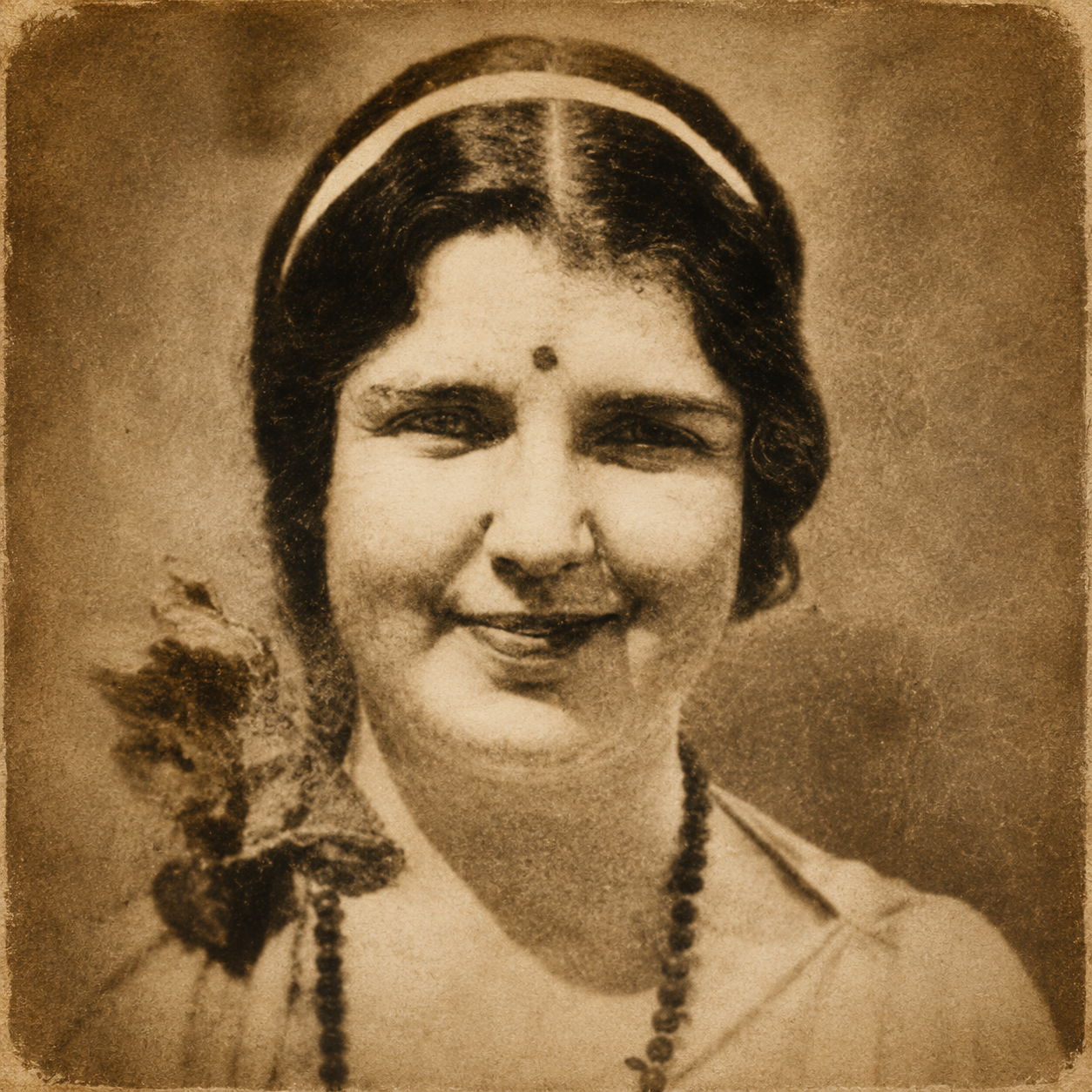
NILLA CRAM COOK
(1908 – 1982)
POLITICS ::: DAVENPORT GROUP :::
Nilla Cram Cook was born into one of the most remarkable artistic families in American history, but she refused to live in anyone else's shadow. The daughter of George Cram Cook and the stepdaughter of Susan Glaspell, founders of the Provincetown Players, she inherited their restless belief that art could change the way people understood the world. Instead of remaining within the literary circles of Davenport, Greenwich Village, or Provincetown, Nilla carried that spirit across continents, mastering languages, embracing unfamiliar cultures, and living a life that continually challenged the boundaries of nationality, religion, and identity.
In 1931 she journeyed to India, converted to Hinduism, and became known as Nila Nagini Devi. What began as a spiritual search soon became a commitment to social justice. Working within Mahatma Gandhi's circle, she spoke against caste discrimination, supported campaigns for equality, and sought common ground between India's struggle against untouchability and America's own legacy of racial injustice. Her extraordinary journey later took her through wartime Greece and to Iran, where she worked at the American Embassy while helping promote theatre, ballet, opera, and Persian literature. Throughout her life she remained less interested in collecting experiences than in building understanding between cultures.
Motherlode remembers Nilla Cram Cook because she carried the spirit of the Davenport Group farther than anyone else. Susan Glaspell transformed American theatre. George Cram Cook reimagined artistic community. Nilla expanded that same spirit onto a global stage, becoming not simply a traveler but a translator of civilizations. Her life reminds us that culture is never confined to one place or one generation. It moves through curious people willing to cross borders, challenge assumptions, and discover that the most important journeys are those that bring humanity closer together.