
Before the Pilgrims
Gods, Cod & Other Reasons to Cross an Ocean
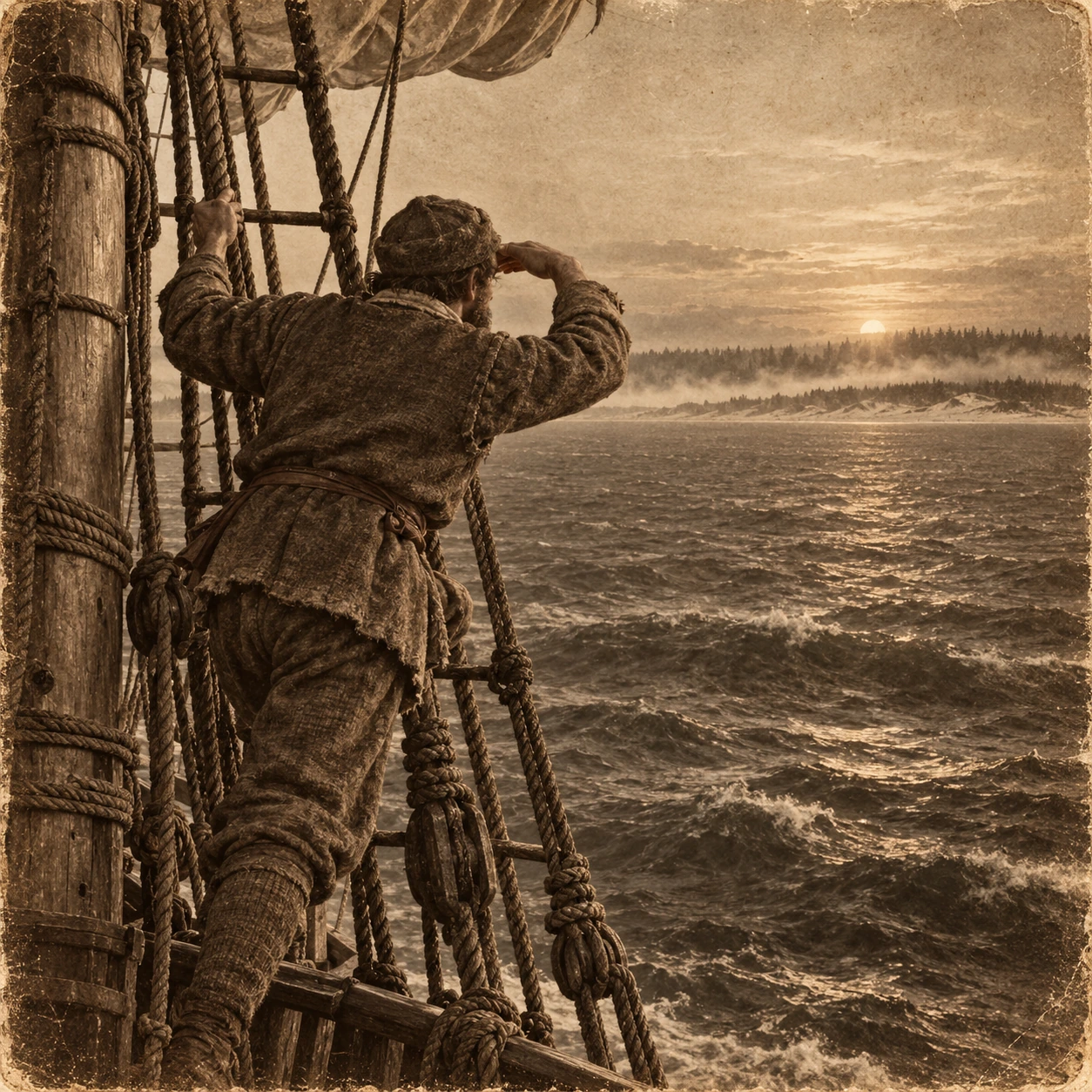
The Mayflower didn’t sail into the beginning of history. It sailed into somebody else’s. The Nauset and Wampanoag peoples had been farming, fishing, trading, and raising families on this coast for generations. When Samuel de Champlain mapped Nauset Harbor in 1605, he found houses, cornfields, and fish traps—a working landscape, with no vacancy sign. The Europeans were newcomers. The neighborhood was established.
And the newcomers had been arriving for centuries. Norse voyagers reached Newfoundland around a thousand years ago. By the sixteenth century, Basque whalers were crossing to Labrador and turning blubber into oil for European lamps. Faith would get the better publicity, but commerce already knew the way across the Atlantic. These northern waters offered fortunes to anyone willing to endure the crossing—and the people already living along their shores had no say in Europe’s expanding ambitions.
The people aboard the Mayflower brought another combustible mixture: religion, money, and the hope of starting over. English Separatists had fled to Holland, where freedom of worship came with hard work and worries about their children’s future. Investors helped finance an American venture, adding passengers whose ambitions were more earthly. Their companion ship, Speedwell , kept leaking; two false starts swallowed precious weeks. On September 6, Mayflower finally sailed alone with 102 passengers. Ahead lay storms, cramped quarters, and a destination near the Hudson River. Then, on November 9, 1620 , land appeared: Cape Cod .
Before the Monument. Before the Myth.
Follow the stories that made the tip of Cape Cod a place for arrivals, departures and independent minds.
Further Reading
- National Park Service: The Nauset Archaeological District
- Plimoth Patuxet Museums: Who Were the Pilgrims?
- William Bradford’s Of Plimoth Plantation
Dates follow the English calendar in use in 1620. Hero image: illustrative reconstruction.