
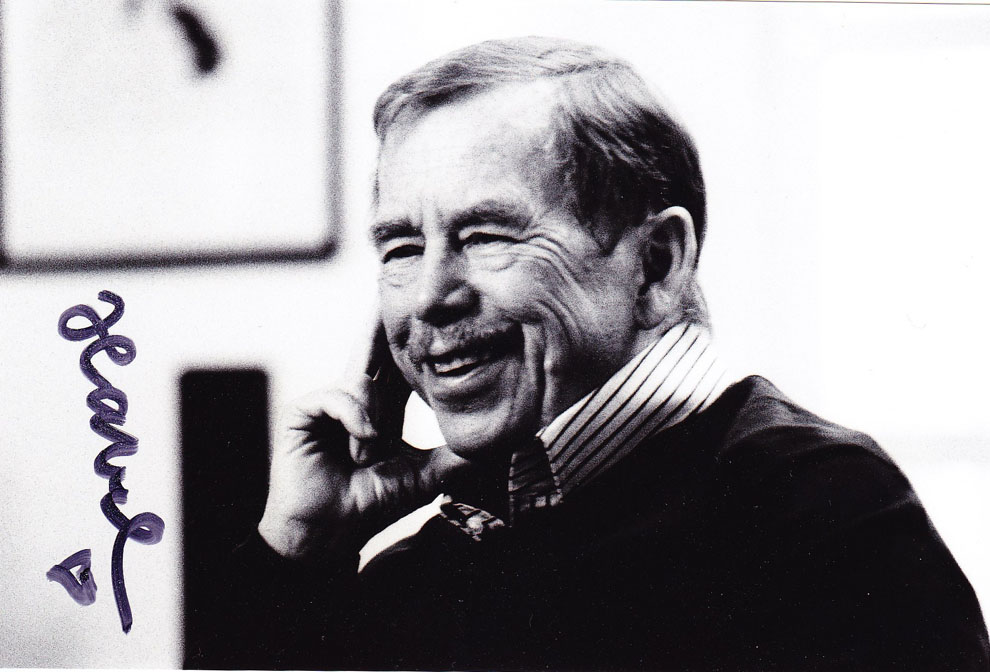
VÁCLAV HAVEL
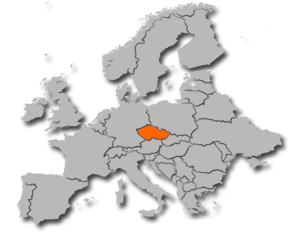
(1936 – 2011)
POLITICS
:::
MUCHOPLAPKA
Few political leaders have entered history through the stage door. Born October 5, 1936, in Prague, Czechoslovakia, Václav Havel became a playwright, essayist and dissident whose work exposed the absurdities of authoritarian power. His plays dismantled the language of conformity; his political convictions brought censorship, surveillance and imprisonment. After the Velvet Revolution ended Communist rule in 1989, the forbidden writer was elected president of Czechoslovakia that December. In 1993, following the country’s dissolution, he became the first president of the Czech Republic. The man the state had tried to silence was suddenly speaking for it.
Rock and roll belongs inside this story. The 1976 prosecution of musicians associated with The Plastic People of the Universe helped bring dissidents together and became a catalyst for Charter 77 , the human rights initiative Havel helped establish. Defending their freedom to make unruly music meant defending the freedom to think and live beyond the state’s instructions. In January 1990, Frank Zappa visited Prague Castle. That same year, Lou Reed interviewed Havel for Rolling Stone , beginning a close friendship; Havel had known the Velvet Underground’s recordings since the late 1960s. Another unexpected figure was already on the diplomatic stage: Shirley Temple Black , U.S. ambassador to Czechoslovakia from 1989 to 1992. Her embassy’s contacts with dissidents became bridges to the new government. An experimental musician, a rock poet, a former Hollywood child star and a playwright president: history had assembled a cast no studio would have believed.
Havel’s story runs beneath the surface of Mucholapka : imagination colliding with authority, private convictions becoming public acts, unlikely people finding one another when the official world fails them. A playwright becomes a president. The defense of underground musicians helps give a movement its footing. Artists and diplomats arrive with different histories but find themselves participating in the same extraordinary transition. This is territory Motherlode keeps returning to—the places where culture enters history and changes what becomes possible. Havel knew the price of that freedom from inside a prison cell. Becoming president did not erase the experience; it made the question of what to do with power his own.