
Motherlode · Politics
Who Killed JFK?
An Allston van, a Manhattan boardroom, and a meeting with 21st Century Art.
Scott Matalon was the ringleader of a pioneering tech cabal called Stumpworld. Before most of us had heard of the internet, they were already deeply immersed in 2D and 3D computer modeling inspired by video gaming. Come the arrival of the information superhighway, they would help bring shopping online, create Flash-driven fan sites and online stores for Aerosmith, Phish, the Rolling Stones and others, and design business tools for artist-management moneymakers.
But first there was the house. In Allston, Stumpworld was a place before it was a company. The nucleus was intact, and its inhabitants were building things most people didn’t yet know they wanted. Through their friend Frank Coleman and his multimedia group, 21st Century Art, they had an opportunity to get in front of the investment-banking types. It was during these early years that the most random opportunity collided with their orbit and produced an experience worthy of a Twilight Zone episode.
Scott is currently hustling an autobiographical manuscript that is a backstage pass to the rise of the internet as we know it today. In the meantime, I’ve conned him into sharing one of my favorite tales with us. What follows comes from his recollection of that meeting; the assassination claims are the story the group was shown, not independently established facts.
John F. Kennedy was assassinated in November of 1963. Decades later, a bunch of guys from Allston drove to Manhattan to show some bankers what they could do with a computer.
At the house on Allston Street, the future was taking shape one rendered room at a time. Karlo built the images, and Scott wrote software that let you move through them. Look north, turn east, walk into another room. Paintings could become places you entered. A computer screen could offer something more interesting than a document with a blinking cursor. Frank Coleman—drummer, artist and fellow computer obsessive—was working with multimedia software on the Macintosh. Together with Tim Halle and a loose collection of collaborators calling themselves 21st Century Art, they were exploring what an interactive experience might become. They wanted to make CD-ROMs.
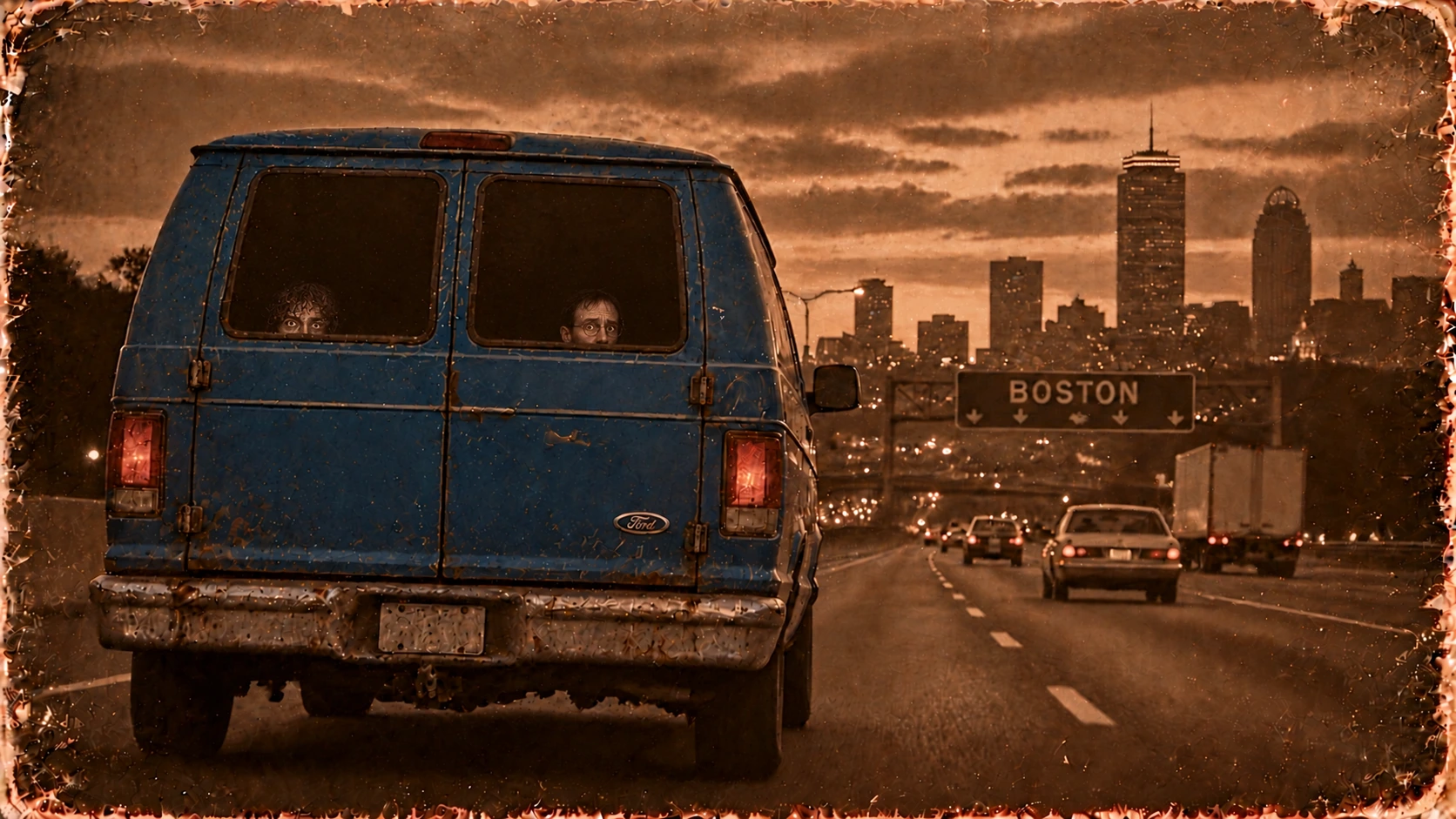
Frank had a connection at the New York investment firm Donaldson, Lufkin & Jenrette. A meeting was arranged, Scott loaded the crew into his big blue band-equipment van, and they headed south. Imagine explaining an interactive world to a roomful of men whose first question was how much money it would make. There were about a dozen of them. The crew demonstrated their work, Frank explained the possibilities, and eventually someone asked what they wanted. A million dollars, Frank told them. Enough to build an interactive experience.
The bankers conferred, then invited the visitors upstairs. From the forty-first floor to the forty-third: fewer people, a smaller room and, as it turned out, a different meeting. Before proceeding, their hosts produced a nondisclosure agreement. It was the first Scott had ever seen. He read through the clauses about what he could not reveal, looked up and made a joke. “What are you going to do? Show us who killed Kennedy?” Tim and Frank laughed. The other guys didn’t.
An attorney in the room represented the widow of an investigator who had spent years pursuing Kennedy’s murder. The collection included documents, recorded interviews and physical material gathered over decades, and the widow wanted to sell the rights. The visitors from Allston had arrived with a way to move through imaginary rooms. Their hosts wanted to know whether they could build a way to move through this.
Then came the recorded interview. The man on the tape, identified in Scott’s account as Joe or “JoJo” Files, said he had been the backup gunman on the grassy knoll. His story described a feud within organized crime. Kennedy had benefited from Mob support, only for Robert Kennedy to turn around and pursue the people who thought they had helped put his brother in office. Cuba and the lost casinos added to the resentment. The senior bosses had refused to authorize killing the president. Somebody further down the ladder decided to do it anyway.
The interviewee described accompanying the other men to Dallas as their driver. When asked to back them up, he took a position behind the fence on the grassy knoll while the other shooters positioned themselves in a building. Their orders were to kill Kennedy without harming his wife or the governor. When the motorcade arrived, he judged that the shots from the building were failing to do the job. The backup man took his shot.
What stuck with Scott was the detail that followed. The man described putting the hot, spent cartridge case in his mouth and biting down on it while he dismantled and concealed his weapon. He said the CIA had trained him to develop habits—little routines to follow while carrying out an operation. The presentation connected that detail to a casing recovered near the grassy knoll by a child and his father, who had tried to turn it over to the authorities. It supposedly bore a crease from teeth marks. That bite was the point: the man’s account and the marked casing were presented as a match.
There was also footage offered as showing a man walking away behind the fence. In that room, these were pieces that fit together. The theory supplied an explanation for the silence, too: the men who had defied their bosses were killed afterward. The driver survived because he was peripheral, overlooked in the reckoning. Jack Ruby’s role was to help obtain the weapons and later kill Oswald. In the interviewee’s version, Ruby was the loyal soldier who took the consequences and kept his mouth shut.
There it was: a confession, a collection, a theory and a set of rights somebody wanted to turn into money. Could the computer guys make a CD-ROM out of it? Of course they could. That was the part of the meeting they were equipped to answer. Users could examine documents, watch interviews and follow competing leads. They could work their way through the material instead of being marched toward a single conclusion. The crew didn’t have to announce that they had solved the assassination; they could build the experience around investigating it. They had come to Manhattan asking people to imagine what their technology could do. Now the bankers had an example.
On the drive back to Boston, everyone kept looking out the van’s rear window. The project never materialized. Word eventually came back about a television deal and complications elsewhere, but exactly how the proposal unraveled remains unclear. After the job failed to come through, Scott and his collaborators struck out on their own. The house became the company. The missed opportunity helped set Stumpworld in motion.
The van ride stayed with him. So did the paperwork. Years later, while gathering material for his manuscript, other people who had attended reminded him of his own opening line: “What are you going to do? Show us who killed Kennedy?” They remembered the joke. They remembered what came next.
The crew that became Stumpworld had gone to New York to pitch the future. For one afternoon, somebody tried to sell them the past.