CHAPTER FIFTEEN: THE SUDETENLAND
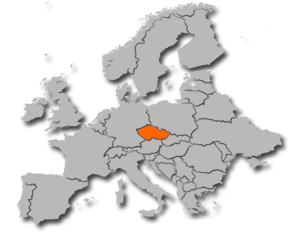
The country created at Versailles had always contained a contradiction. Czechoslovakia was founded in the name of national self-determination, yet more than three million German speakers lived within its borders—many concentrated along the mountainous rim of Bohemia and Moravia known as the Sudetenland.
They had not recently arrived from Germany. Their families had lived in these regions for generations, when the territory belonged to the Habsburg Empire. After 1918, they became citizens of a new Czechoslovak state in which Czechs and Slovaks held political power.
Some adapted. Some resented it. Most lived somewhere between those positions.
Hitler did not invent their grievances. He organized, amplified and weaponized them.
Nazi propaganda claimed that the Sudeten Germans were being persecuted and demanded their “return” to the German Reich. The word was deliberately misleading. The Sudetenland had not been part of the German Empire that collapsed in 1918. Hitler was not restoring a lost German border. He was using ethnicity to justify expanding one.
The territory offered more than a convenient population to rescue. It contained much of Czechoslovakia’s border fortification system, important factories and the mountainous defenses protecting the country from Germany. Surrendering it would leave the republic economically damaged and militarily exposed.
By 1938, Tomáš Masaryk was dead and Edvard Beneš was president. Czechoslovakia remained one of Central Europe’s surviving democracies, with a modern army and defensive alliances. But those alliances depended upon Britain and France being willing to confront Hitler.
They were not.
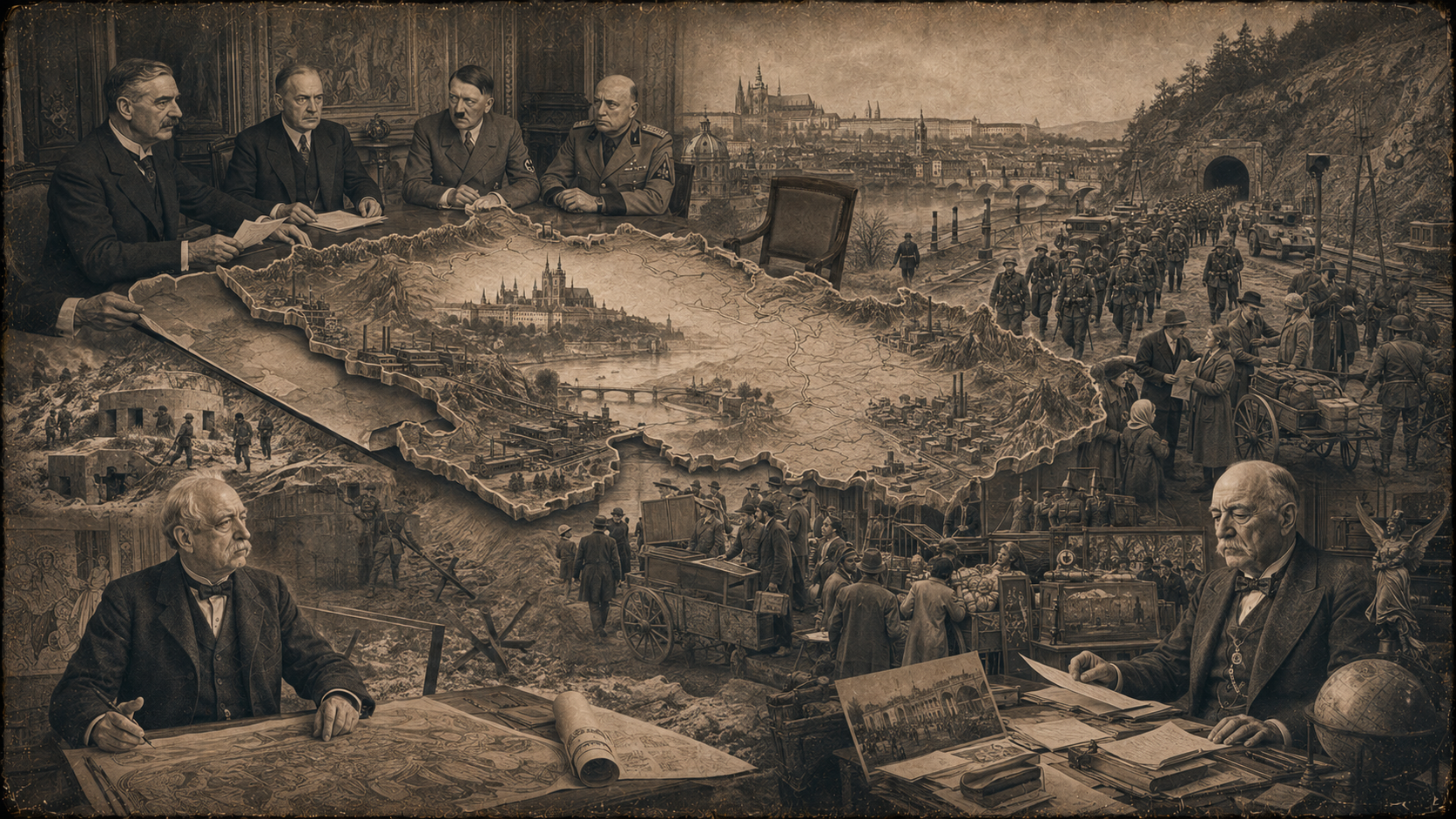
On September 29 and 30, 1938, the leaders of Germany, Italy, Britain and France met in Munich. Czechoslovakia was not permitted to participate in the negotiations over its own territory. The four powers agreed that Germany could occupy the Sudetenland in exchange for Hitler’s promise to make no further territorial demands.
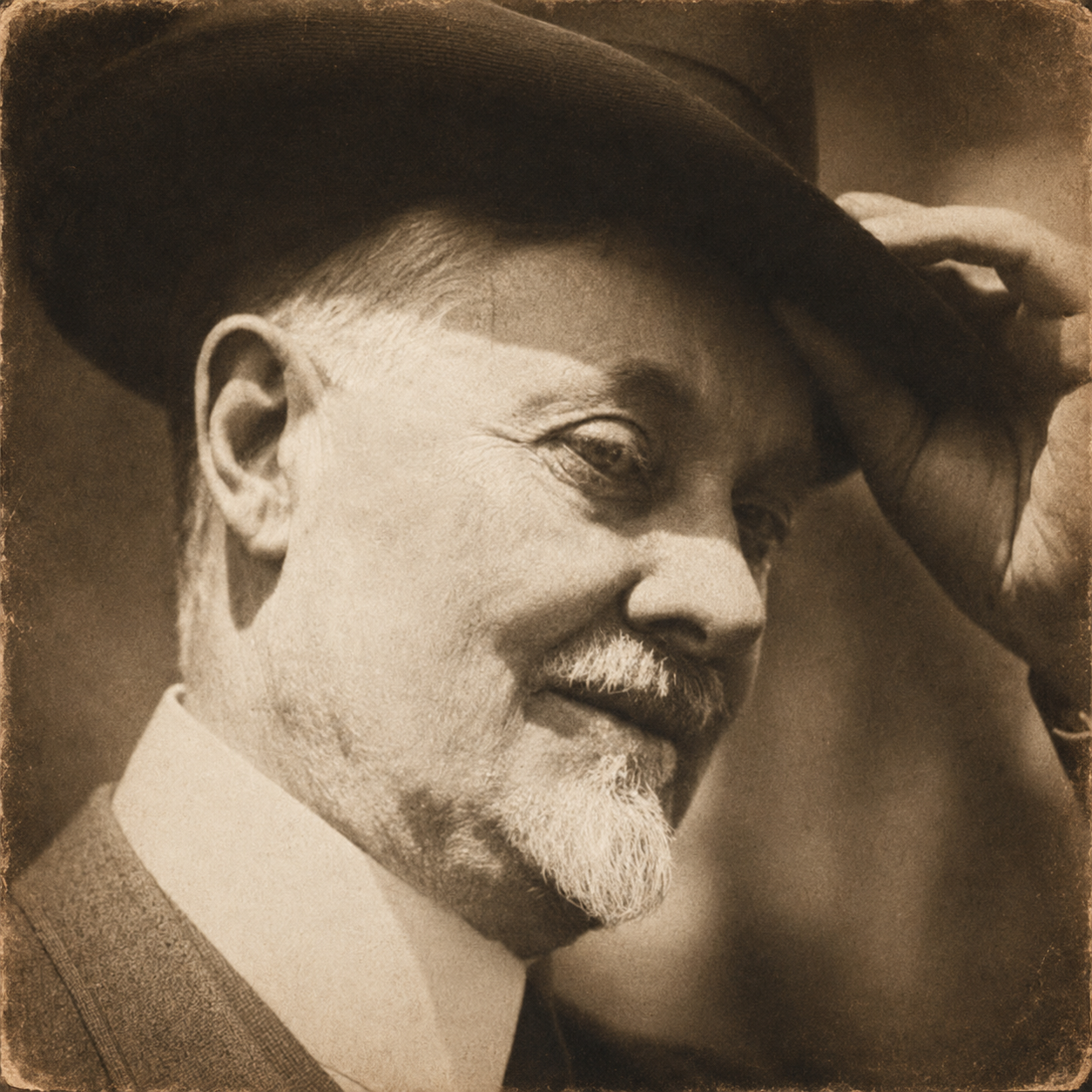
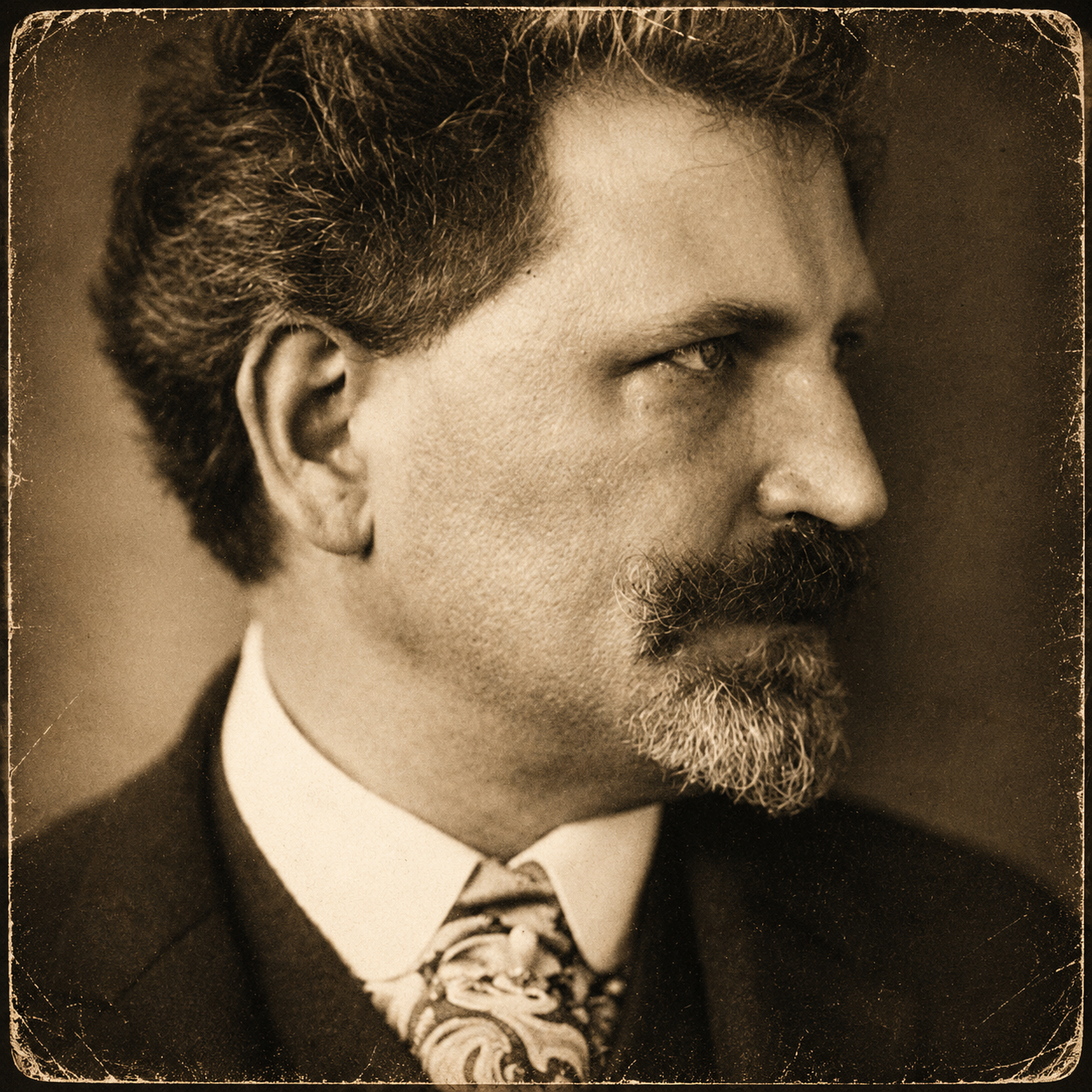
The country Masaryk, Beneš, Mucha and Crane had helped create was cut apart in a room where it had no seat.
British prime minister Neville Chamberlain returned home declaring “peace for our time.” To people desperate to avoid another world war, the agreement seemed like a painful but necessary compromise. To Hitler, it demonstrated that the Western democracies would sacrifice a smaller democracy rather than fight for it.
German troops entered the Sudetenland in October. Czechoslovakia lost its defenses, industrial territory and control over strategic railways and roads. Poland and Hungary soon took advantage of the crisis to claim additional pieces of the weakened state.
The promised peace lasted less than six months.
On March 15, 1939, German troops occupied Prague. Hitler entered Prague Castle—the former seat of the kings of Bohemia and the Holy Roman Emperor Charles IV—and declared the Czech lands a German protectorate. Slovakia became a nominally independent state under Nazi domination.
The seizure exposed the lie at the center of Munich. Hitler had not been seeking self-determination for German speakers. He had been dismantling Czechoslovakia one defensible piece at a time.
Alphonse Mucha was among the first prominent Czechs arrested by the Gestapo. His patriotism, public visibility and Masonic involvement made him an obvious target. He was interrogated and released after several days, but his health deteriorated rapidly.
He died of pneumonia on July 14, 1939, ten days before his seventy-ninth birthday. Despite restrictions on public gatherings, a large crowd came to honor him at Prague’s Slavín Cemetery.
Charles Crane had died of pneumonia five months earlier, in February 1939. He did not live to see German troops enter Prague. Mucha did not live to see Germany invade Poland that September and begin the Second World War.
Both men died in 1939, as if the century had waited for them to leave before destroying what they had built.
The Slav Epic was hidden to protect it from the Nazis. Czechoslovakia disappeared from the map. The republic born from Masaryk’s philosophy, Beneš’s diplomacy, Crane’s connections and Mucha’s imagination would spend the next half-century beneath occupation and dictatorship.
But it returned.
The Nazi empire that claimed a thousand-year destiny survived for twelve years. Czechoslovakia reappeared after the war, endured communist rule and recovered its democracy in 1989. In 1993, the Czech Republic and Slovakia separated peacefully—accomplishing through negotiation what Europe had repeatedly attempted through force.
The story that began beneath the electric lights of Chicago’s White City ends beneath the darkened towers of Prague Castle. Between them ran pipes, railways, banknotes, paintings, universities, revolutions, sacred bells and friendships capable of altering the borders of nations.
That is why Mucha cannot be reduced to decorative posters, why Crane cannot be dismissed as an eccentric millionaire and why Czechoslovakia was never merely another shape on an old European map.
The history of Bohemia is not the story of the empires that ruled it. It is the story of the culture that survived them.