CHAPTER TWO: CHICAGO AND THE CRANES
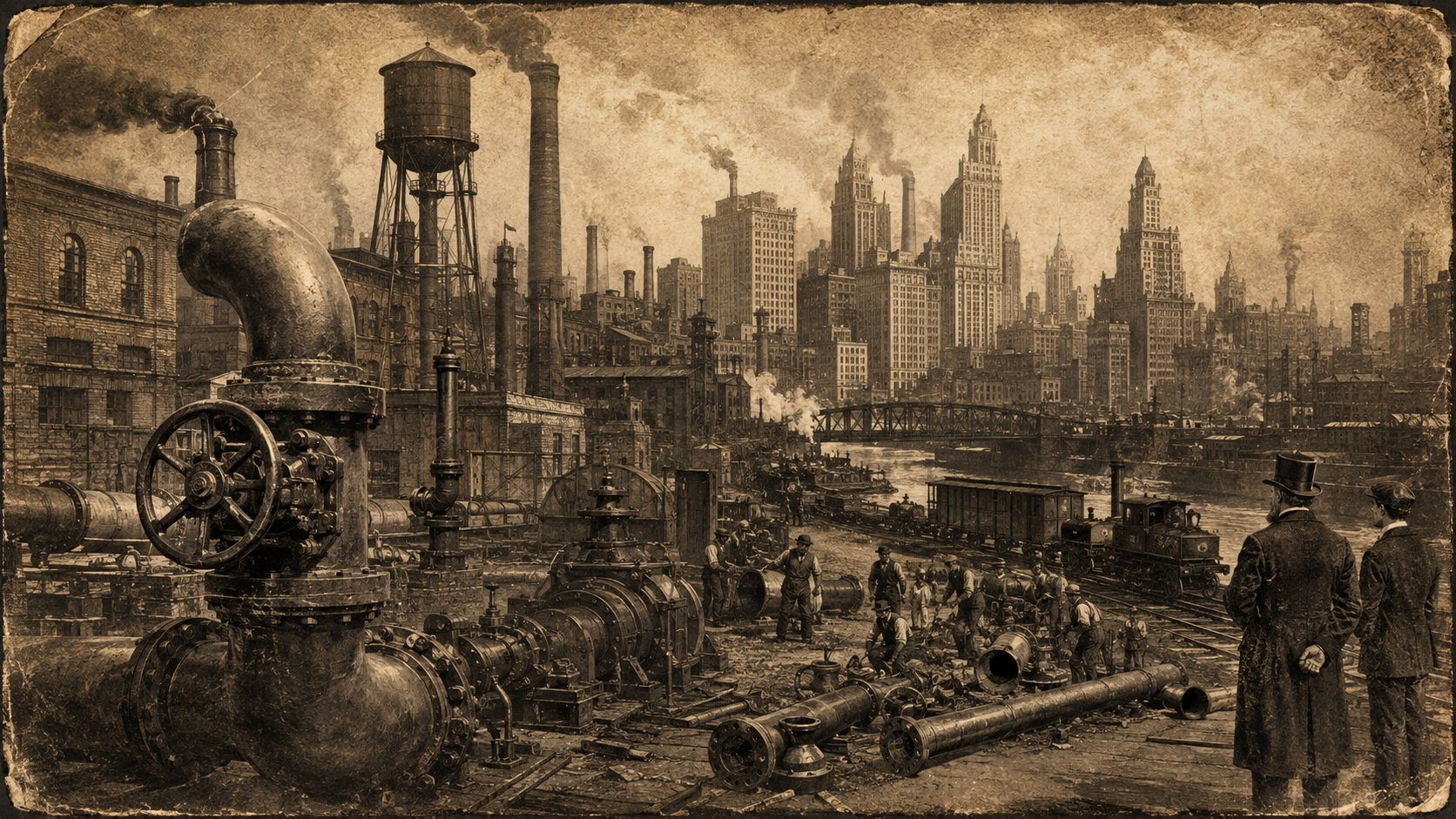
When Richard Teller Crane arrived in Chicago in 1855, it was not yet the industrial capital it would become. Its streets turned to mud, its buildings rose faster than its government could regulate them and its population seemed to double whenever someone stopped counting. Chicago was not a finished city. It was an invitation to anyone who believed he could manufacture the future.
Crane arrived with little formal education but years of practical experience in mills, foundries and machine shops. He understood metal, pressure and the movement of steam and water through pipes. On July 4, 1855, he opened a small brass and bell foundry. The business began with railroad parts, engine fittings and industrial equipment—the unglamorous pieces without which glamorous machines could not operate.
Chicago and Crane grew together. Railroads converged upon the city. Factories multiplied. Buildings climbed higher. Each new structure required heating, plumbing, elevators, valves and miles of pipe. The modern city was becoming a machine, and the Crane Company manufactured many of the parts hidden inside it. By the time the White City opened in 1893, the small foundry had become an industrial empire.
The family was already connected to another Chicago fortune. Richard Teller Crane was the nephew of lumber dealer Martin Ryerson, whose family supplied the raw material from which much of the growing city had been built. The Cranes and Ryersons belonged to the generation that transformed Chicago from a frontier marketplace into a center of industry, finance, education and philanthropy. Their factories made money. Their money began making institutions.
Richard Teller Crane believed in machinery, manual training and knowledge that could be put immediately to work. He distrusted universities and the educated theorists they produced. His eldest son, Charles Richard Crane, inherited the industrial fortune but not his father’s boundaries. Where Richard saw valves, Charles saw pathways. Where Richard built a company, Charles assembled a network.
Charles Crane entered the family business as a young man, but the factory could not contain his curiosity. He traveled through Europe, developed a fascination with Russia and began cultivating relationships among businessmen, professors, diplomats, reformers and members of royal courts. The same fortune produced by pipes beneath Chicago would eventually carry its heir into the palaces of St. Petersburg, the politics of Prague and the negotiations following a world war.
Chicago gave Charles the perfect laboratory. The newly founded University of Chicago was gathering scholars from around the world. The city’s museums, clubs and philanthropic boards allowed industrial wealth to move quietly into science, education and foreign affairs. Charles did not need to hold public office to exercise power. He could finance a lecture, arrange an introduction, underwrite an expedition or place the right person in the right room.
This was the Crane method. Industry generated wealth. Wealth purchased access. Access created relationships, and relationships redirected events. Charles Crane never seemed to enter history through the front door; he preferred to own the hallway where everyone eventually crossed paths.
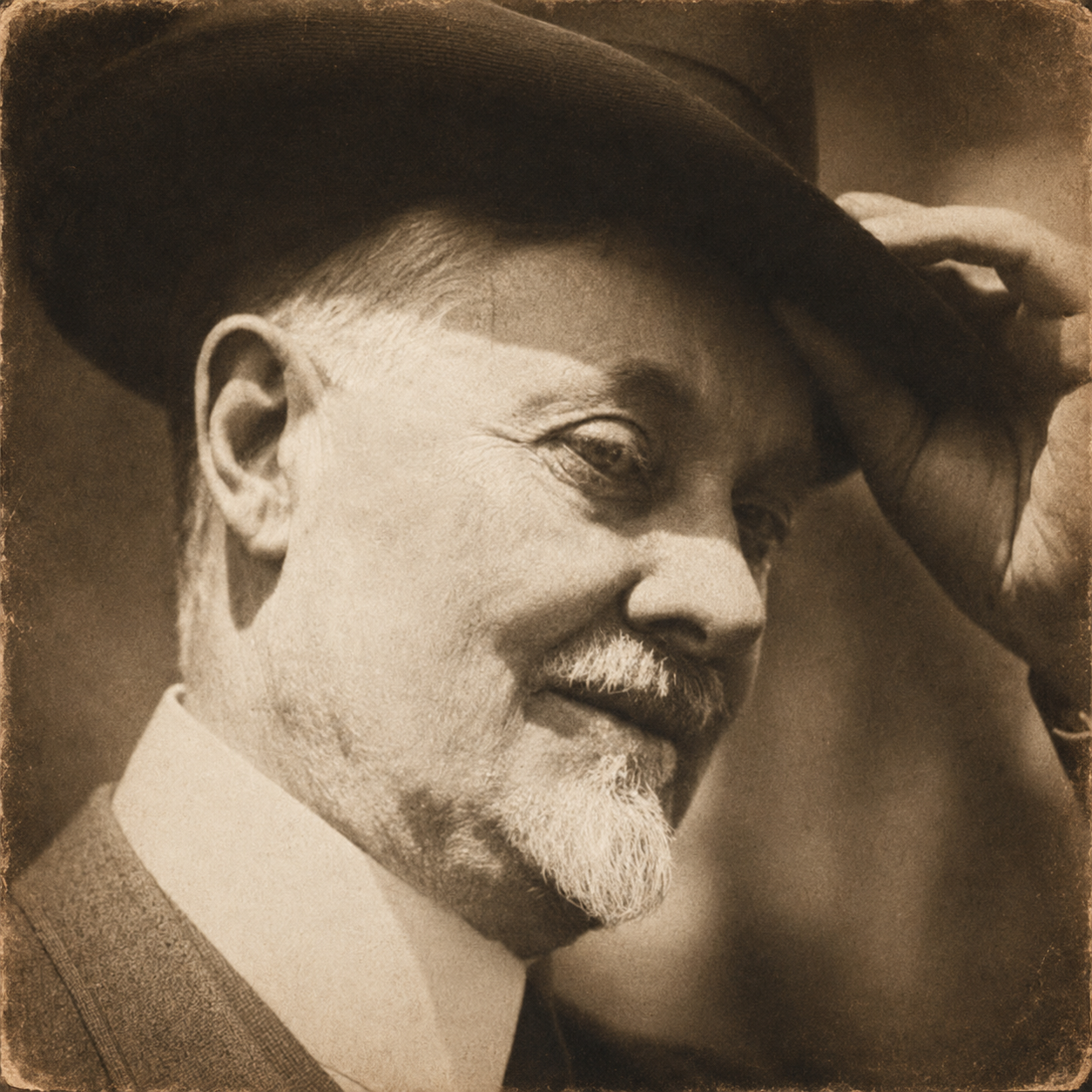
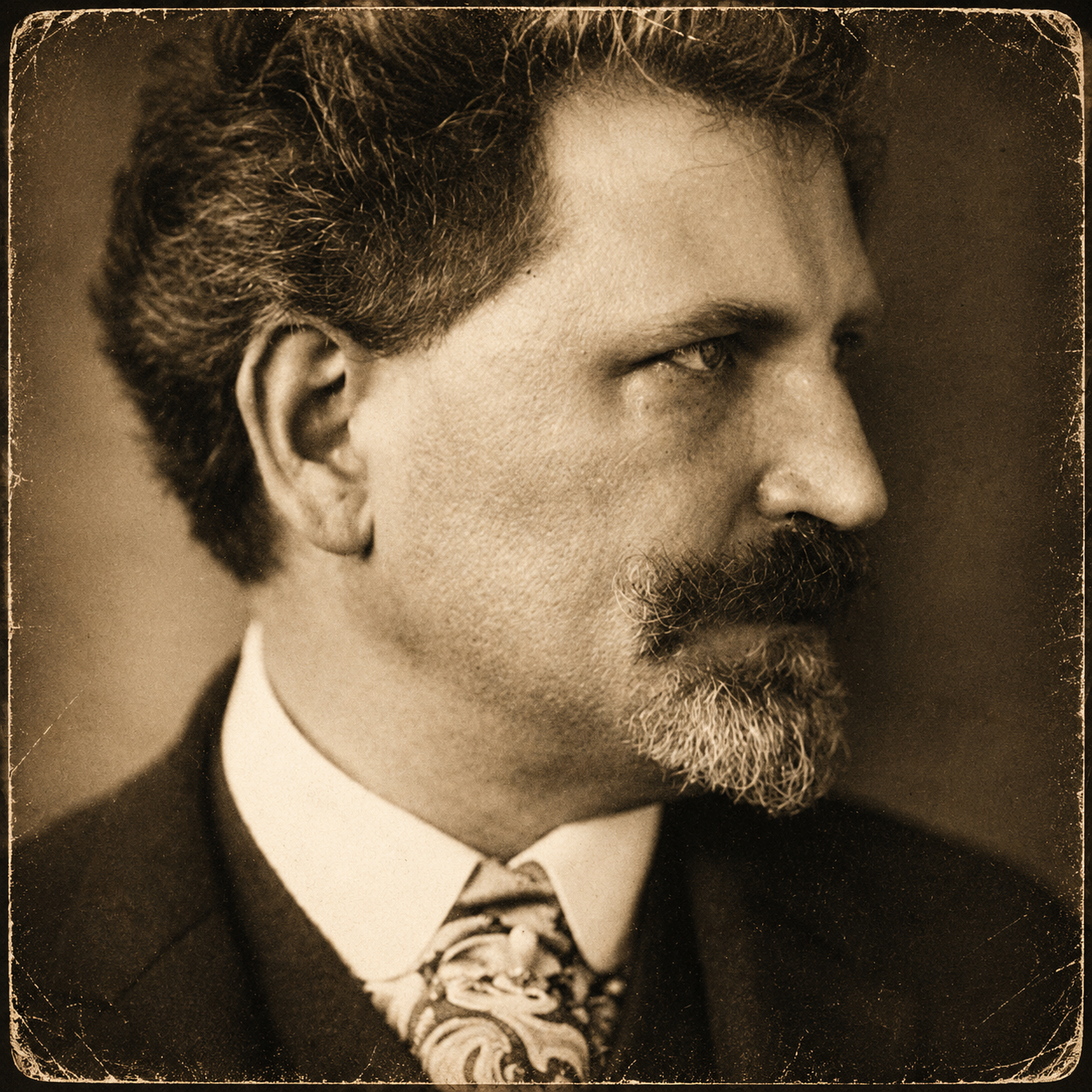
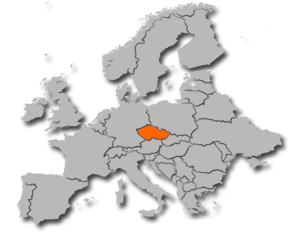
Before long, those hallways would carry Tomáš Masaryk to Chicago, Alphonse Mucha to Crane’s attention and American university leaders to an audience with the Tsar. A manufacturer’s son from Chicago would help finance the cultural identity of a nation that did not yet exist.
This is the question that will follow the Cranes from the factory floor into universities, royal courts and revolutions:
At what point does private wealth stop participating in history and begin directing it?
Richard Teller Crane built the machinery. Charles Crane discovered how to connect it to the world.
MUCHOLAPKA by CWW III
Fact-check foundation: Crane Company’s corporate history, Encyclopedia of Chicago, and the Charles R. Crane family papers at Columbia University.