CHAPTER THREE: MEANWHILE, BACK IN BOHEMIA
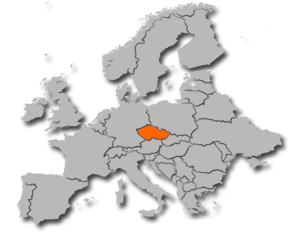
While Chicago was transforming iron, steam and ambition into an industrial empire, another kind of machinery was operating across the Atlantic. Bohemia and Moravia belonged to the Austrian Empire. Their people possessed their own language, legends, saints, music and memory—but no independent nation in which to place them.
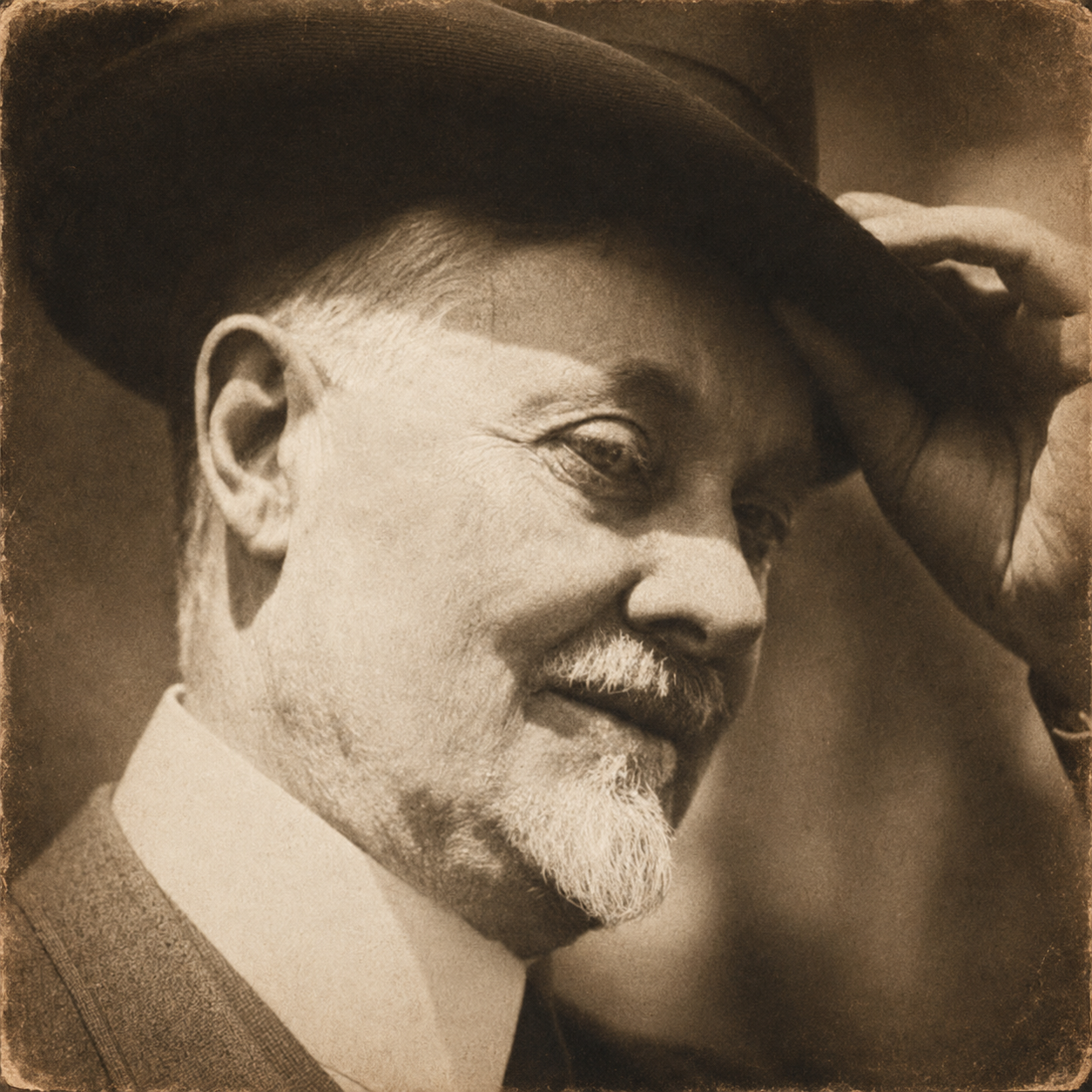
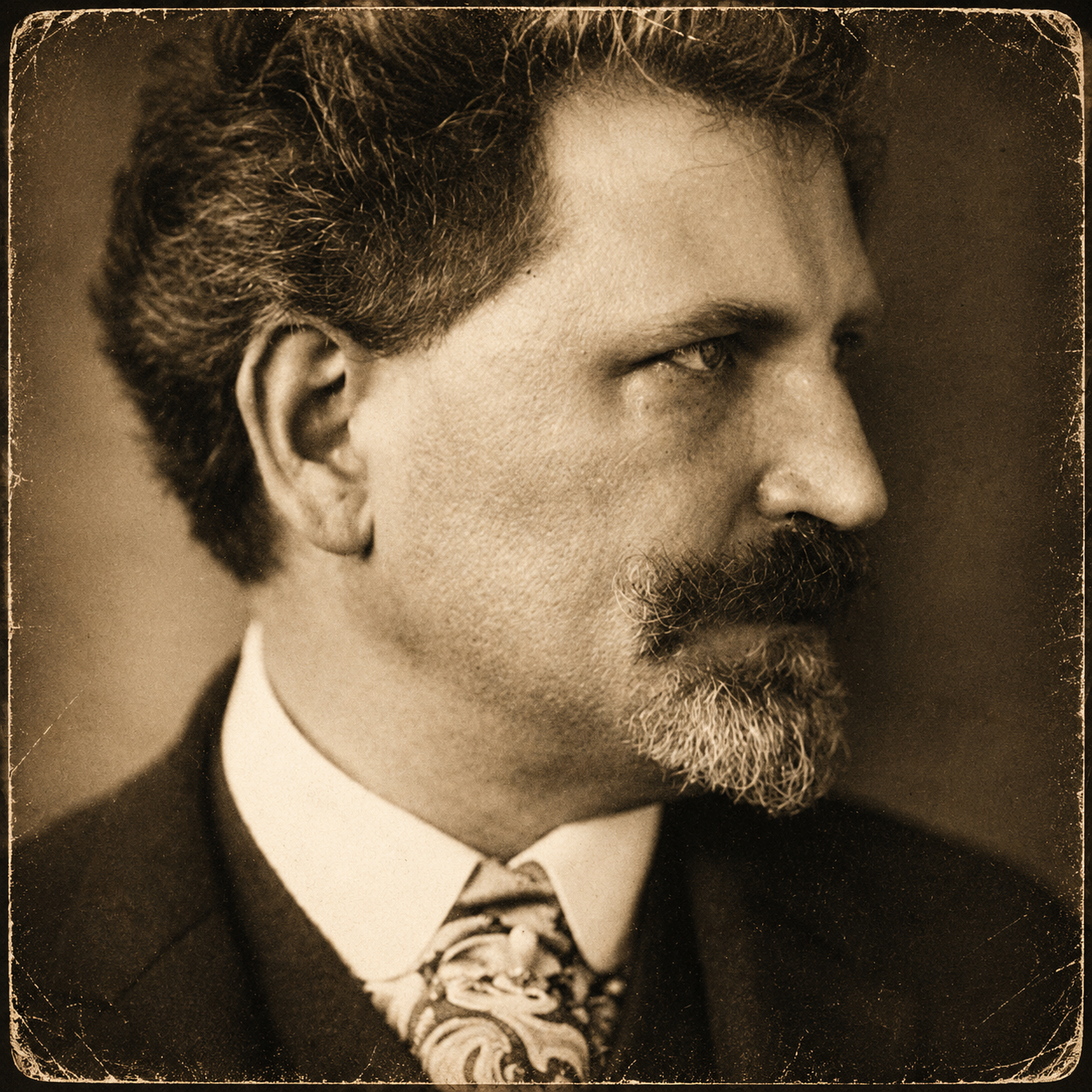
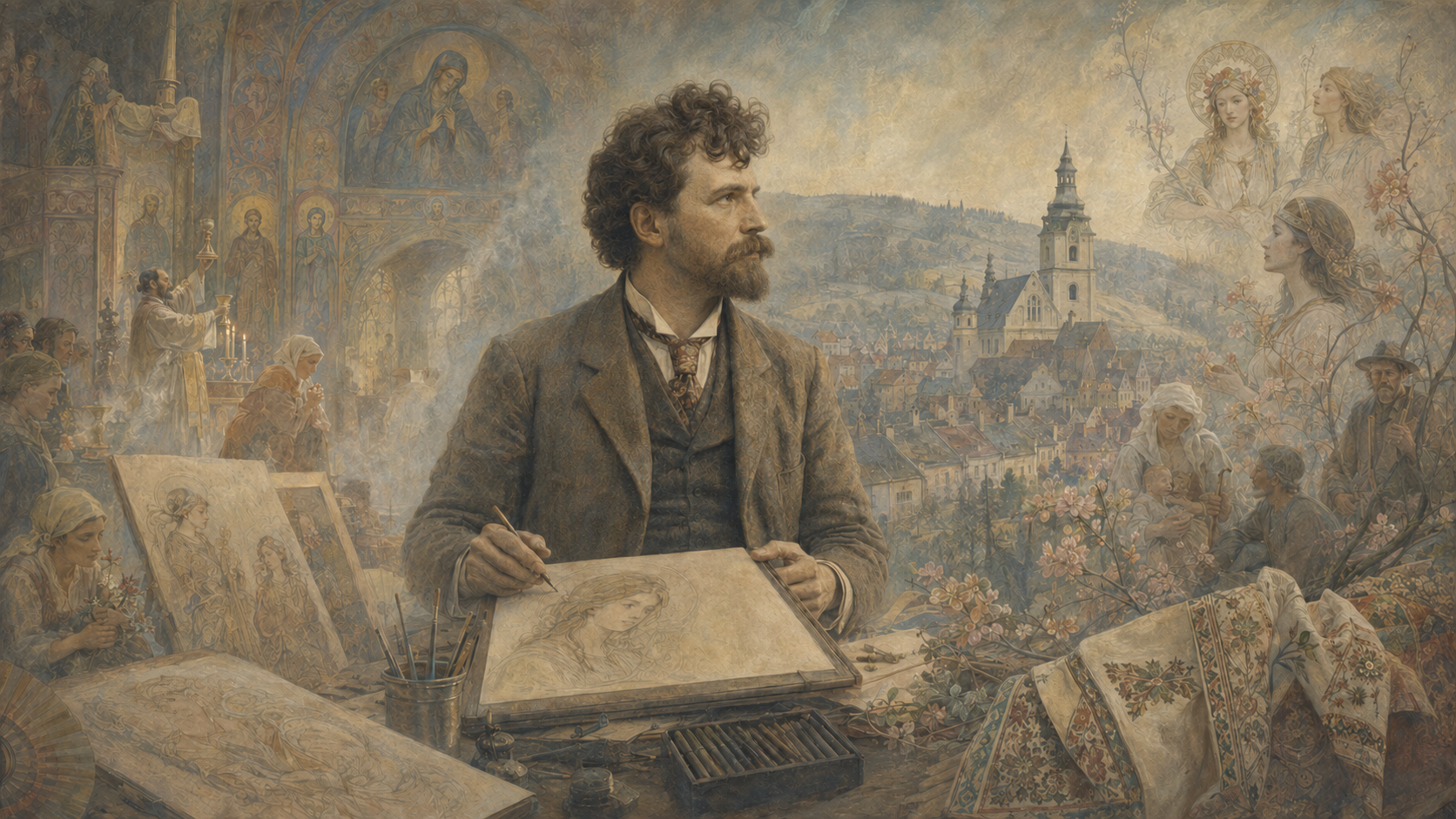
Alphonse Maria Mucha was born on July 24, 1860, in Ivančice, a small Moravian town governed from Vienna. His father worked as an usher at the local courthouse. The family had little money, but Mucha grew up surrounded by church ritual, folk tradition and the remnants of a Slavic history that foreign rule had never entirely erased. He began drawing before anyone had given him permission to call himself an artist.
The Prague Academy of Fine Arts rejected his application. Mucha went to work painting theatrical scenery in Vienna, where art existed not only in museums but on stages, walls, costumes and advertisements. When the company employing him collapsed, he returned to Moravia and survived by painting portraits and decorating interiors. Talent had not yet opened the door. It had merely kept him standing outside it.
His work attracted Count Eduard Khuen-Belasi, who commissioned Mucha to decorate his castle and then helped finance his studies in Munich. From there, Mucha continued to Paris, the center of the European art world. When the Count’s support ended, he remained in the city as an illustrator, accepting whatever work allowed him to pay the rent.
Paris was changing the relationship between art and everyday life. New printing methods could reproduce images in enormous numbers. Posters covered walls. Magazines carried illustrations into private homes. Packaging turned ordinary products into objects of desire. Art no longer had to remain inside a palace, church or gallery. It could meet people in the street.
On December 26, 1894, Mucha happened to be at a printing shop when an urgent request arrived for a poster advertising Gismonda, a theatrical production starring Sarah Bernhardt. The famous actress needed the poster immediately. Mucha accepted the assignment and created a tall, narrow image unlike anything else appearing on the boulevards of Paris.
When the poster appeared on New Year’s Day, people stopped to look. Some reportedly removed copies from the walls. Bernhardt offered Mucha a contract, and the unknown Moravian illustrator became an international sensation. His elongated figures, halos, flowers, flowing hair and intricate borders became so recognizable that Art Nouveau was often simply called Le Style Mucha.
But Paris misunderstood what it had discovered. Mucha’s work was treated as a fashionable decorative style, while Mucha regarded beauty as a language capable of carrying spiritual and political meaning. The women in his posters were not merely selling plays, biscuits, bicycles or cigarettes. They were rehearsals for something larger: symbolic figures through whom a people might see itself.
Mucha had escaped an empire without escaping the question of who he was. Beneath the commercial commissions remained the memory of Moravia and the dream of Slavic self-determination. He did not want merely to decorate the modern world. He wanted to recover a history that imperial power had pushed into the background.
Alphonse Mucha did not decorate history; he gave it a face beautiful enough to remember itself.
This is the question that will follow Mucha from Ivančice to Vienna, Paris, Chicago and eventually Prague:
Can an artist give a nation its identity before the nation itself exists?
Paris made Mucha famous. Bohemia would give that fame a purpose.