CHAPTER TWELVE: DECODING THE SLAV EPIC
Alphonse Mucha is remembered for beautiful women surrounded by flowers, stars and curling hair. The Slav Epic contains almost none of that familiar comfort.
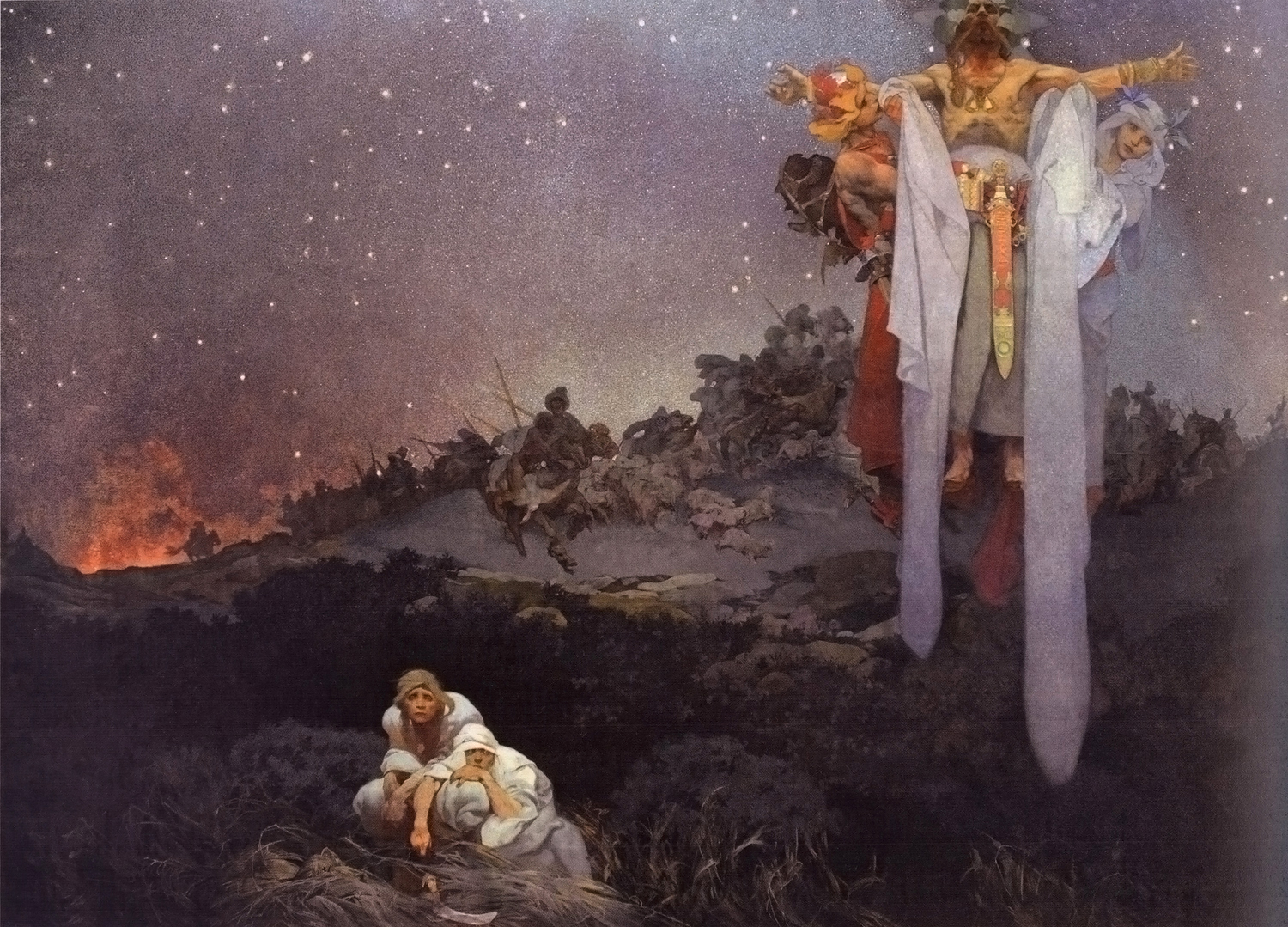
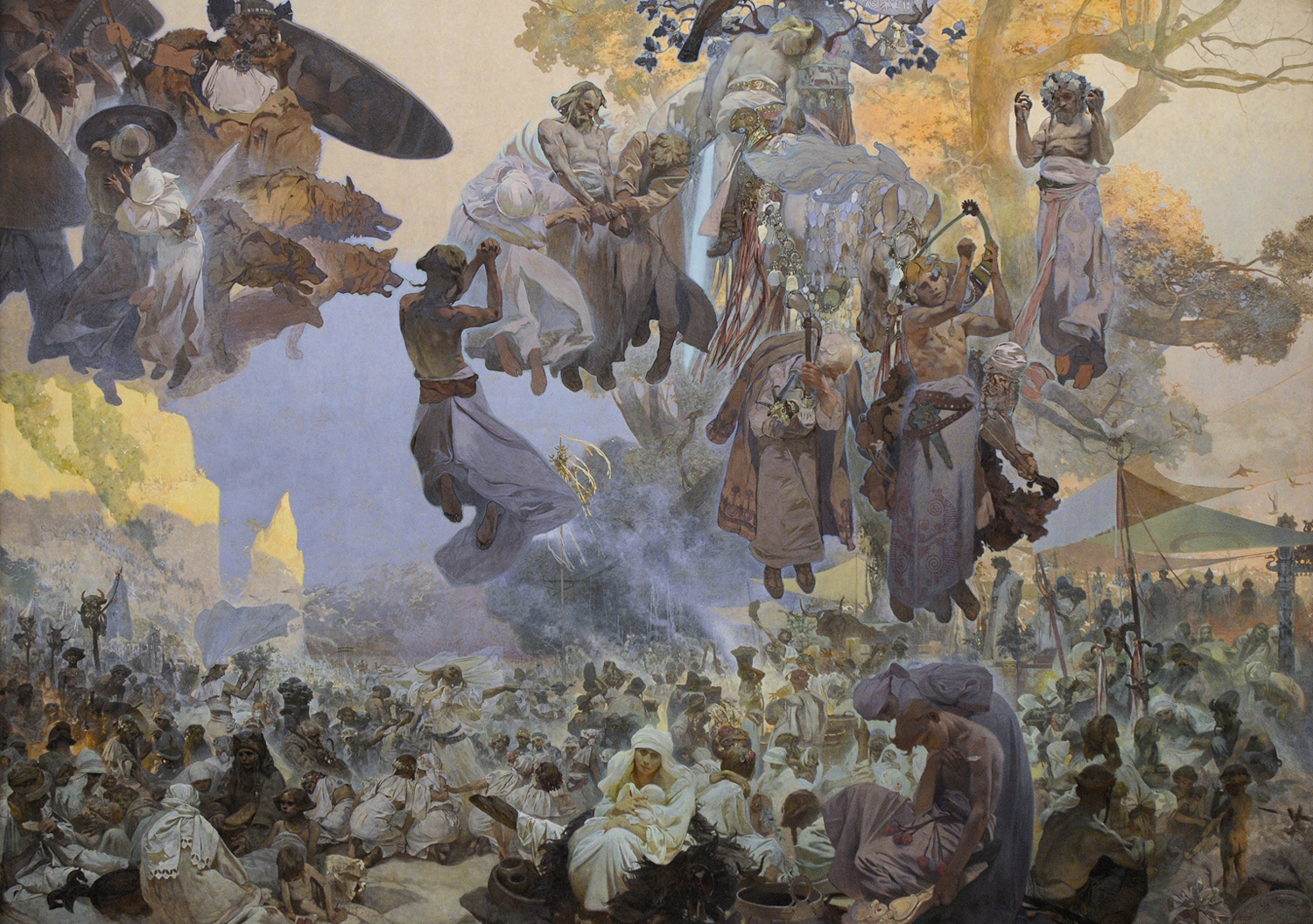
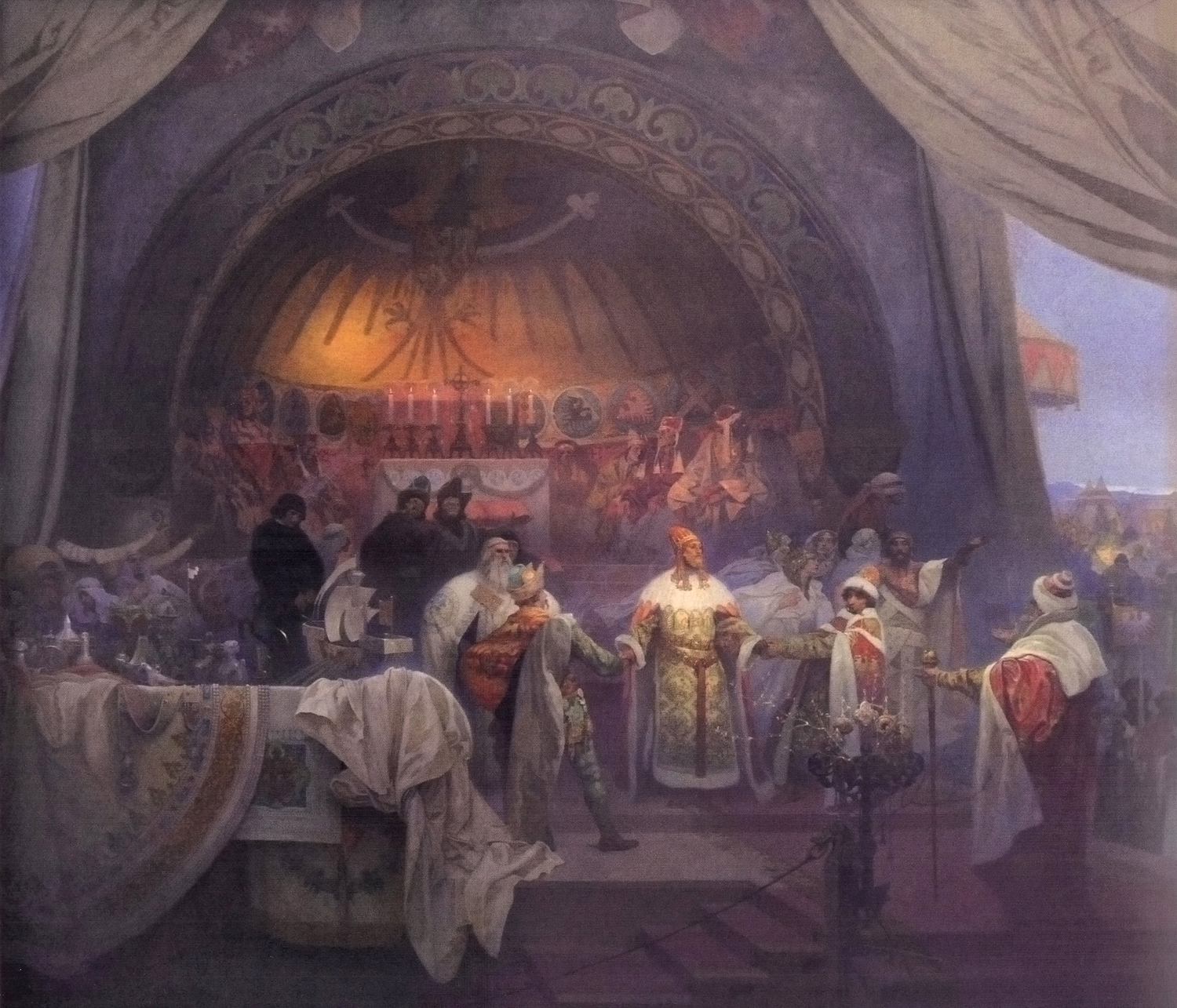
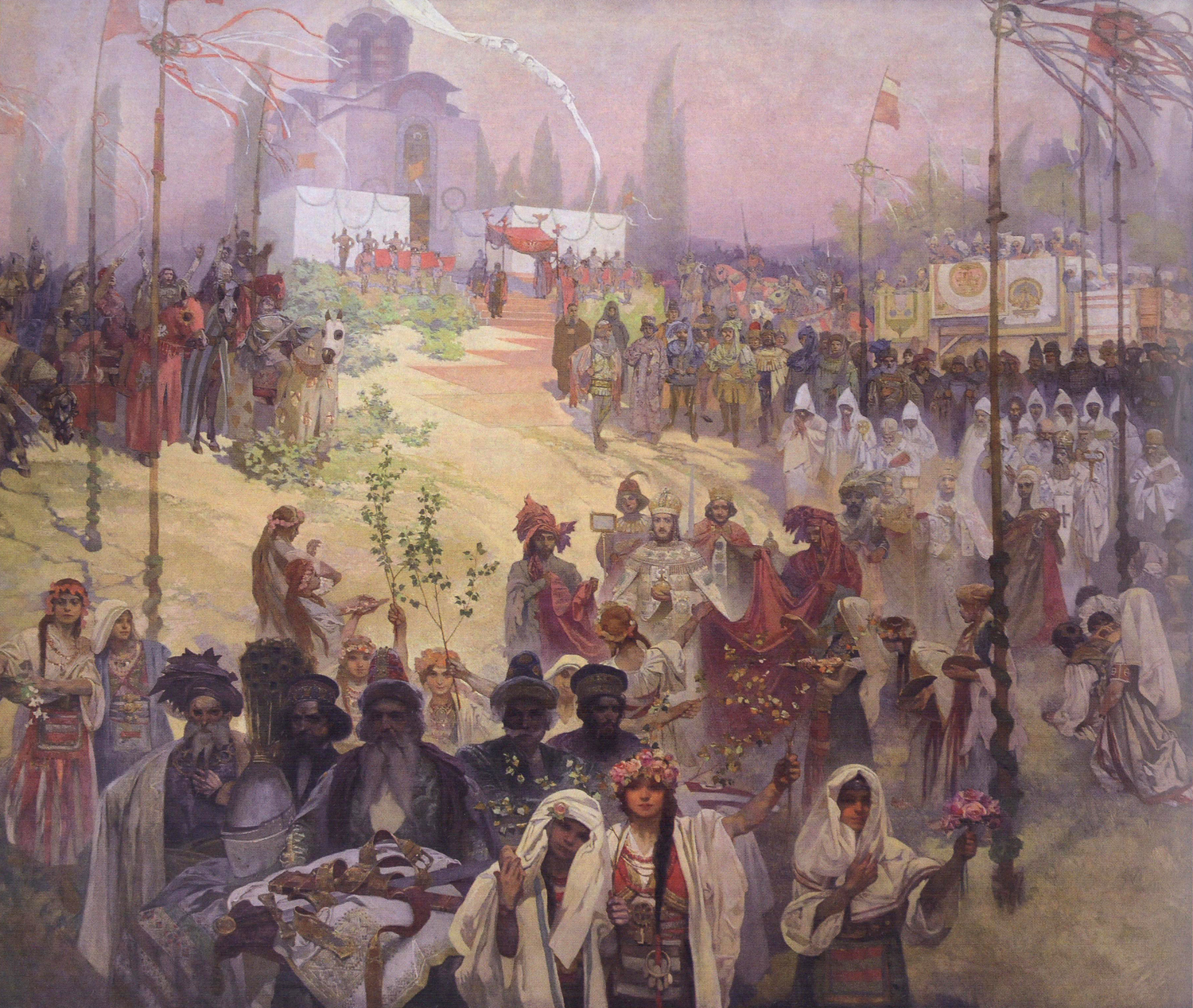
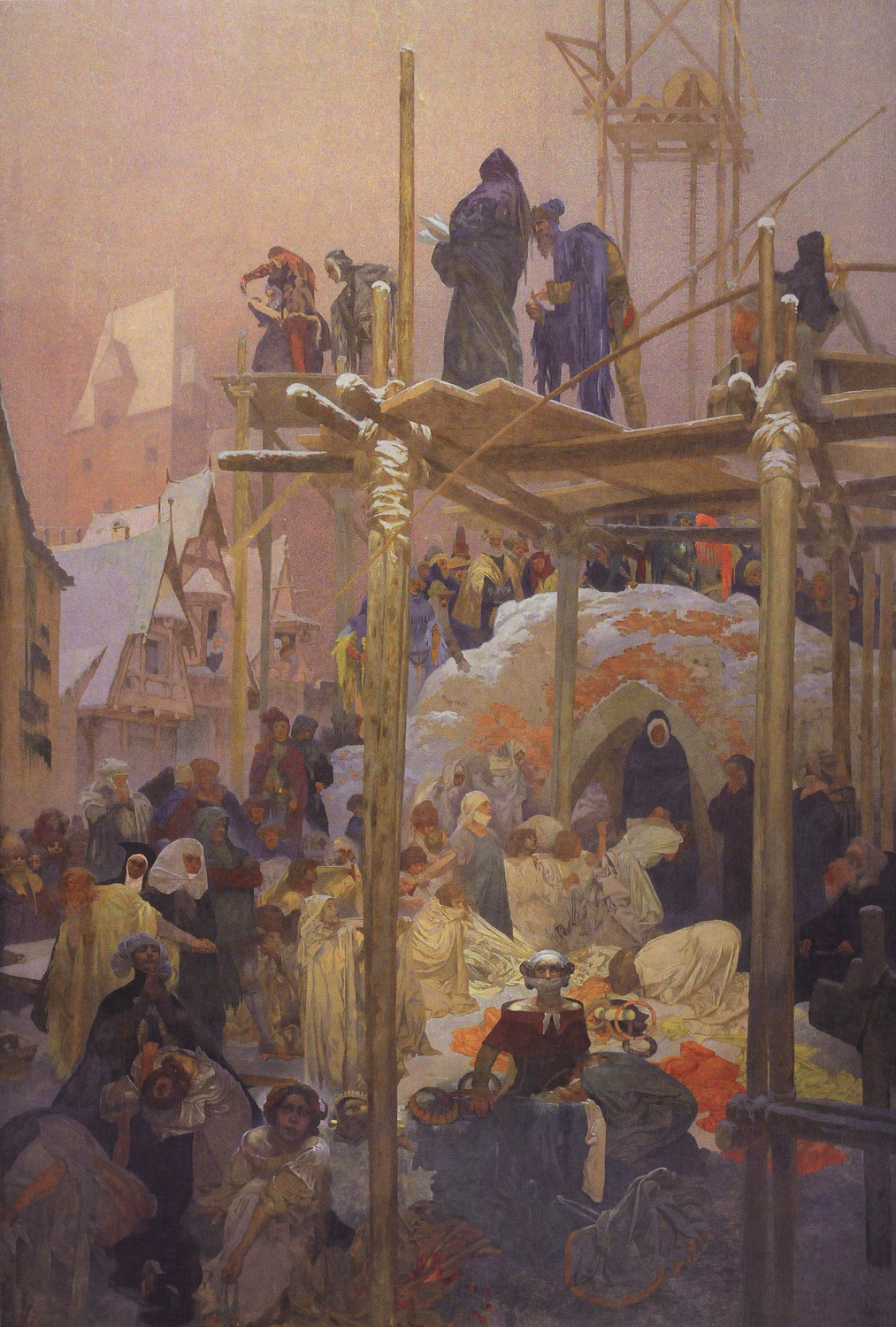
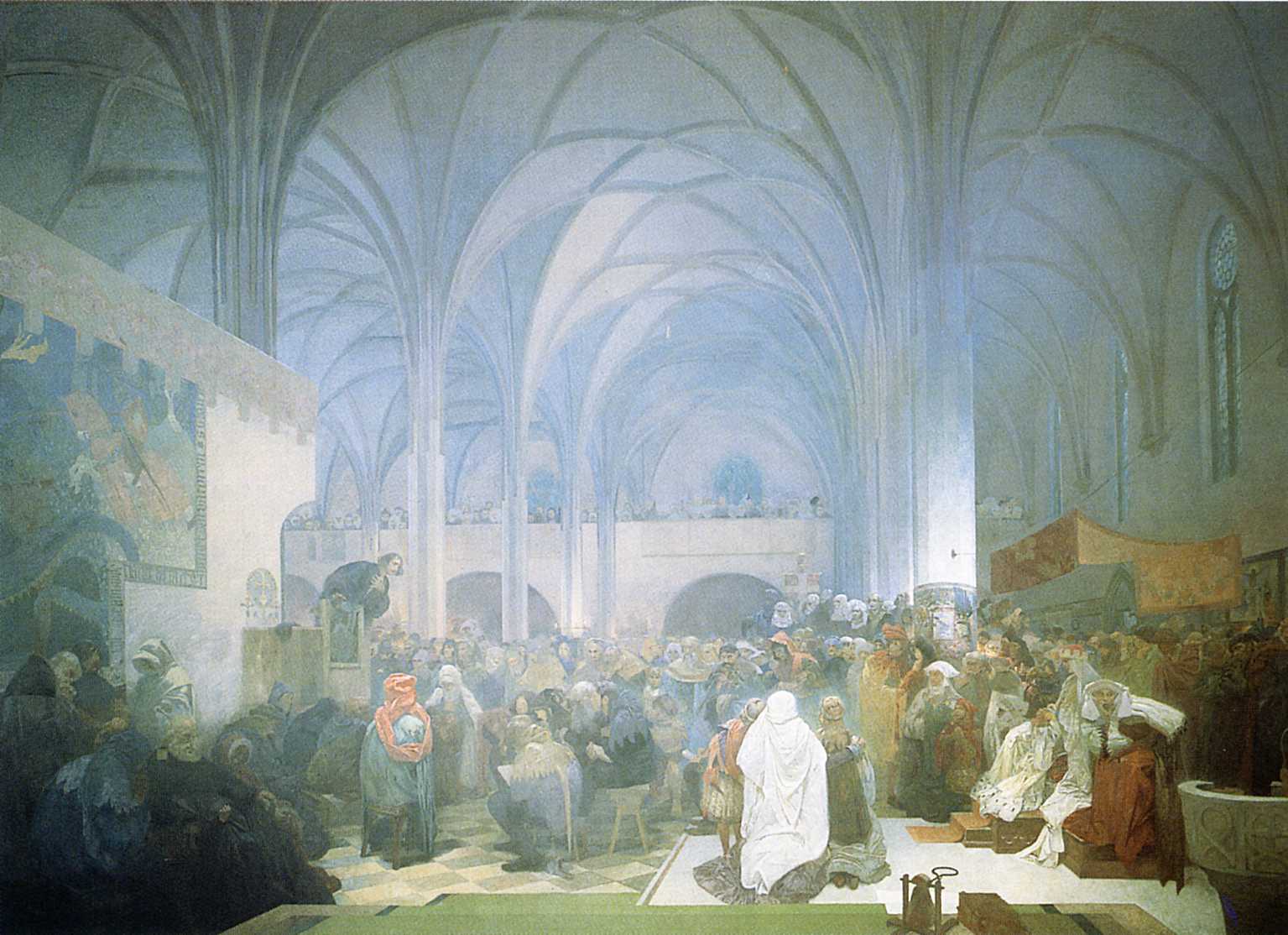
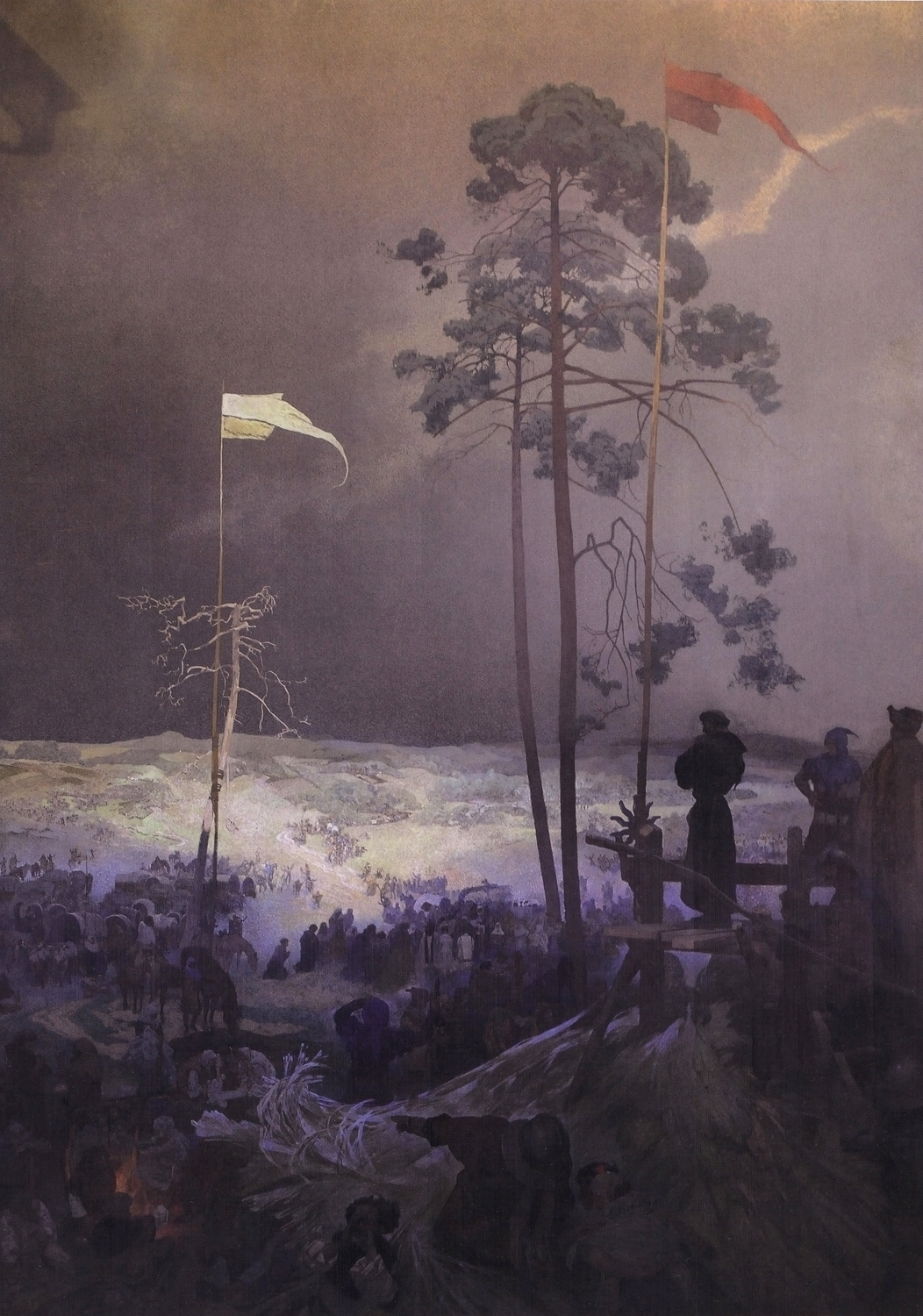
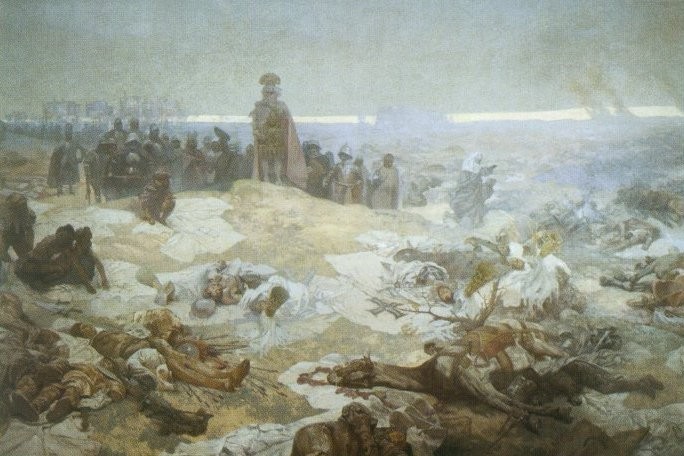
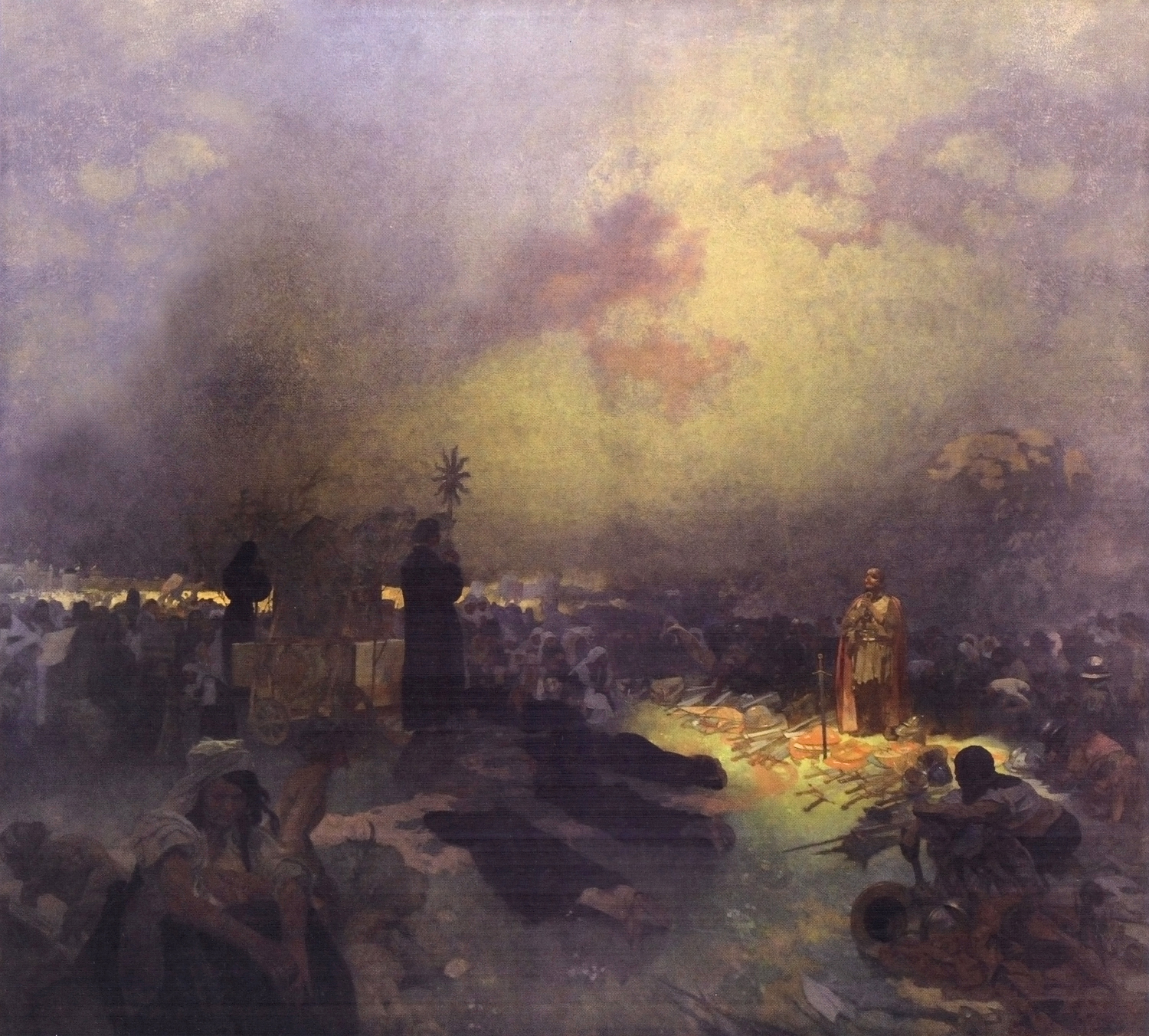
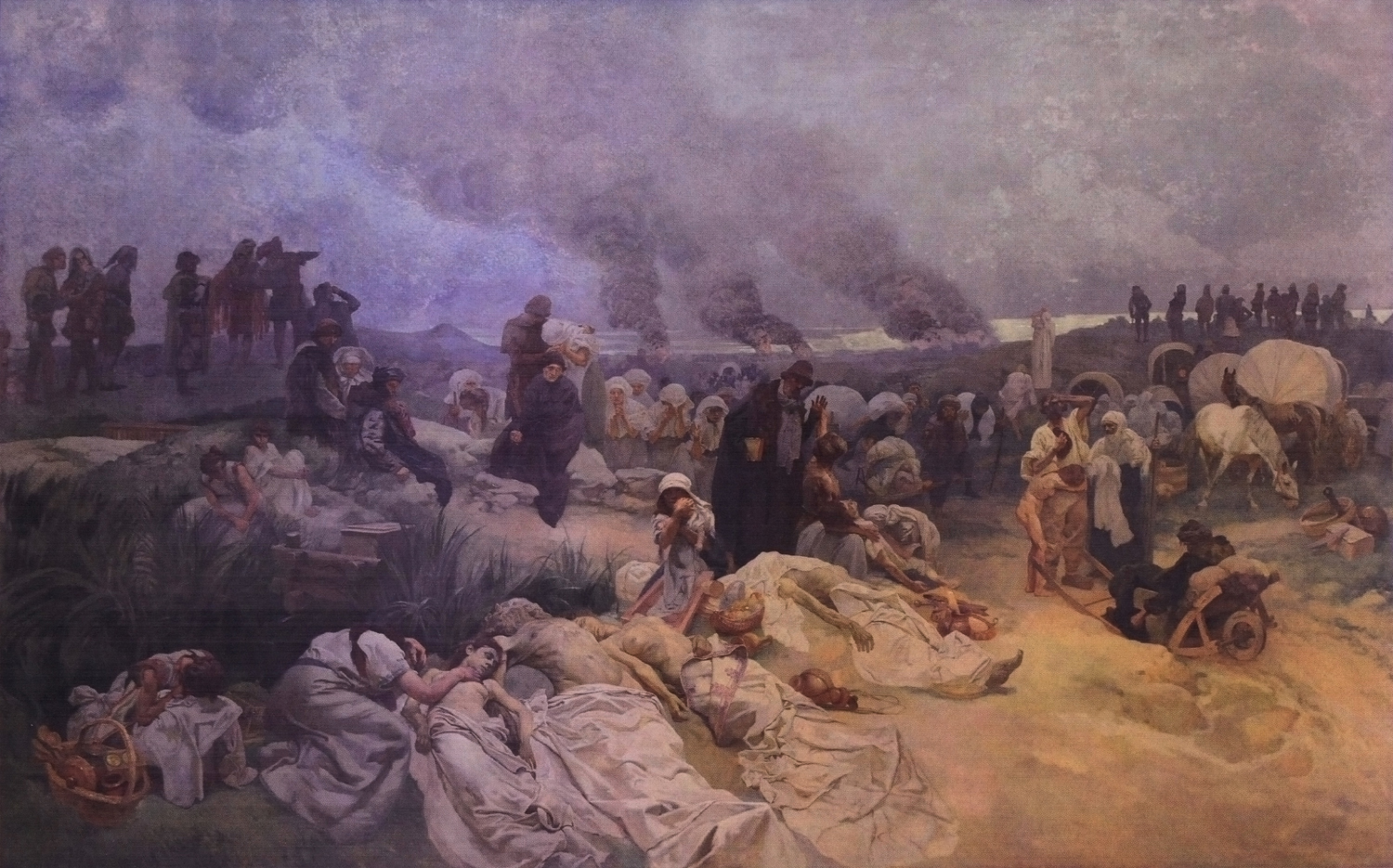
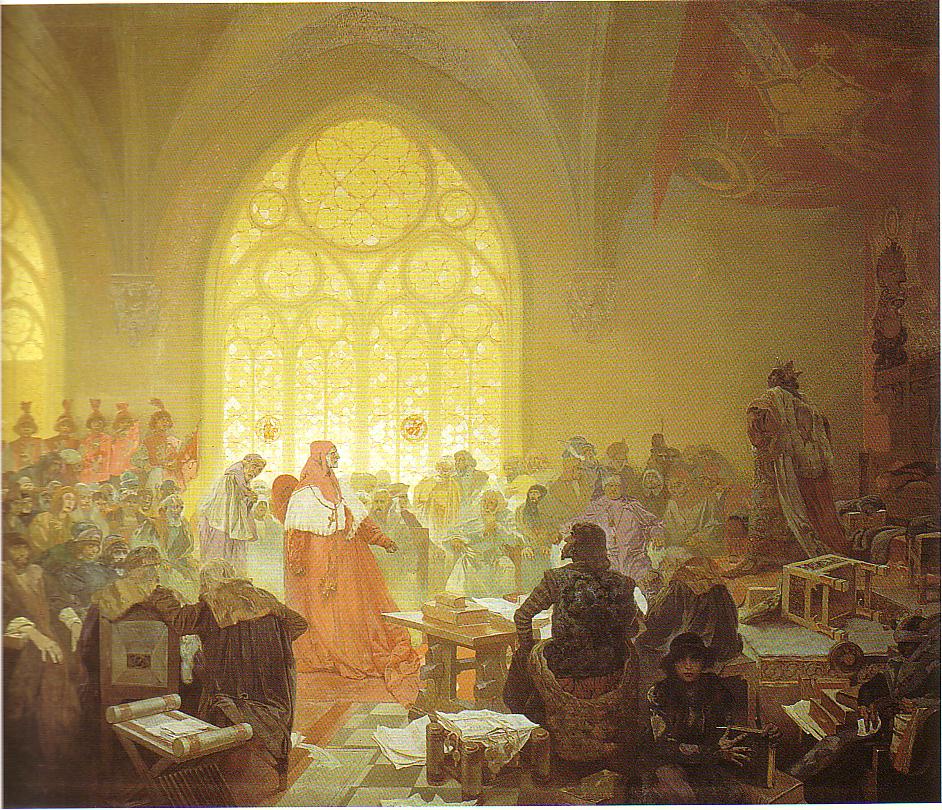
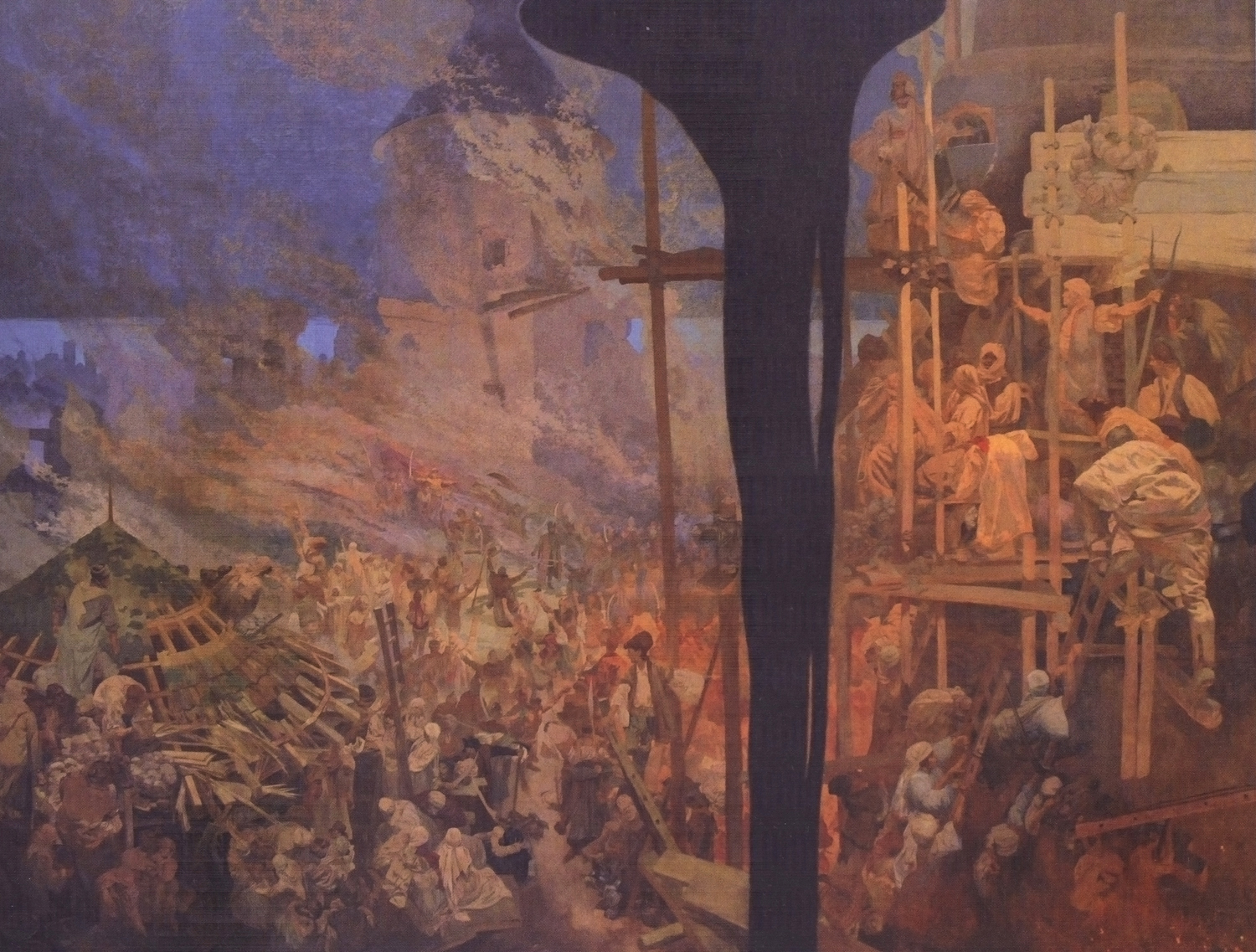
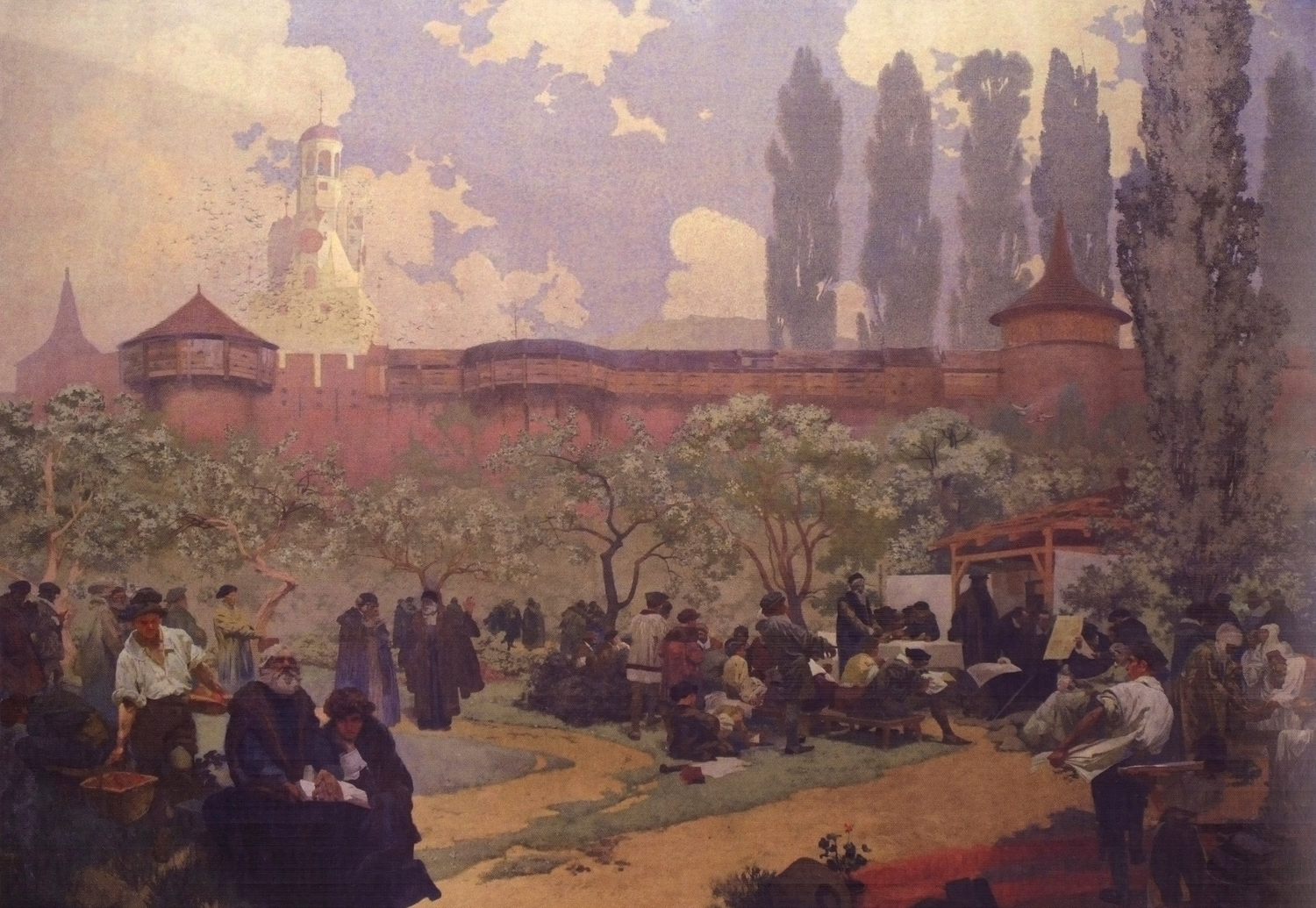
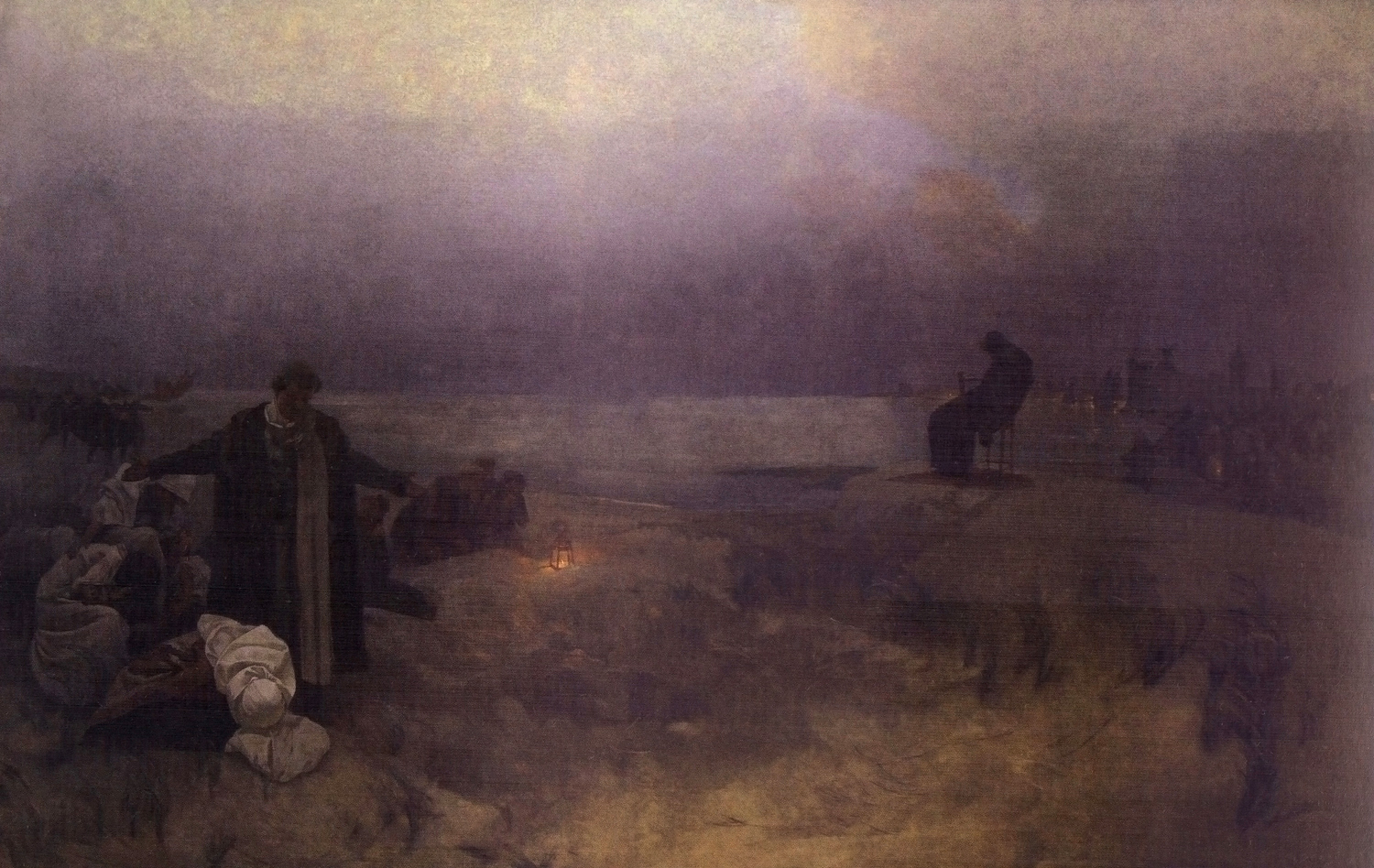
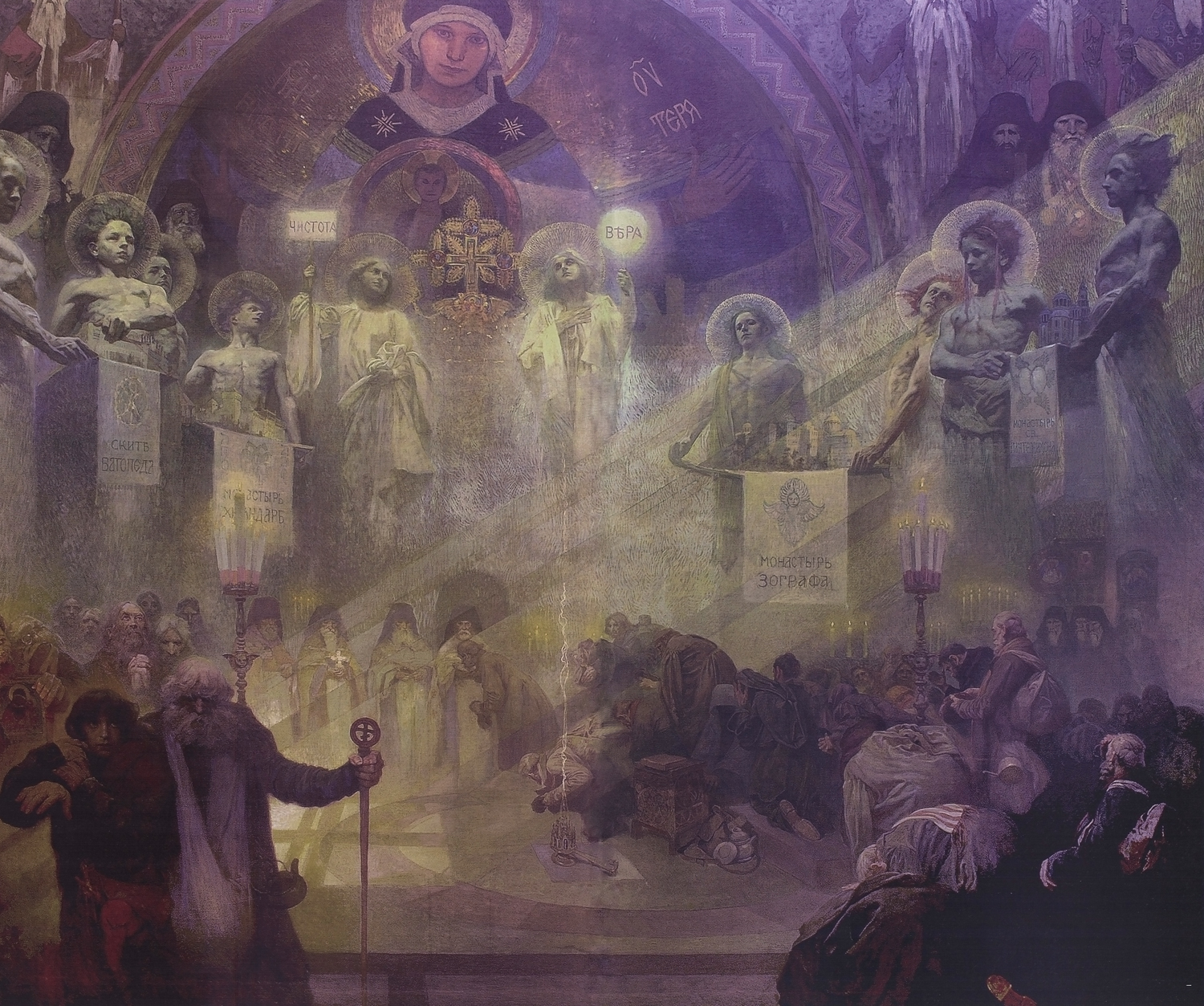
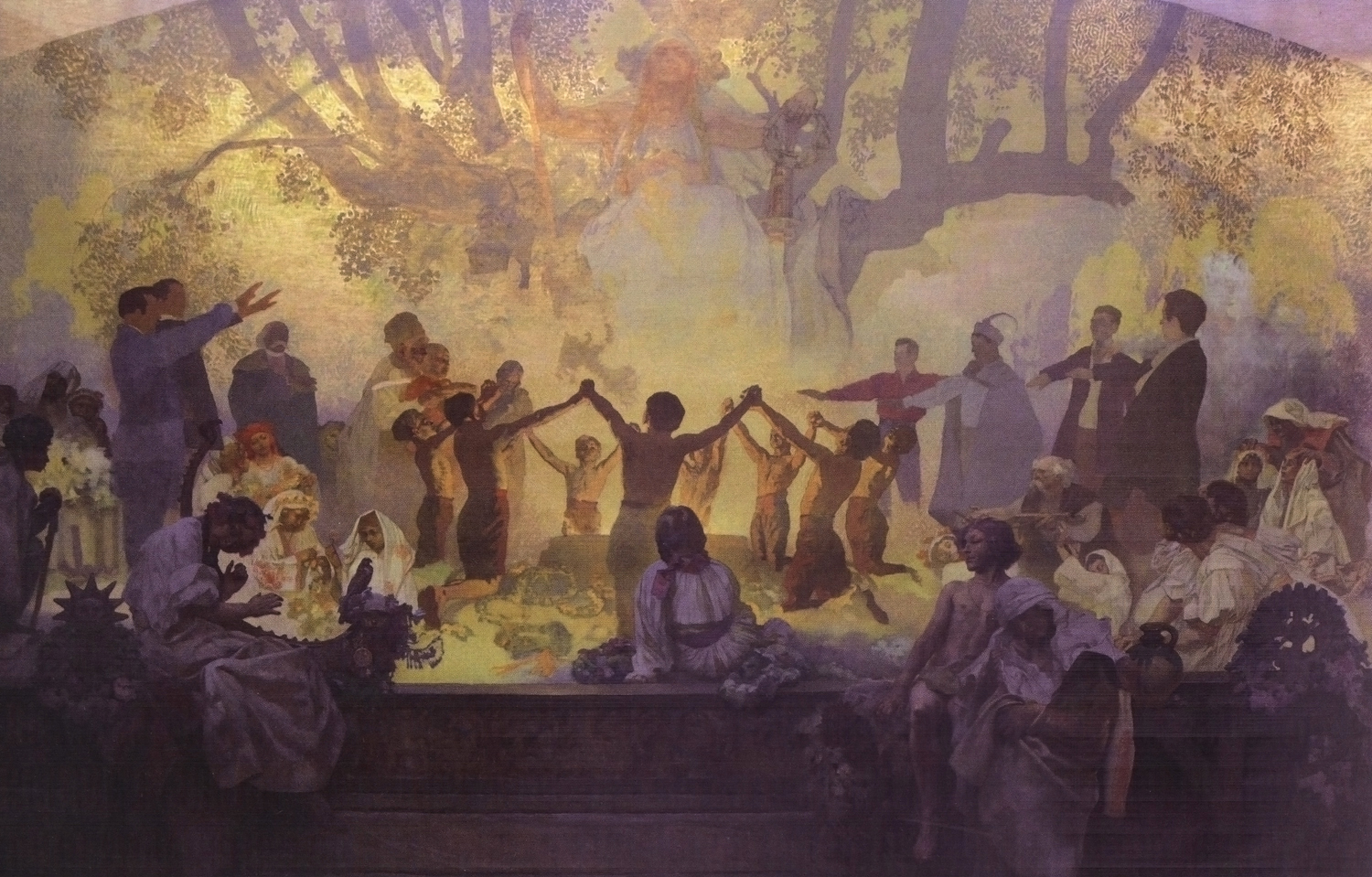
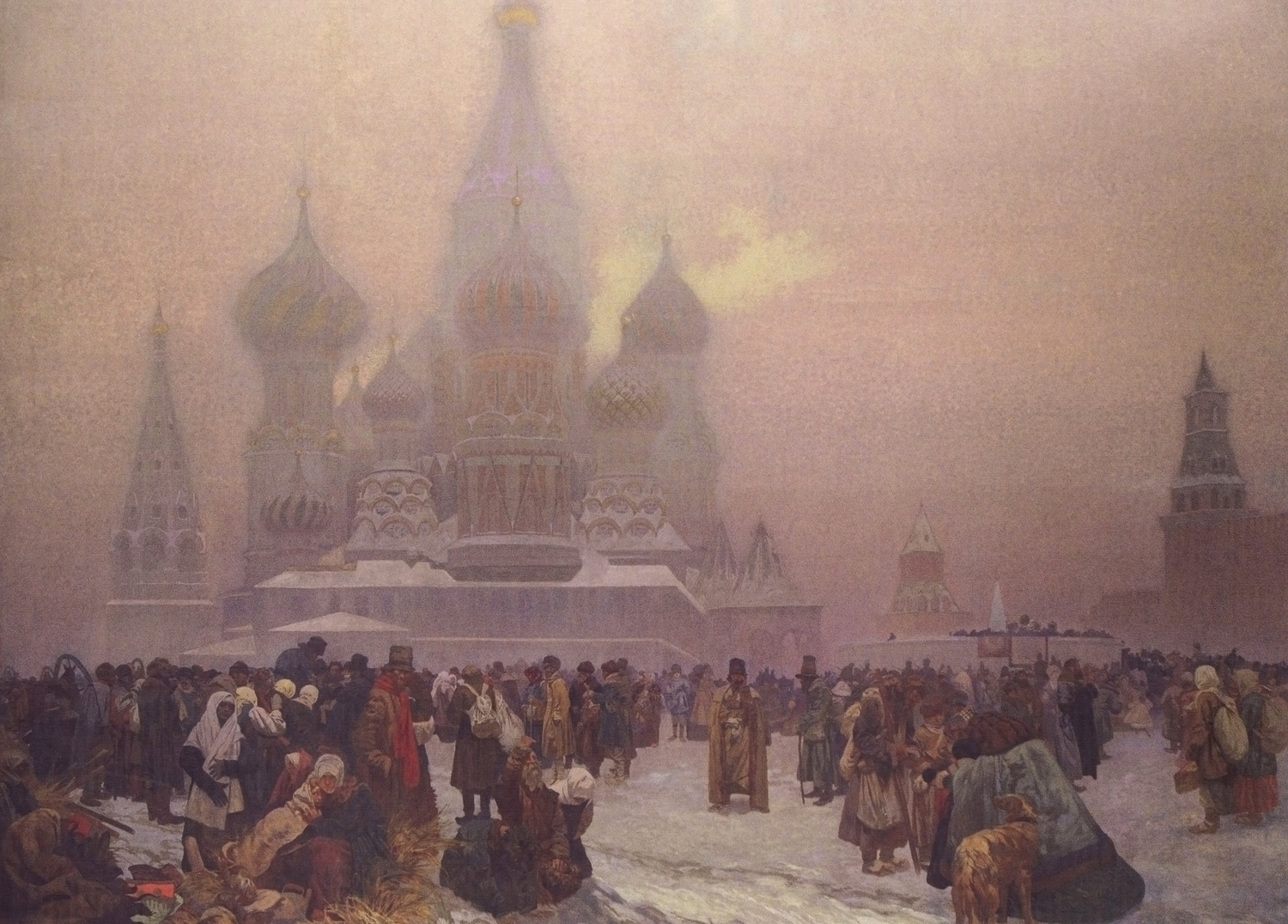
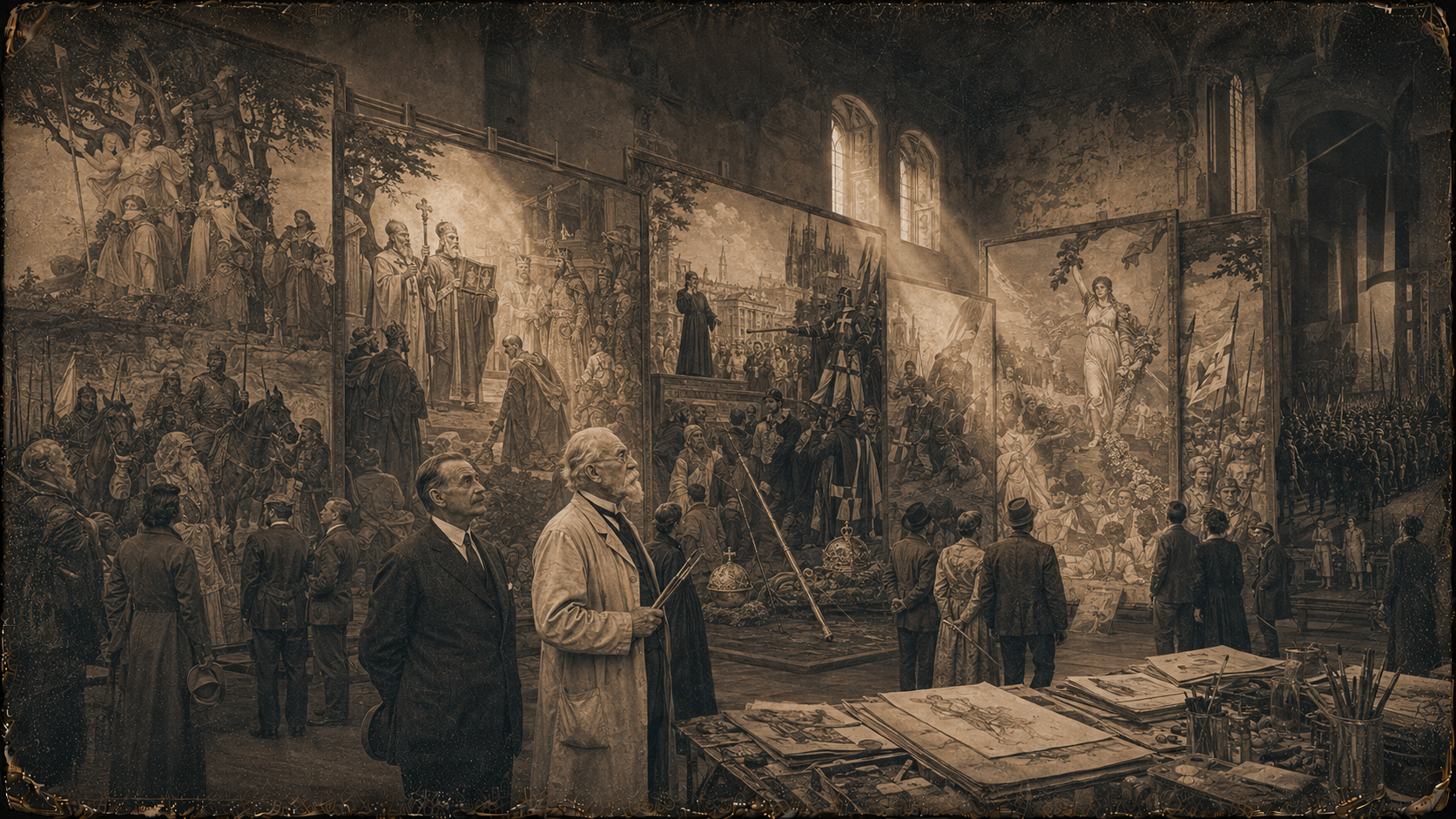
Instead, twenty enormous canvases carry the viewer through more than a thousand years of Slavic history. Some are nearly twenty-six feet wide. Figures appear life-sized or larger, emerging from smoke, shadow and fields of glowing color. These were not paintings intended to match the furniture. They were meant to surround the visitor and make history physically unavoidable.
The Slav Epic was Mucha’s attempt to paint a civilization remembering itself.
The story begins not with a king or a military victory, but with frightened people hiding in the darkness while invaders move through their homeland. Mucha’s Slavs enter history as survivors—caught, as the first canvas declares, “between the Turanian whip and the sword of the Goths.”
That choice unlocks the entire series. Mucha was not constructing a parade of national heroes. He was tracing what happens to a people repeatedly conquered, divided, converted and ruled by outsiders—and how language, belief, art and memory allow them to remain themselves.
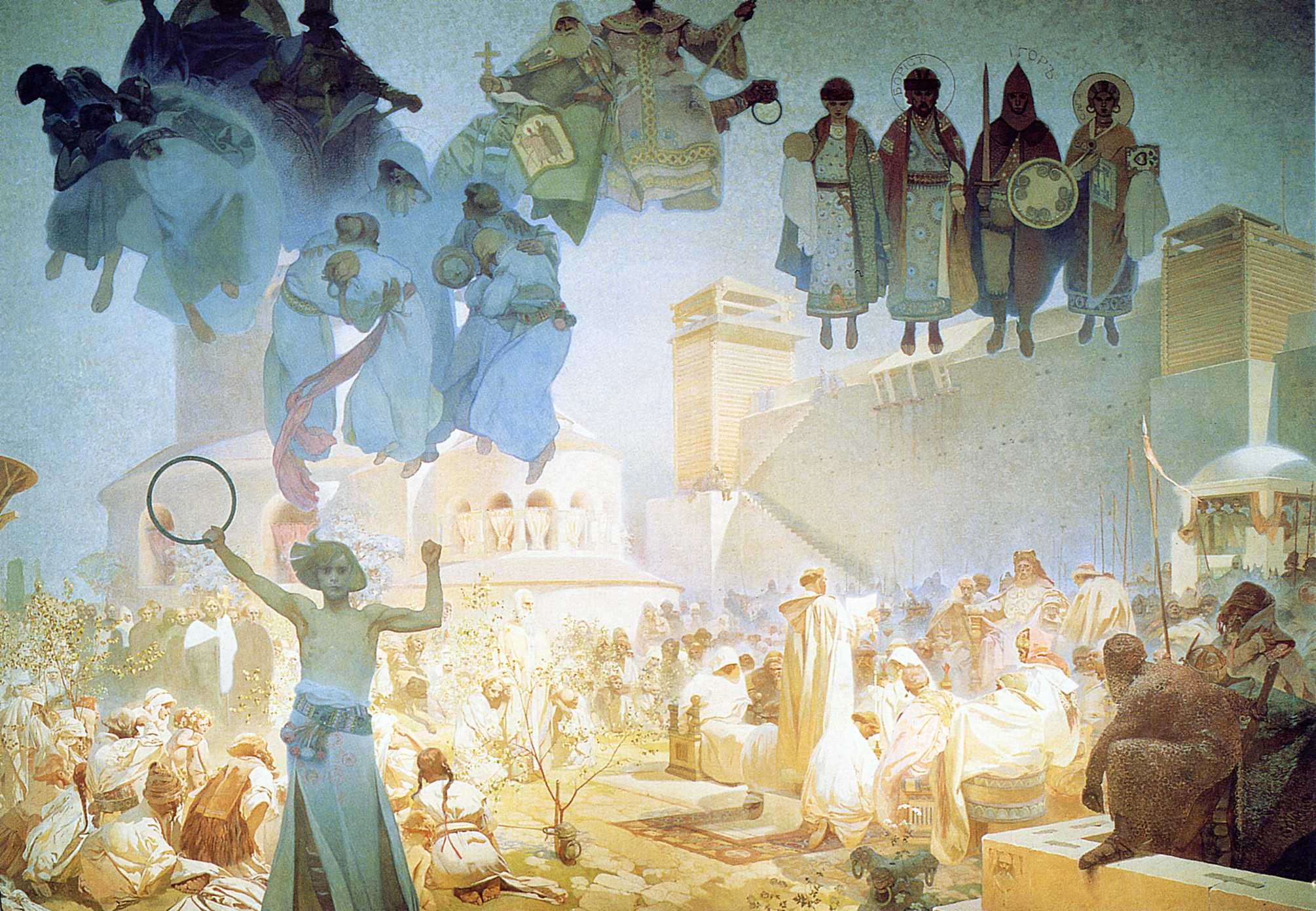
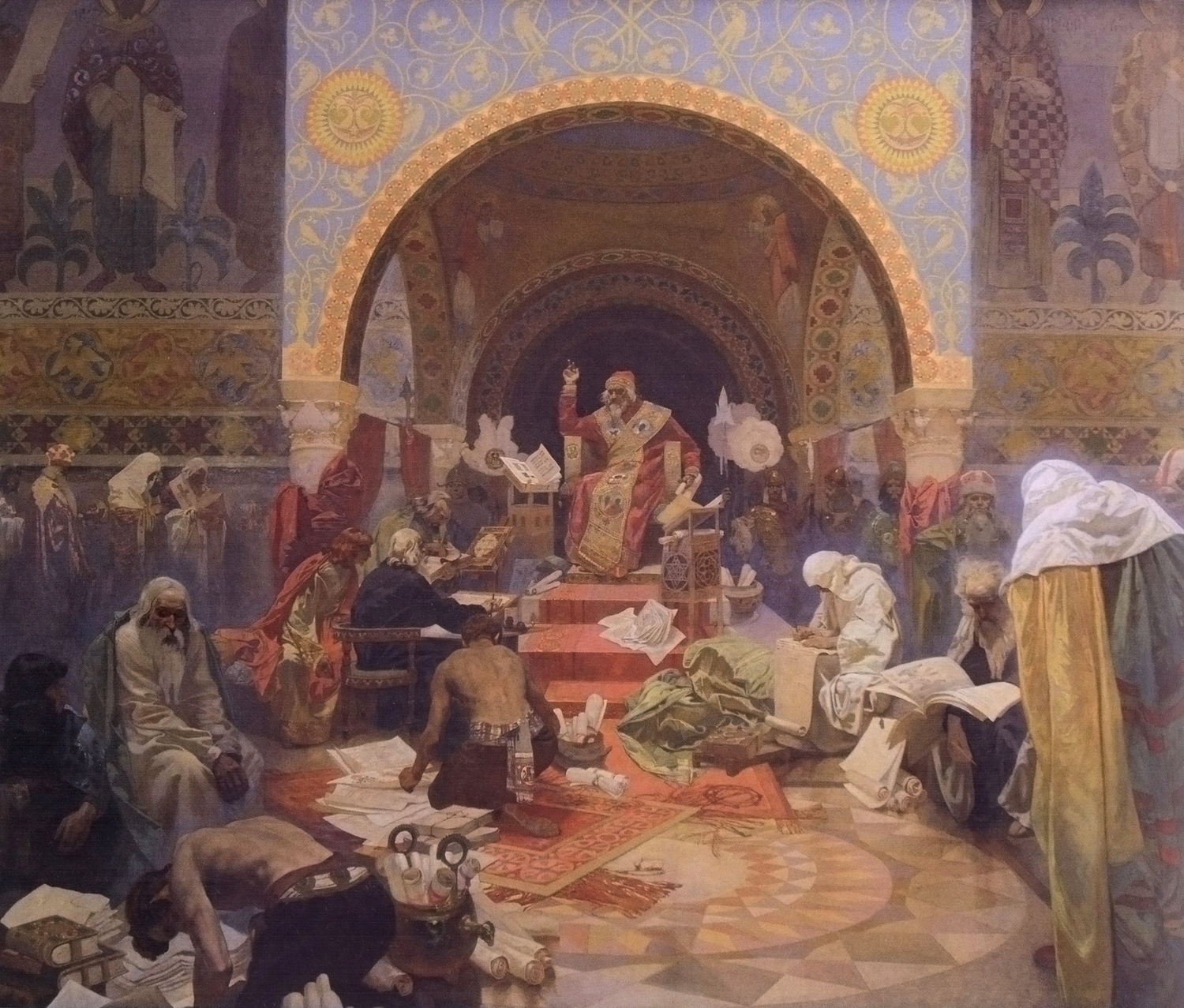
The canvases move across centuries and borders. Pagan rituals give way to Christianity. Saints introduce worship in the Slavic language. Rulers create kingdoms and legal codes. Jan Hus challenges the authority of the Church. Armies clash, cities burn and religious movements splinter. Victories appear, but they rarely look uncomplicated.
Mucha’s heroes are often teachers, translators, reformers and people carrying books. His most important battles are fought over language, education and the right to understand one’s own faith. In the Slav Epic, culture is not something produced after survival has been secured. Culture is how survival is secured.
Charles Crane understood that idea immediately. His money made the project possible, but he did not purchase the paintings for himself. He financed Mucha’s ability to research, travel and work on a scale few artists could have attempted. The industrial fortune behind Chicago elevators, pipes and plumbing was converted into twenty monumental paintings about the spiritual survival of the Slavic world.
This was patronage with geopolitical consequences. Crane supported Masaryk’s campaign for an independent Czechoslovakia while financing Mucha’s visual argument for why such a country should exist. One man carried the case through universities and government offices. The other carried it through history, symbol and paint.
Yet the Slav Epic is not propaganda in the simplest sense. Mucha included persecution, fanaticism, internal division and defeat. His message was not that Slavs were destined to rule others. It was that suffering should teach them not to repeat the machinery of domination.
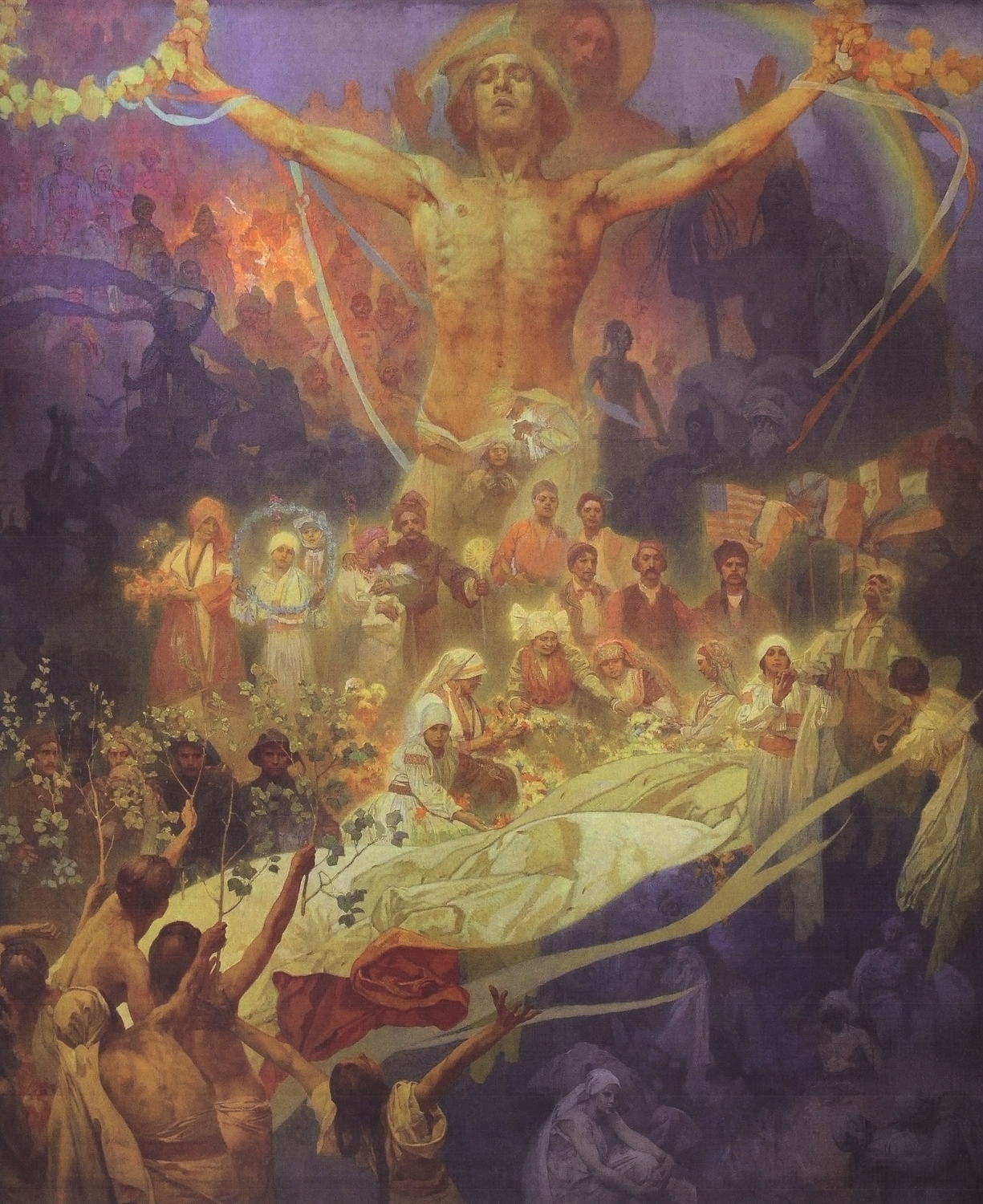
The final canvas, The Apotheosis of the Slavs, gathers the entire story into four fields of color representing different eras. At its center stands the figure of a newly liberated people, surrounded by the accumulated dead, martyrs, warriors and visionaries who made that freedom possible.
It appears triumphant. It is also a warning.
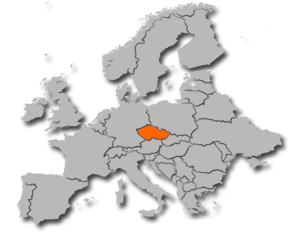
Mucha completed the twenty canvases in 1926. In 1928, he and Crane formally presented the entire cycle to the City of Prague as a gift to the nation on the tenth anniversary of Czechoslovak independence. The two men had spent years imagining Slavic freedom. For one brief moment, they could stand inside it.
But the paintings carried a dangerous assumption: that people who remembered the cost of conquest would recognize it when it returned.
Outside the gallery, another historical story was being assembled. It also used ancient symbols, wounded national pride and a carefully edited version of the past. Mucha had painted history as a defense against tyranny. Adolf Hitler was learning how to use history as one of tyranny’s most effective weapons.
If the Slav Epic was Mucha’s attempt to show how civilization survives an empire, the Third Reich was about to demonstrate how an empire manufactures itself.