CHAPTER THIRTEEN: WHAT EXACTLY WAS THE THIRD REICH?
The phrase “Third Reich” is so familiar that it often passes without explanation. It sounds like the official name of Hitler’s government—or perhaps something invented by the Nazis to make themselves appear ancient, mysterious and inevitable.
That was precisely the effect.
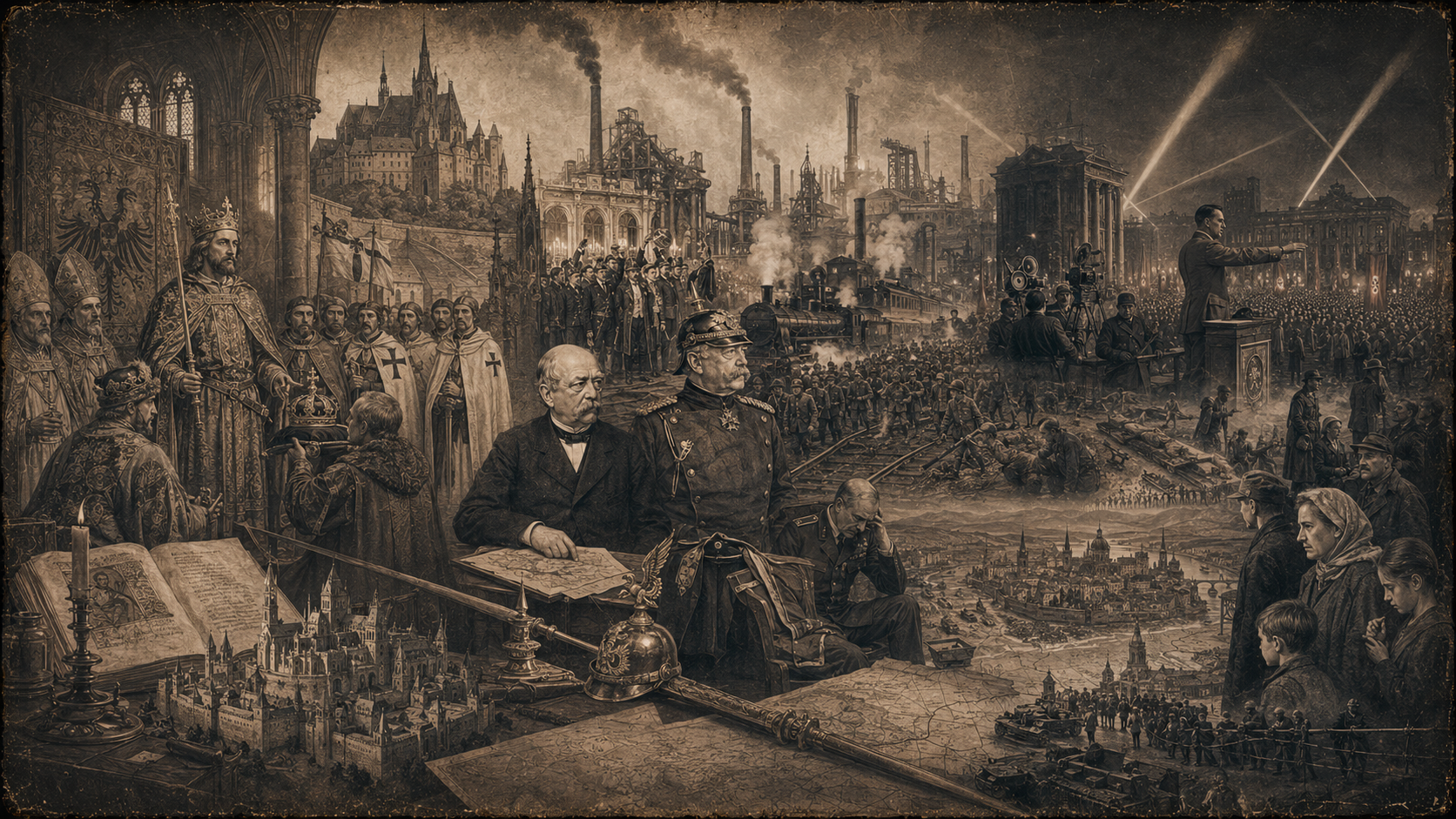
The German word Reich means a realm or empire. Calling Nazi Germany the Third Reich placed Hitler’s dictatorship at the end of an imaginary procession: the rebirth of two earlier German empires and the fulfillment of a destiny supposedly interrupted by defeat.
But the history was much messier than the slogan.
The so-called First Reich was the Holy Roman Empire, usually dated from 962 to 1806. It was not Germany in the modern sense. It was a shifting, decentralized collection of kingdoms, duchies, cities and church territories stretching across much of Central Europe. Its inhabitants spoke different languages, practiced different forms of Christianity and answered to local rulers who frequently ignored the emperor.
Bohemia was part of that world. Prague became an imperial capital under Charles IV, and the kings of Bohemia participated directly in choosing the Holy Roman Emperor. The empire the Nazis later presented as naturally German had actually been multilingual, divided and deeply entangled with Czech history.
The Second Reich was easier to identify. In 1871, Prussia united most of the German states under Kaiser Wilhelm I. This German Empire became an industrial and military power, competed for colonies and entered the First World War under Wilhelm II. It collapsed in 1918 with Germany’s defeat and the Kaiser’s abdication.
What followed was not a third empire. It was the Weimar Republic—a democracy burdened by war debt, political violence, inflation and the widespread belief that Germany had been humiliated at Versailles.
In 1922, nationalist writer Arthur Moeller van den Bruck coined the expression “Third Reich” for an imagined future German empire that would overcome democracy, Marxism and class division under a commanding national leader. Hitler did not invent the phrase. He inherited a ready-made prophecy and placed himself inside it.
The trick was to make a political movement appear to be the return of something ancient.
The Nazis raided Germanic and medieval history for usable symbols. Runes, eagles, heroic knights, imperial ceremonies and legends of sacred objects were detached from their complicated origins and rebuilt as stage scenery. The SS imagined itself as a racial order of modern knights. Archaeology was bent into a search for proof. Myth was presented as memory, and memory was converted into entitlement.
This is where stories about objects such as the so-called Spear of Destiny enter the picture. Hitler’s supposed obsession with possessing the spear that pierced the side of Christ has been repeated so often that folklore has hardened into biography. The evidence for an occult quest is weak. The usefulness of the legend, however, is obvious: it transforms a calculating dictator into the chosen instrument of supernatural history.
The real machinery was less mystical and far more frightening.
Hitler became chancellor on January 30, 1933. Within months, the Nazis used emergency decrees, arrests, street violence and legislation to dismantle German democracy. Opposition parties were eliminated. Trade unions were destroyed. Newspapers, schools, courts and cultural institutions were brought into line. Germany did not awaken one morning beneath an enchanted empire. Its laws and institutions were deliberately converted into tools of dictatorship.
Race supplied the new Reich with its organizing principle. The Nazis divided humanity into invented biological categories, declared so-called Aryans superior and treated Jews, Roma, disabled people, Slavs, political opponents and others as threats to the national body. In 1935, the Nuremberg Laws transformed antisemitism from prejudice into government procedure by stripping German Jews of citizenship and legal protection.
That distinction matters. The Third Reich was not simply a country ruled by one madman. It was a modern state whose civil servants, businesses, universities, scientists, police departments and cultural institutions learned to translate fantasy into paperwork.
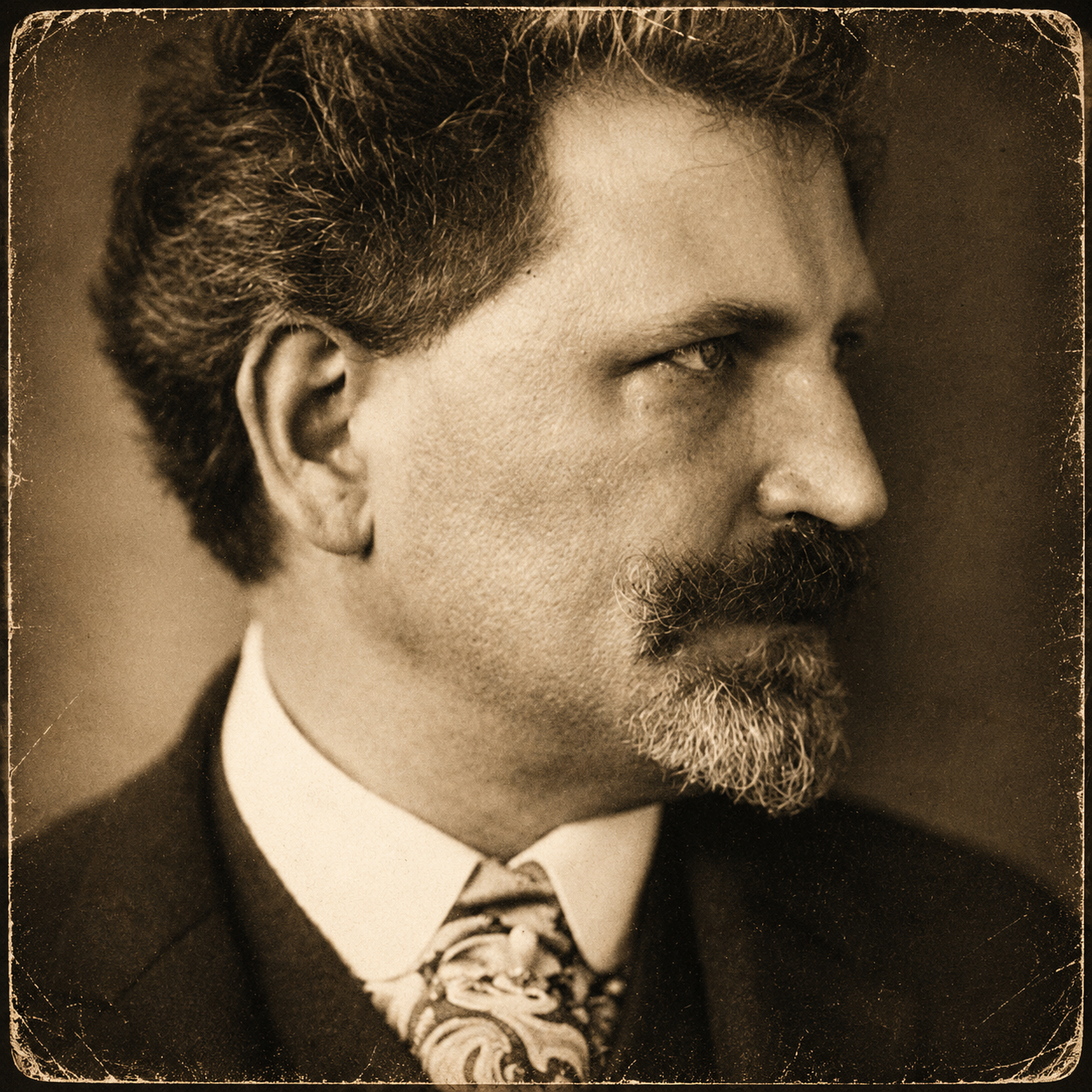
Mucha had used the past to argue that suffering should produce solidarity. Hitler used the past to argue that suffering entitled Germany to dominate others. Both understood that history could move people. Only one required history to be falsified before it could do its work.
The Third Reich was not the restoration of an ancient empire. It was a new dictatorship wearing stolen antiques.
While Hitler and Himmler searched Europe’s legends for symbols of racial authority, Charles Crane was traveling through another world of sacred traditions—Orthodox icons, Byzantine mosaics, Islamic holy cities and church bells whose sound carried across fallen empires.
The same past could be studied, preserved, worshipped, purchased or weaponized. The difference depended upon who was telling the story—and what they intended to build with it.