CHAPTER NINE: WORLD WAR I
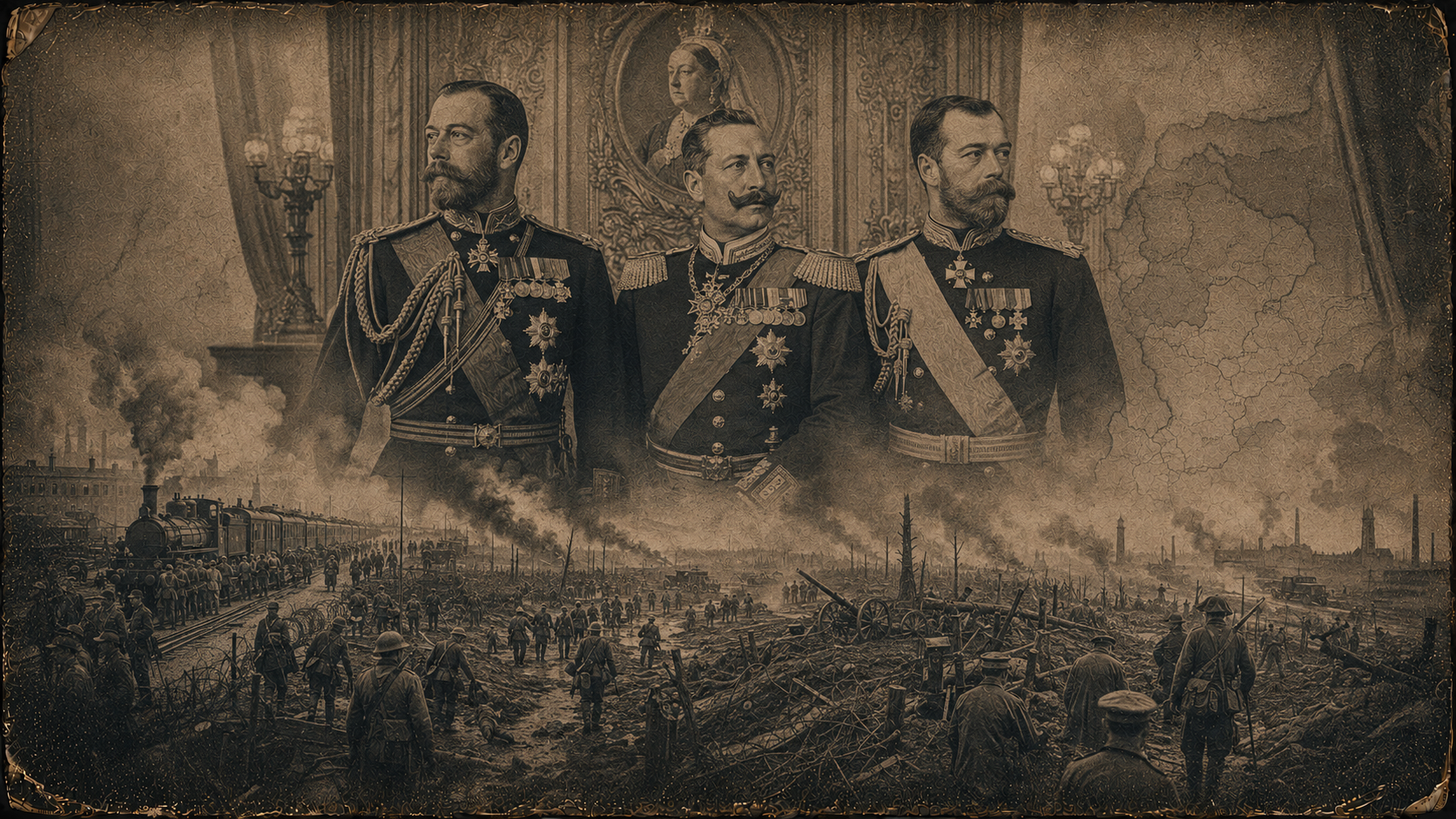
Fourteen months before Europe went to war, three monarchs gathered in Berlin for a royal wedding. King George V of Britain, Kaiser Wilhelm II of Germany and Tsar Nicholas II of Russia belonged to the same extended family. They posed for photographs, attended ceremonies and presided over a continent whose royal houses had been connected by generations of strategic marriages.
George and Wilhelm were first cousins through Queen Victoria. George and Nicholas were first cousins through their Danish mothers, sisters Alexandra and Dagmar. Wilhelm and Nicholas were more distantly related, while Nicholas’s wife Alexandra was another of Victoria’s grandchildren. In their private correspondence the German and Russian emperors addressed one another as “Willy” and “Nicky.” Europe appeared to be governed by a family.
But a family was not a government, and a wedding photograph was not a peace treaty. Beneath the royal relationships stood military alliances, colonial rivalries, nationalist movements, arms manufacturers and generals whose plans depended upon moving millions of soldiers before an enemy could move theirs. The cousins occupied the thrones. The machinery beneath those thrones had acquired momentum of its own.
After the assassination of Franz Ferdinand, Nicholas and Wilhelm exchanged telegrams attempting to slow the crisis. Their messages could not reverse mobilization schedules or overcome the governments surrounding them. Austria-Hungary moved against Serbia. Russia mobilized. Germany declared war on Russia and France. Germany’s invasion of Belgium brought Britain into the conflict. Within days, the cousins were enemies.
Each occupied a different relationship to power. George V reigned through a constitutional monarchy in which elected ministers directed the war. Wilhelm possessed greater authority but increasingly deferred to Germany’s military leadership. Nicholas assumed personal command of the Russian army in 1915, making himself directly responsible for defeats, shortages and the suffering of his people. Their crowns looked similar in photographs. Their political systems were not.
The war quickly escaped every expectation placed upon it. Machine guns, heavy artillery, poison gas, submarines, aircraft and barbed wire converted industrial progress into industrial slaughter. The same modern systems that carried water into cities and electricity into homes now transported soldiers, shells and bodies across an entire continent.
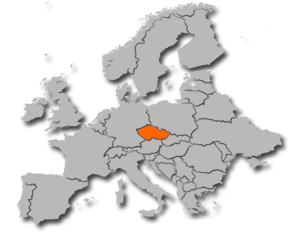
For the Czech and Slovak peoples, the war created an impossible division. Many were conscripted into the Austro-Hungarian Army and ordered to defend an empire they increasingly wished to leave. Others defected or joined military formations organized abroad. The Czechoslovak Legions began turning national identity into a physical army before Czechoslovakia existed as a recognized state.
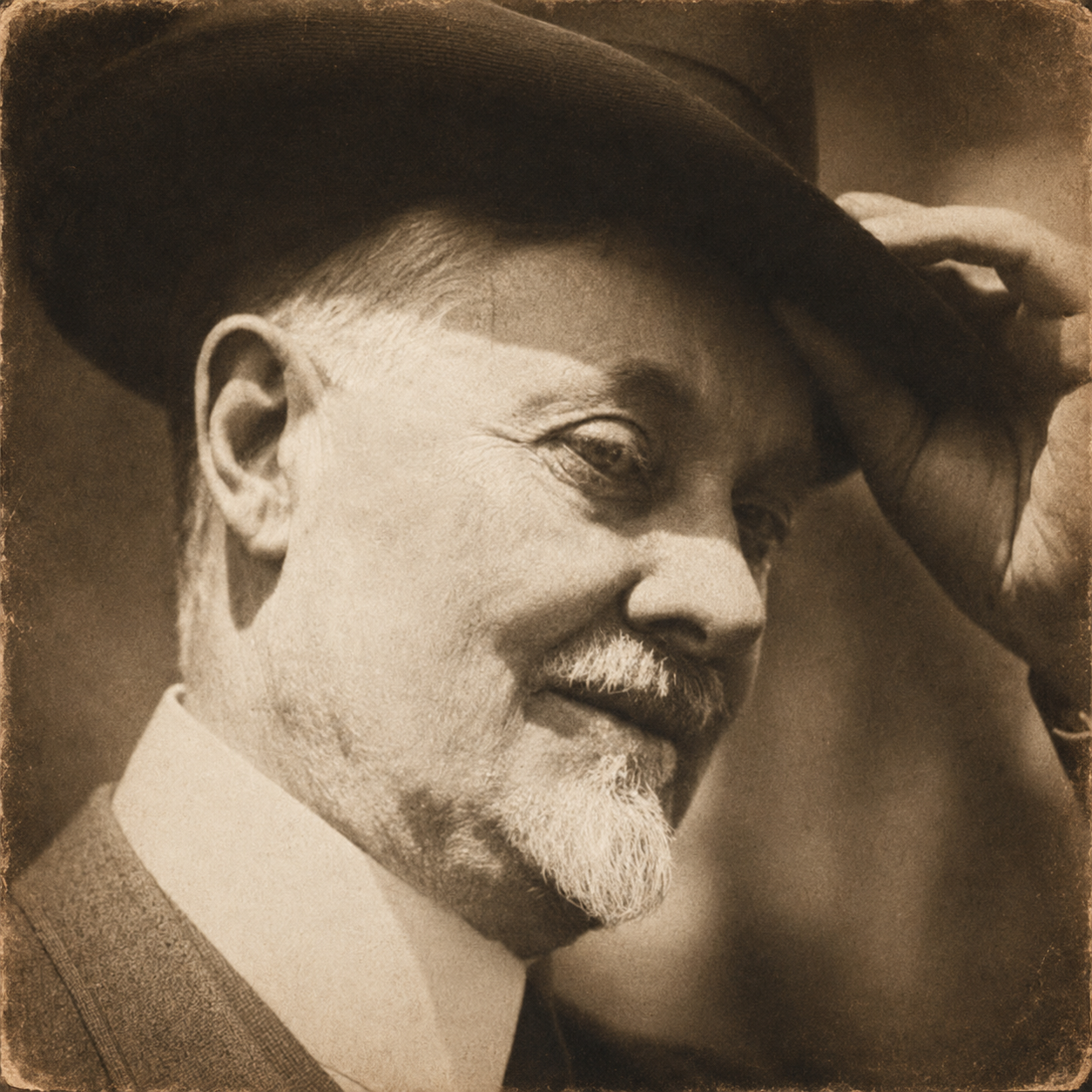
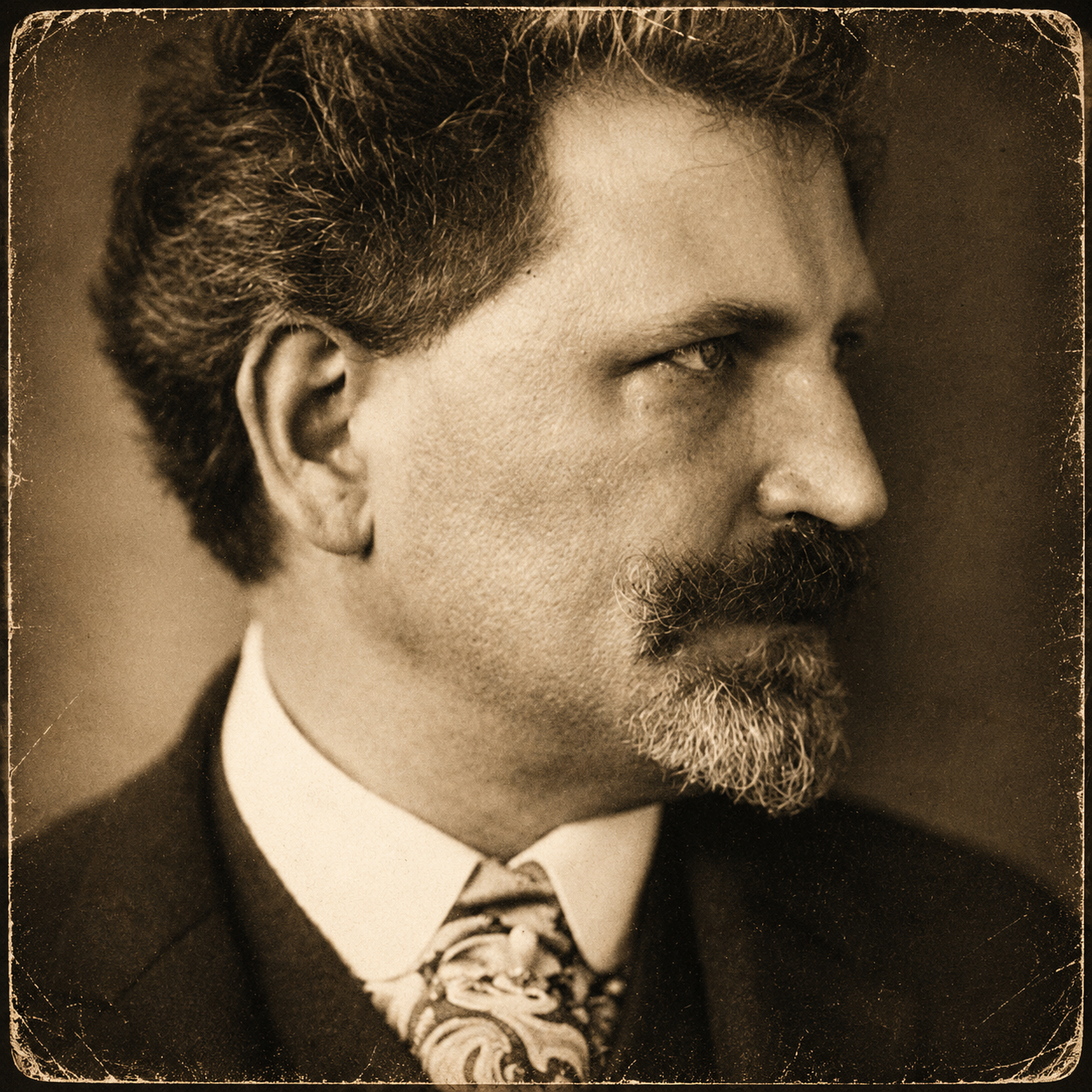
Tomáš Masaryk left the empire and organized the independence movement from exile. Edvard Beneš worked through Paris, while Milan Rastislav Štefánik used his position in France to help recruit support and soldiers. Masaryk understood that cultural identity and philosophical argument would no longer be enough. If the Czechs and Slovaks wanted a place at the peace conference, they would have to demonstrate that they had participated in winning the war.
In Russia, military defeat, food shortages and political paralysis finally broke the Romanov system. Nicholas abdicated in March 1917. The throne that had seemed immovable when Crane entered the imperial court disappeared in a matter of days. A provisional government attempted to continue the war while revolutionary forces competed to determine what would replace the Tsar.
President Woodrow Wilson sent a special diplomatic commission to Russia led by Elihu Root. Charles Crane joined it because few Americans possessed his knowledge of the country or his range of personal contacts. He returned not as a private traveler seeking audiences, but as the representative of a president he had helped elect. The network had become foreign policy.
That same spring, Germany’s unrestricted submarine warfare and the Zimmermann Telegram brought the United States into the conflict. Wilson declared that the world must be made safe for democracy. The phrase transformed a European power struggle into an American moral mission—and gave stateless peoples such as the Czechs an opportunity to present independence as part of the democratic peace to come.
By 1918, the family portrait had been destroyed. Nicholas and his family were executed by the Bolsheviks. Wilhelm lost his throne and fled into exile. George remained king, but renamed his German-rooted royal house Windsor to survive the nationalist fury unleashed by the war. Of the three cousins, one kept his crown, one lost it and one lost his life.
The First World War was not caused by a family quarrel. It was the failure of an entire political order that mistook blood relationships for stability, military preparation for security and imperial control for peace. The cousins did not create all of the machinery—but they inherited it, commanded it and proved unable to stop it.
This is the question that will follow the survivors from the battlefields to the negotiating tables at Versailles:
When an old world destroys itself, who earns the right to design the new one?
Three cousins entered the war wearing crowns. Only one came out with his throne.